Diamond Engagement Rings
 Sapphire Engagement Rings
 Emerald Engagement Rings
 Ruby Engagement Rings
 Rings
Rings
 Earrings
 Necklaces
 Brooches
 Bracelets & Bangles
 Cufflinks
 Pendants
 Chains
 Tie Pins
 Lockets
 Charms
 Signet Rings
 Seals
Seals
 Curiosities
 UK / £
 USA / $
 AU / $


 Experts since 1975

-
Your Shopping Bag is empty

 Free Worldwide Delivery
 View All
 Diamond
 Sapphire
 Emerald
 Ruby
Ruby
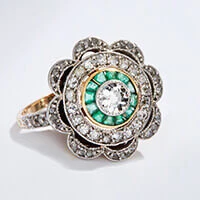





Are Antique Diamonds Worth More Than New or Lab-Grown Diamonds?
When buying a diamond engagement ring, or any diamond jewellery for that matter, there are three main options: antique or old diamonds, newly mined diamonds, and lab-grown diamonds. Each type has its own characteristics, appeal, value, and desirability. Here’s a look at these different types of diamonds and what makes each unique in terms of rarity, quality, and ethical considerations.
Rarity
Old Diamonds
Often referred to as antique or vintage diamonds, old diamonds have been mined naturally and have circulated for many years, possibly even centuries. These diamonds might originate from sources that are no longer accessible due to mine closures or exhaustion. They often come with unique qualities not found in newly mined diamonds due to differences in mining practices and locations. An old diamond also brings with it a sense of history and intrigue.
New Diamonds
New natural diamonds still have rarity since they are a finite resource. However, new diamonds are typically sourced from active mines. In today’s context, this may make them somewhat less rare in comparison to older diamonds with limited or unknown sources.
Lab-Grown Diamonds
Laboratories create these diamonds using high-tech methods. Lab-grown diamonds could theoretically be produced indefinitely. This makes them “un-rare”. But currently the number of labs that are capable of creating top-quality diamonds is few. For now, this adds a sort of exclusivity to high-quality lab-grown diamonds.
Quality
Old Diamonds
Vintage diamonds often feature distinctive cuts like the Old European, Marquise, or Old Mine cuts, along with natural imperfections that many find charming. Skilled technicians hand-crafted these cuts so they are artisinal not machine-made and mass-produced as with most modern diamonds. However, their quality can vary widely depending on age and maintenance. If you’re after a pristine, brilliant sparkle, they are rarer and more exclusive to find in antique diamonds that have survived over time.
New Diamonds
Modern diamonds are cut with advanced techniques, yielding precise shapes and brilliance. Typically, they come with grading reports detailing their quality based on the 4Cs (carat, cut, color, and clarity). With new diamonds, it’s easier to verify quality and select a high-grade stone according to your preferences.
Lab-Grown Diamonds
Generally of very high quality, labs grow diamonds to meet strict standards, with excellent clarity and few impurities. like mined diamonds, they evaluate lab-grown diamond quality with the 4Cs, so that lab-grown options can match desired specifications.
In short, if you’re using the 4C’s grading system it’s easier to find “higher quality” lab-grown diamonds as they’re made to match those standards. HOWEVER, the value of this quality is different for mined diamonds where a high-quality level is nature-made and thus rarer.
Learn more about the diamond grading system with The 4Cs Explained. Or check out A Guide to Antique Diamond Cuts.
Ethical Considerations
Old Diamonds
By choosing antiques consumers can feel confident that their purchase supports sustainable and ethical practices. Old diamonds might come with histories tied to conflict mining practices in the distant past. However, these diamonds eliminate any ethical violations today as you’re essentially recycling a piece of history. This also makes them the best eco-friendly choice as you reduce the demand for new mining, which is a win for Mother Earth and your ethics!
New Diamonds
The diamond industry today emphasizes responsible sourcing, with many new diamonds certified as ethically sourced. Jewellers can hypothetically trace the origin of these diamonds and confirm they’re conflict-free. However, while the intention is there, the reality of diamond sourcing is still murky. Many consumers remain unaware of the full supply chain which can include exploitation of people and eco-systems.
Lab-Grown Diamonds
Lab-grown diamonds avoid the environmental and social challenges associated with mining. Their production has minimal impact on the environment, and their origins are entirely transparent and traceable. They are definitely ethical. However, they are not zero-impact on the environment as they still produce a carbon footprint from manufacturing.
Read more about the eco-friendliness of antique jewellery in Antique Jewellery: The Thinking Girl’s Answer to Sustainable Luxury
Which Type is Most Valuable?
Collectors, and buyers in general, highly prize old diamonds due to their unique qualities, hand craftmenship and historical significance, they can carry great value. New diamonds offer a modern look with certified quality. Lab-grown diamonds, while often more affordable and less rare, are appreciated for their ethical appeal.
Ultimately, the “worth” of a diamond is subjective, depending on what matters most to you—whether that’s rarity, modern quality, or ethical production. Finding the right diamond is about discovering the piece that resonates with you personally.
One bonus of Antique and Vintage diamonds is they have no “newness charge” (in layman’s terms there’s no VAT so you save 20%). This means you can keep quality while saving on cost.
If you have more concerns about value why not mix business and pleasure? Make an appointment and come chat with us in person- who knows you may find something worth it for you!
Learn More About Diamonds