Diamond Engagement Rings
 Sapphire Engagement Rings
 Emerald Engagement Rings
 Ruby Engagement Rings
 Rings
Rings
 Earrings
 Necklaces
 Brooches
 Bracelets & Bangles
 Cufflinks
 Pendants
 Chains
 Tie Pins
 Lockets
 Charms
 Signet Rings
 Seals
Seals
 Curiosities
 UK / £
 USA / $
 AU / $


 Experts since 1975

-
Your Shopping Bag is empty

 Free Worldwide Delivery
 View All
 Diamond
 Sapphire
 Emerald
 Ruby
Ruby





Victorian Engagement Rings: A Buyer’s Guide
Victorian engagement rings carry more sentiment than any others. Made during Queen Victoria’s long reign, from 1837 to 1901, they speak a language of snakes, hearts, forget-me-nots and hidden messages, set in warm yellow gold with old cut diamonds and coloured stones. If you want a ring with a story, this is the era to explore.
A ring for a queen
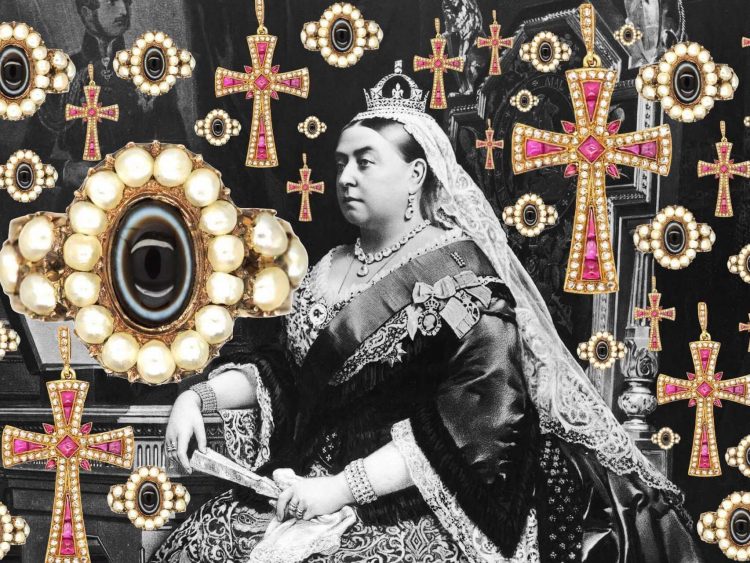
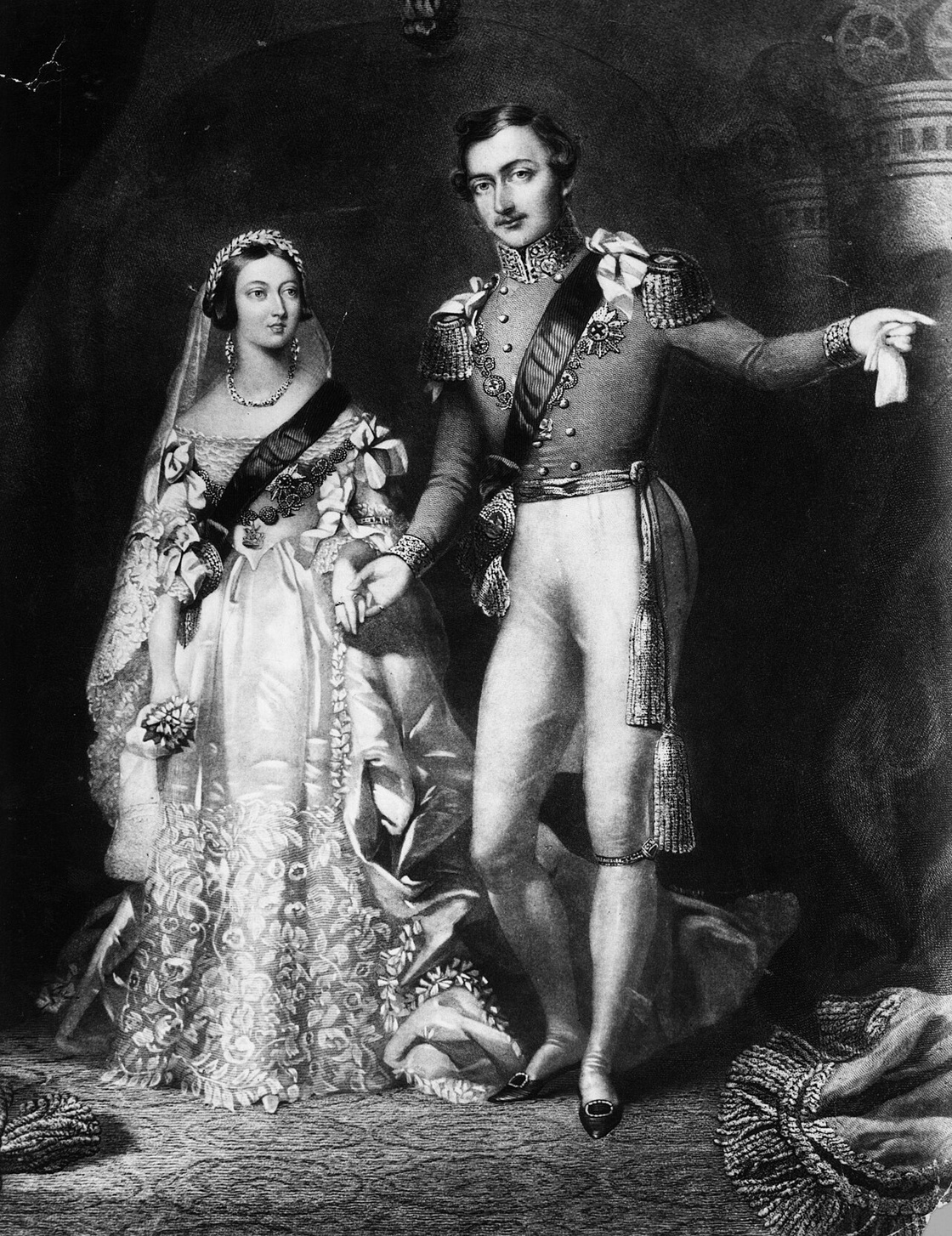
Queen Victoria set the tone herself. When Prince Albert proposed in 1839, he gave her a gold ring in the form of a snake, its head set with an emerald, her birthstone. The snake, swallowing its tail or coiled around the finger, stood for eternal love, and it became one of the most popular ring designs of the century. Our article on snakes in Victorian jewellery tells the story.
Three periods in one reign
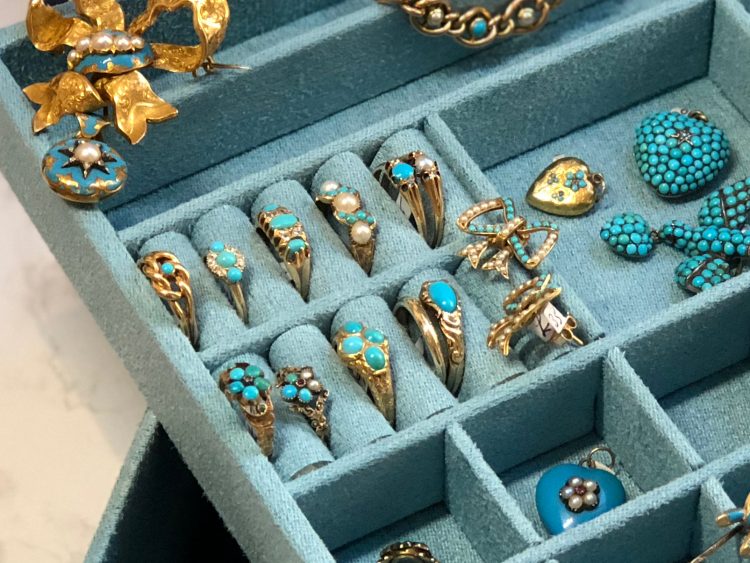
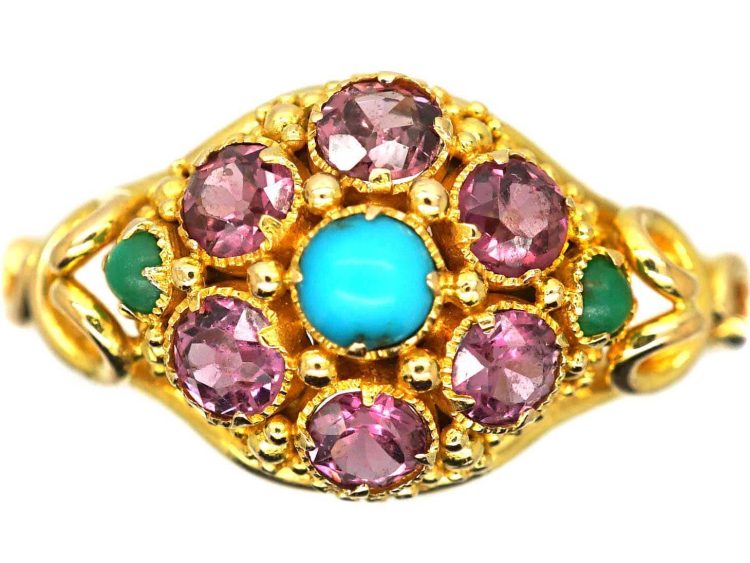
Early Victorian, the Romantic period (1837 to 1860). Jewellery was sentimental and nature-loving: gold rings with turquoise forget-me-nots, cabochon garnets, hearts, hands and flowers, often with intricate chased or engraved gold.
Mid Victorian, the Grand period (1861 to 1880). After Albert’s death in 1861, the Queen went into mourning and fashion followed, with darker, heavier jewellery and mourning rings. Our guides to mourning rings and jet jewellery explore this side of the period.
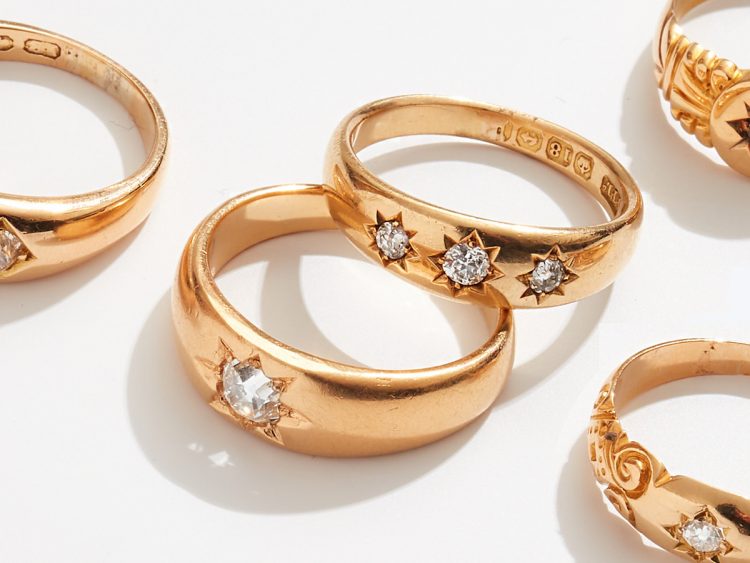
Late Victorian, the Aesthetic period (1880 to 1901). The discovery of diamonds in South Africa in 1867 made diamonds far more plentiful, and late Victorian engagement rings are full of them: carved half hoops, gypsy rings, five-stones and clusters, many of which still look wonderfully fresh today.
The classic Victorian ring styles
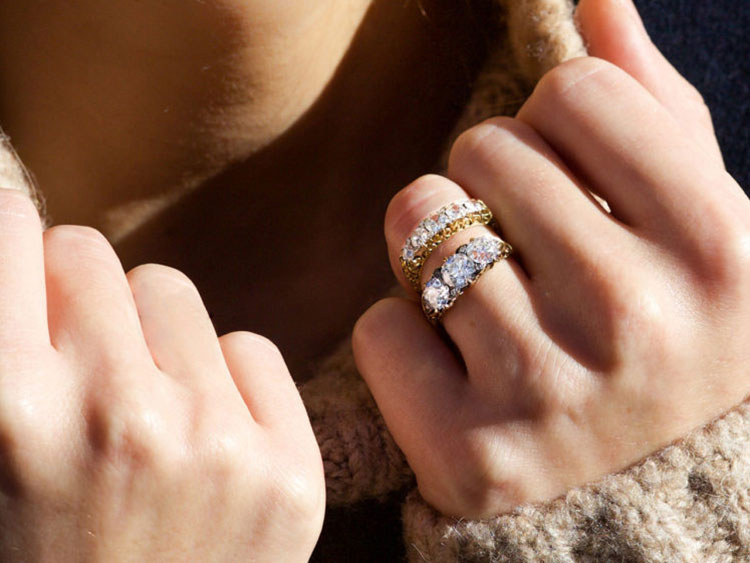
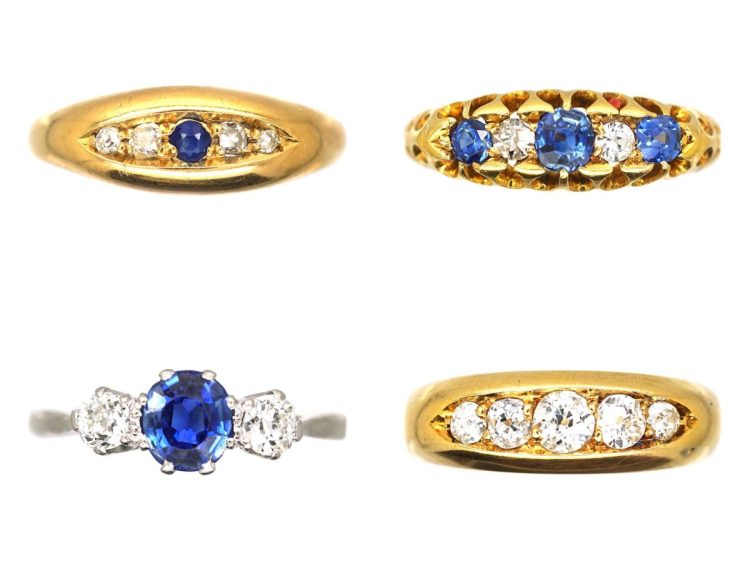
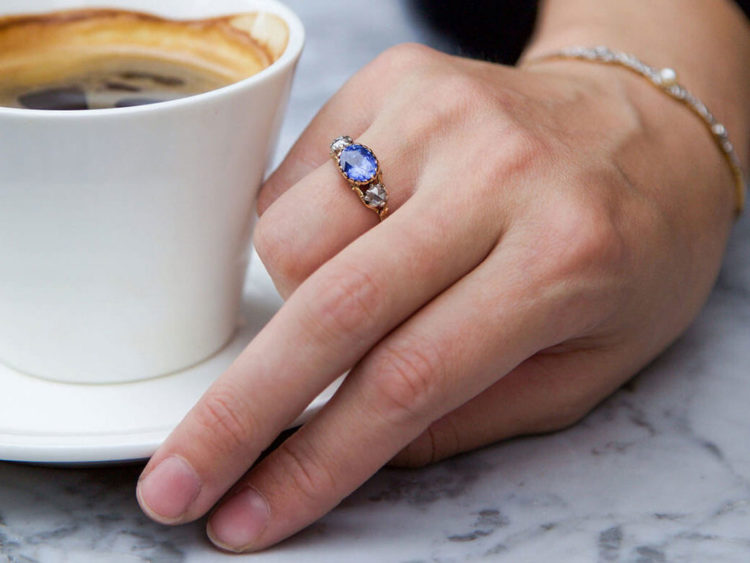
The carved half hoop. A row of three or five stones set in a carved gold mount with scrolling detail between them, the classic late Victorian engagement ring.
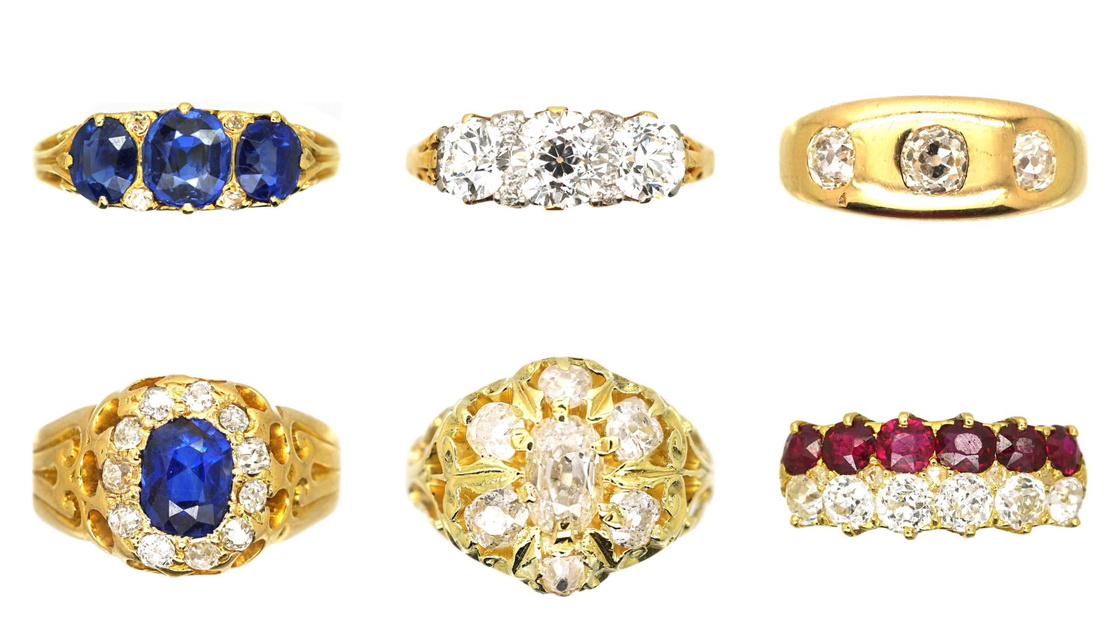
The gypsy ring. Stones sunk flush into a heavy gold band, sometimes within star-shaped engraving. Read our guide to gypsy rings and rub-over settings.
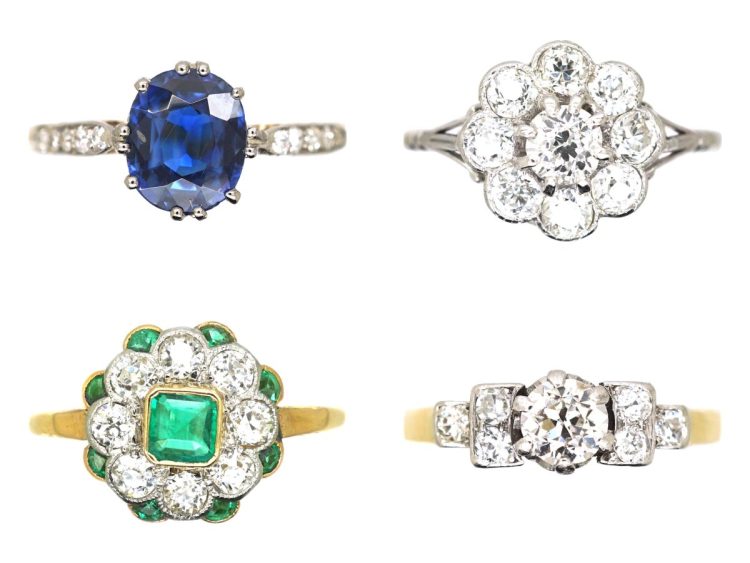
The cluster. A centre stone surrounded by diamonds, often in silver-topped gold so the diamonds look whiter.
The boat-shaped and marquise ring. A long head set with diamonds and coloured stones, like this Victorian boat-shaped ring with rubies and diamonds.
The acrostic and sentimental ring. Stones chosen so their initials spell a word, such as REGARD or DEAREST. Our guide to regard rings explains how they work.
Victorian rings were made to say something. When you know how to read them, the snakes, hearts and hidden words make every one feel like a love letter.
Olly Gerrish, AJC Founder
Gold, silver and old cut diamonds
Victorian rings are usually made in rich yellow gold, most often 18ct or 15ct, with 9ct and 12ct introduced in 1854. Diamonds were often set in silver on a gold ring, because silver made them look whiter, which is why some Victorian rings have a slightly darker top. The diamonds themselves are old mine cuts or rose cuts, cut by hand with a soft, candlelit sparkle. Our guides to old mine cut diamonds and gold carats explain more.
Sizing, wear and care
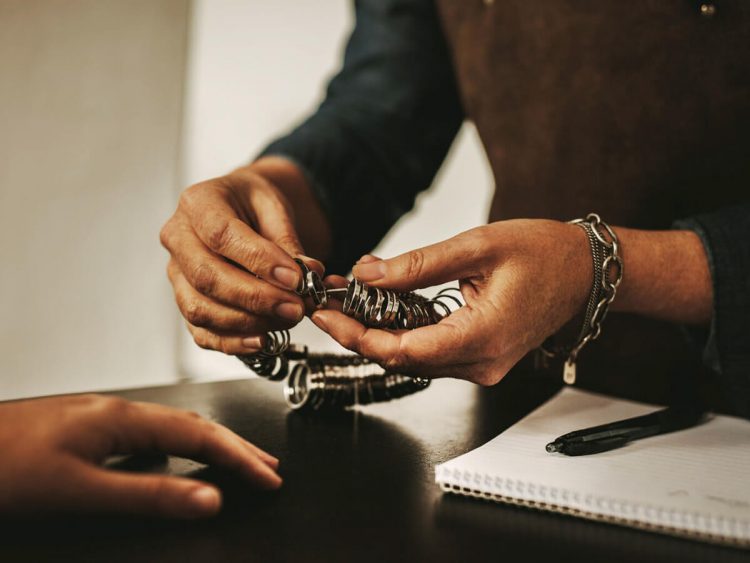
Victorian rings were made to last, but a century and more of wear can thin a shank or loosen a claw, so have your ring checked by a jeweller, especially before resizing. Silver-topped settings tarnish a little over time, which is part of their charm and easy to clean. Avoid ultrasonic cleaners if the ring has turquoise, pearls, opals or foiled stones.
What we look for
We look for good gold, crisp carving and engraving, old cut diamonds with life in them, settings in sound condition and, wherever possible, a ring with a little of the sentiment that makes the era so special. You can see some of our favourites below, and more in the shop.
A Victorian ring has warmth you can feel. The gold glows, the old diamonds flicker, and you know it has been loved before.
Olly Gerrish, AJC Founder
Explore the collection
- Victorian engagement rings
- Victorian rings
- Carved half hoops
- Gypsy rings
- Five-stone rings
- Victorian jewellery