Diamond Engagement Rings
 Sapphire Engagement Rings
 Emerald Engagement Rings
 Ruby Engagement Rings
 Rings
Rings
 Earrings
 Necklaces
 Brooches
 Bracelets & Bangles
 Cufflinks
 Pendants
 Chains
 Tie Pins
 Lockets
 Charms
 Signet Rings
 Seals
Seals
 Curiosities
 UK / £
 USA / $
 AU / $


 Experts since 1975

-
Your Shopping Bag is empty

 Free Worldwide Delivery
 View All
 Diamond
 Sapphire
 Emerald
 Ruby
Ruby





Rub-Over Settings: A Guide
A rub-over setting holds a stone in a smooth collar of metal rather than claws. It is one of the oldest ways of setting a gem, and one of the most practical, and it is the setting of some of the most characterful Victorian rings we see.
What is a rub-over setting?
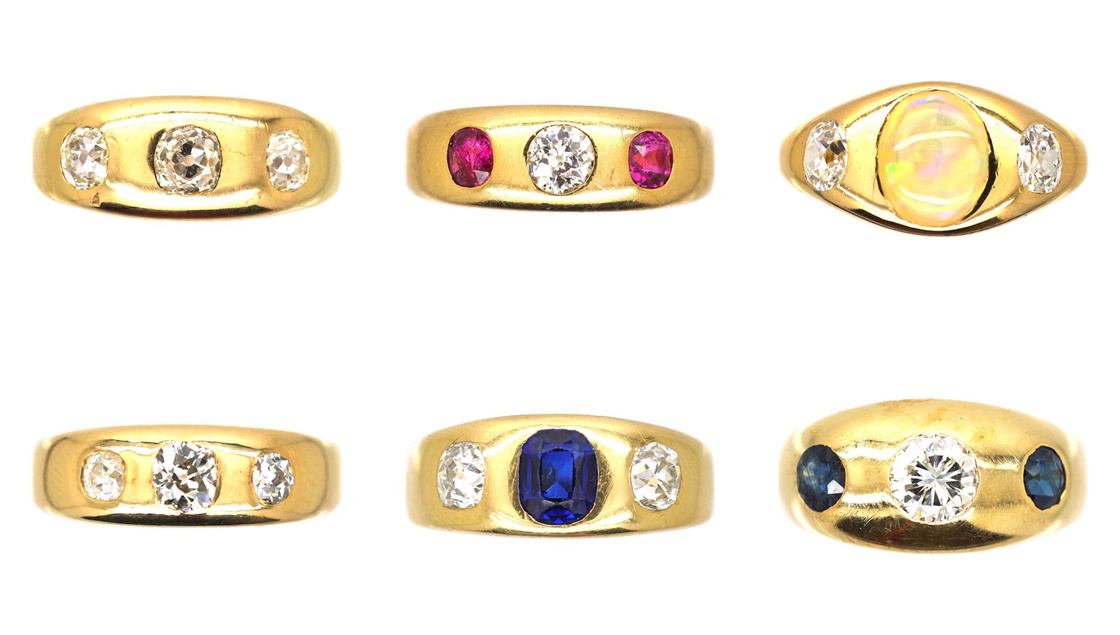
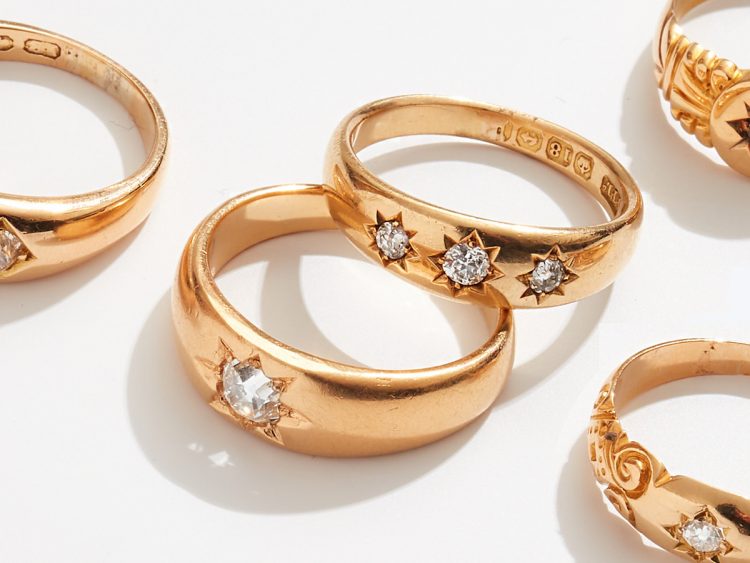
In a rub-over setting, a thin wall of metal surrounds the stone and is pressed, or “rubbed”, over its edge to hold it in place. In Britain we call it a rub-over or collet setting; in America it is usually called a bezel setting. Nothing projects above the stone, so the metal frames it like a picture, as in this Victorian gold ring with a rub-over set old mine cut diamond.
How a rub-over setting is made
The jeweller makes a collar of metal to fit the exact size and shape of the stone. The stone is dropped in, and the top edge of the collar is burnished inwards over it with a steel tool until it grips the stone all the way round. It takes skill: too little pressure and the stone is loose, too much and it can crack.
Why choose a rub-over setting?
Security. The stone is held all the way round, so it cannot easily work loose.
Protection. The metal protects the edge of the stone, the part most likely to chip, which makes rub-over settings ideal for softer stones such as opal.
A clean look. With no claws, the ring has a smooth, sculptural outline that looks as modern today as it did 150 years ago.
Everyday wear. Nothing snags on clothing, so a rub-over ring is ideal for anyone who uses their hands a great deal.
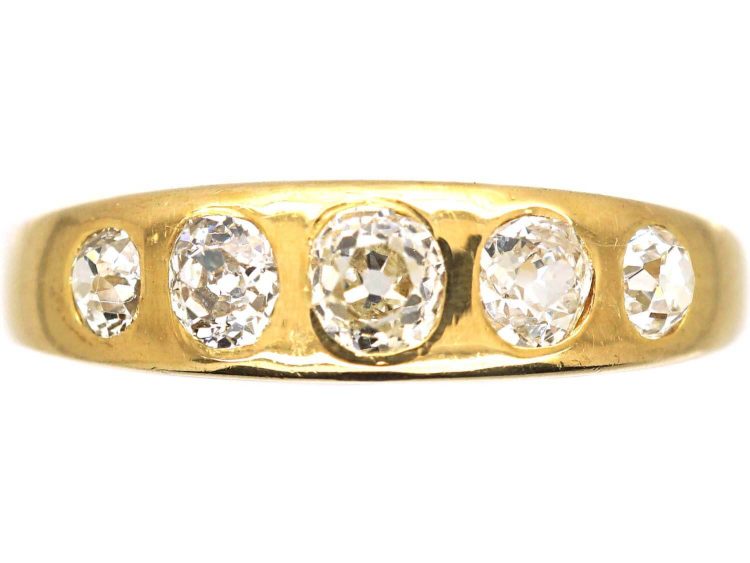
A Victorian rub-over ring is the one I’d give to someone who’s hard on their jewellery. Nothing snags, nothing works loose, and the gold frames the stone like a little picture.
Olly Gerrish, AJC Founder
The drawbacks
Less light. Because the metal covers the edge of the stone, a little less light reaches it, so a rub-over diamond can look slightly smaller and less sparkling than the same stone in claws. Many people prefer the softer look.
Metal and weight. A rub-over uses more metal, so rings can be a little heavier, and resetting a stone is more work.
Who should consider one?
Anyone who wants a ring for everyday wear, anyone choosing a softer stone, and anyone who loves a smooth, sculptural look. It is also a lovely choice for a first antique ring: robust, understated and easy to wear.
An ancient technique with a Victorian heyday
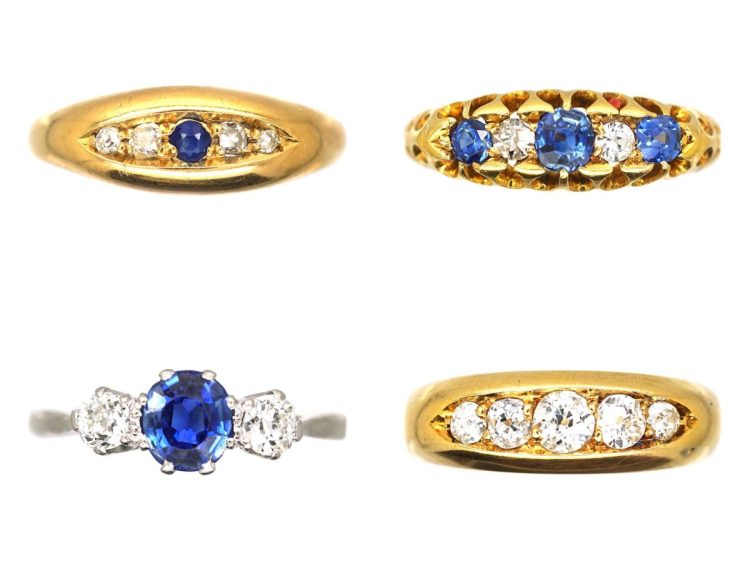
Rub-over settings are thousands of years old; ancient and medieval rings used box and collet settings long before claws were common. But the setting’s great period in British jewellery was the Victorian era, when three- and five-stone rings in heavy 18ct gold, often called gypsy rings, set their stones deep into the shank. See our gypsy rings and three-stone rings.
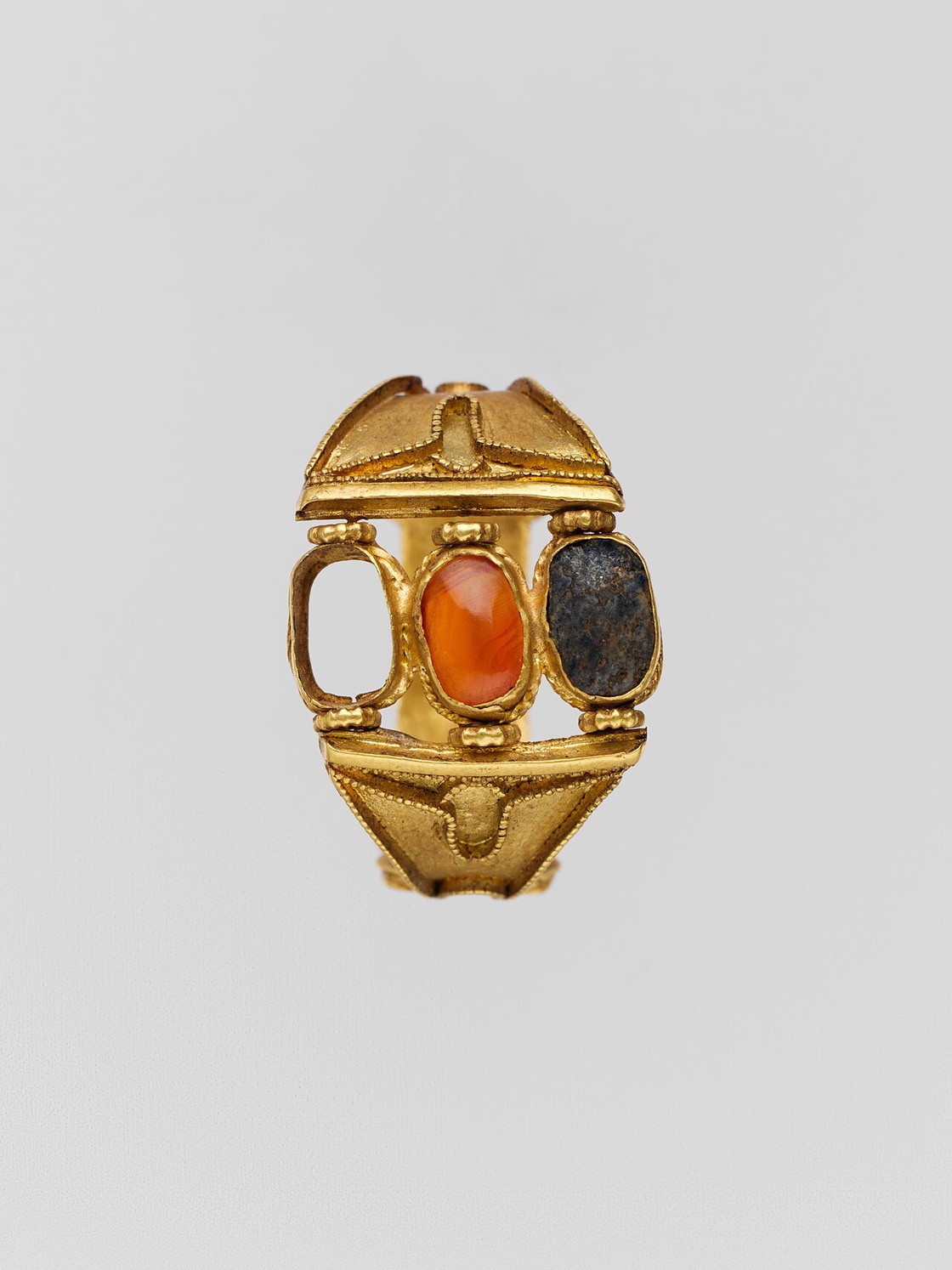
What we look for
We check that each stone sits tight in its collar and that the rubbed-over edge is even and unbroken. On old rings the metal can wear thin over time, and on gypsy rings the stones should sit flush with the gold, without gaps or cracked edges.
Our view
A Victorian gold rub-over ring, three or five old-cut diamonds set deep in 18ct gold, is one of the most satisfying antique rings you can own: tough, handsome and completely without pretension. It is the ring we recommend most often to people who want to wear their jewellery every day, and never take it off.