Diamond Engagement Rings
 Sapphire Engagement Rings
 Emerald Engagement Rings
 Ruby Engagement Rings
 Rings
Rings
 Earrings
 Necklaces
 Brooches
 Bracelets & Bangles
 Cufflinks
 Pendants
 Chains
 Tie Pins
 Lockets
 Charms
 Signet Rings
 Seals
Seals
 Curiosities
 UK / £
 USA / $
 AU / $


 Experts since 1975

-
Your Shopping Bag is empty

 Free Worldwide Delivery
 View All
 Diamond
 Sapphire
 Emerald
 Ruby
Ruby


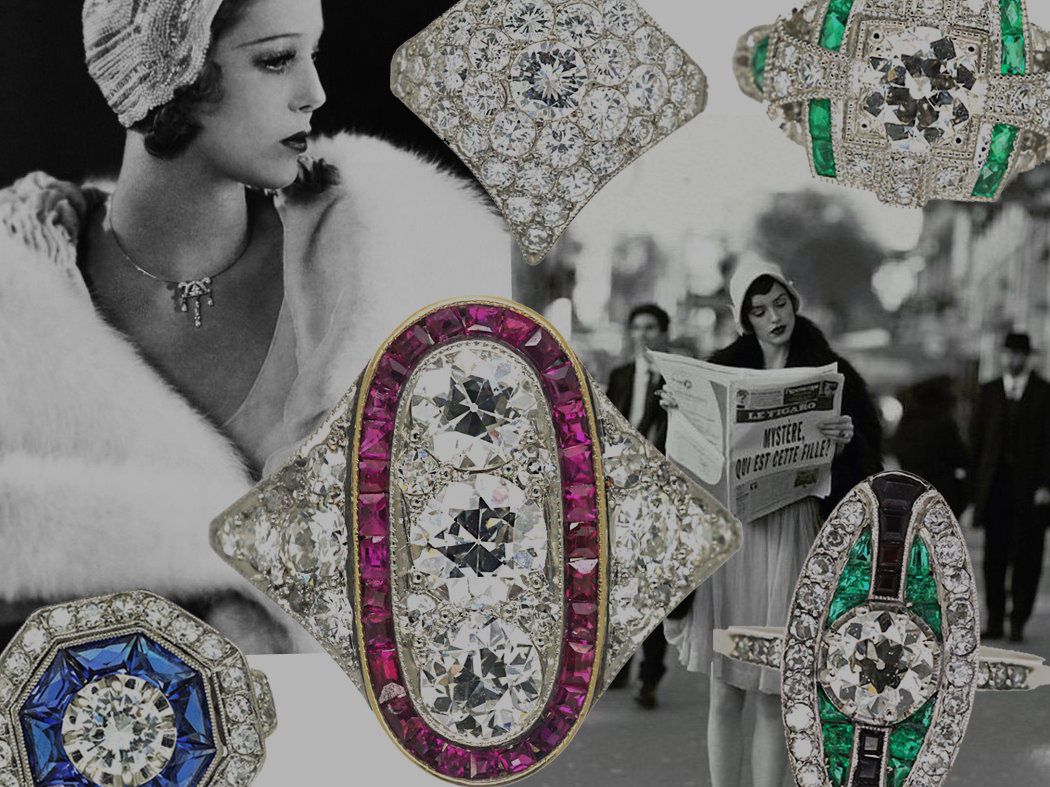

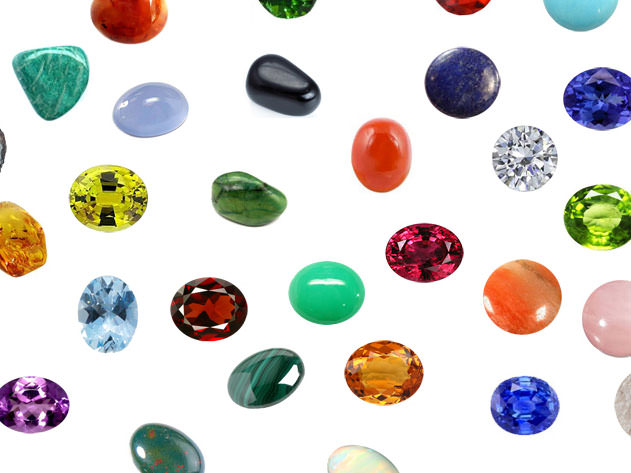


Old Mine Cut Diamonds: A Guide
The old mine cut is the diamond of the Georgian and Victorian eras: cushion-shaped, deep, and cut by hand to keep as much of the precious rough as possible. It sparkles differently from a modern diamond, with broad, flashing fire rather than a glitter, and many of our clients, once they have seen one, never look back.
What is an old mine cut diamond?
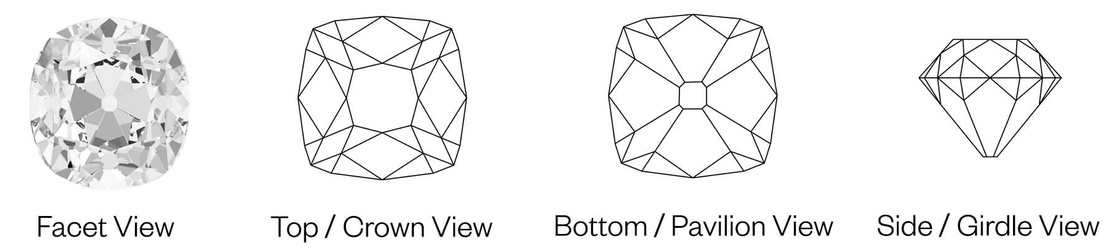
An old mine cut has a softly squared, cushion-shaped outline, a high crown, a small table on top and, usually, an open culet: a tiny flat facet at the base that looks like a small circle when you look down into the stone. It has roughly the same number of facets as a modern brilliant, but they are larger, less regular and arranged for a different effect.
Where the name comes from
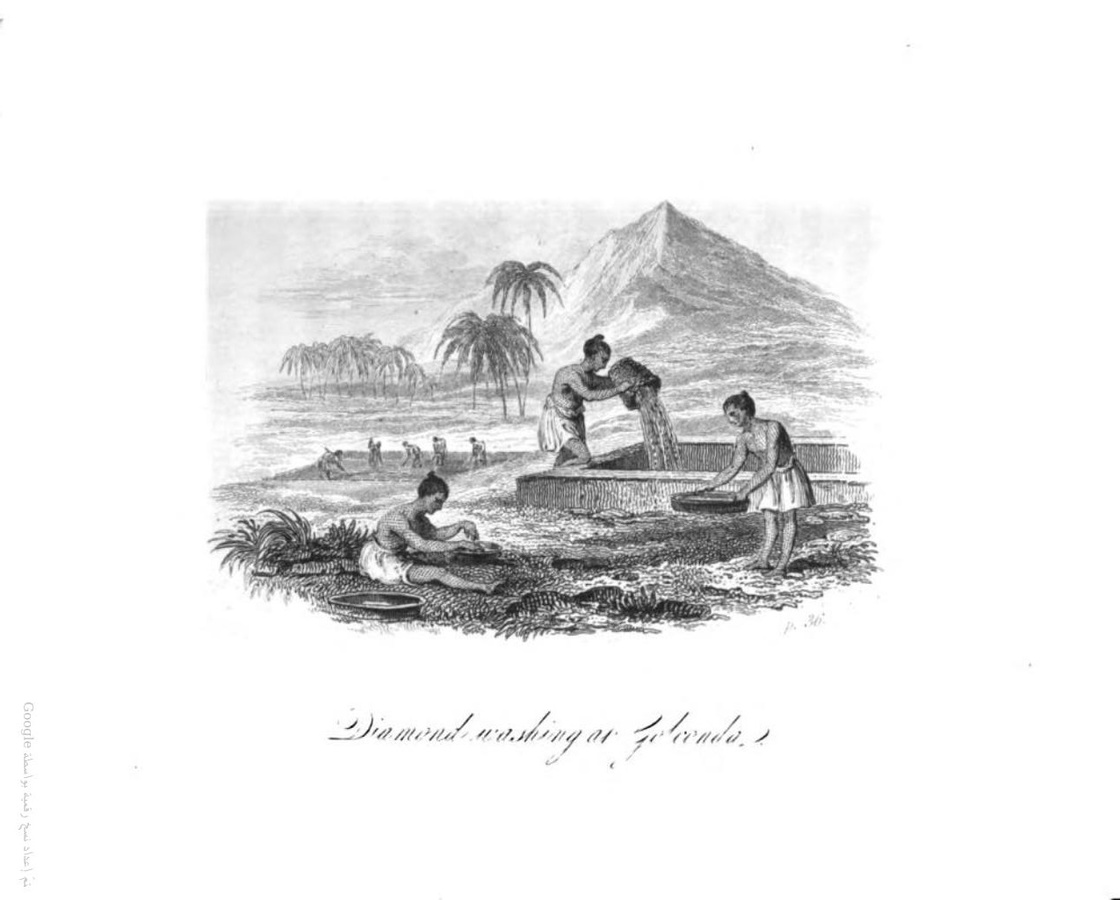
For centuries almost all the world’s diamonds came from India, from the mines around Golconda. In the 1720s diamonds were found in Brazil, which became the main source for the rest of the eighteenth and much of the nineteenth century. When the great South African mines opened in the 1870s, the diamonds from the earlier sources became known as coming from the “old mines”, and the name stuck to the way they were cut.
How to recognise one
The outline. Squarish with rounded corners, rarely perfectly symmetrical.
The culet. Look straight down through the stone: a small visible circle at the centre is the open culet, a hallmark of old cutting.
The facets. Broad and chunky, giving flashes of colour rather than pinpoint sparkle, especially by candlelight.
The depth. Old mine cuts are deep stones, so they often look smaller from above than their weight suggests.
Old mine, old European and modern
From the late nineteenth century, cutters began to make diamonds round, and the old mine cut gradually gave way to the old European cut. The modern brilliant followed in the twentieth century. Each is lovely in its own way; our guide to antique diamond cuts explains the differences.
Where you will find them
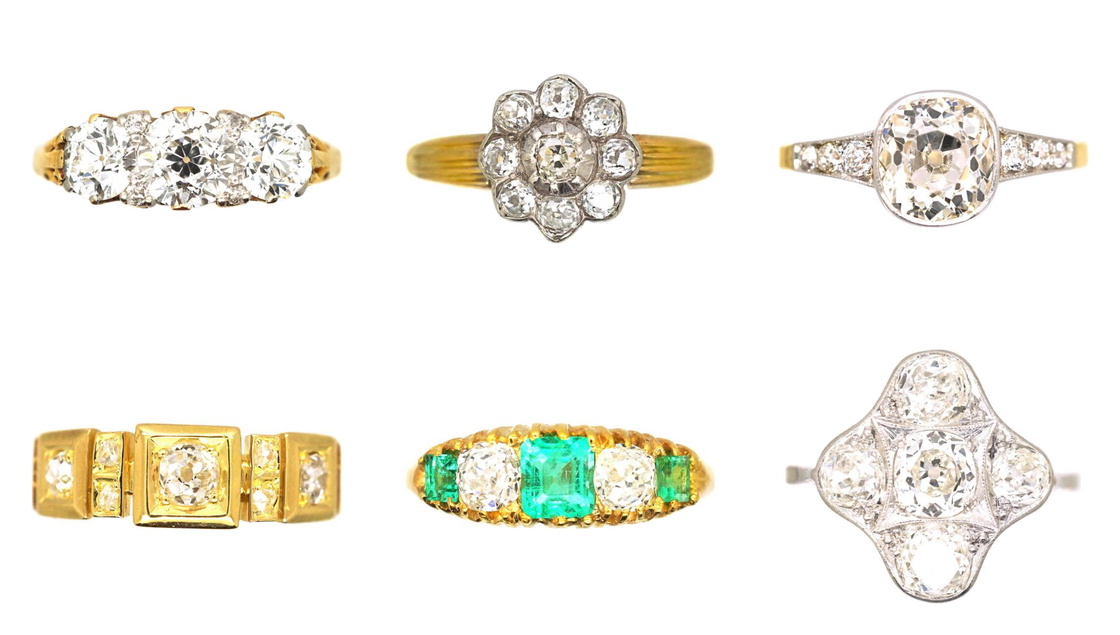
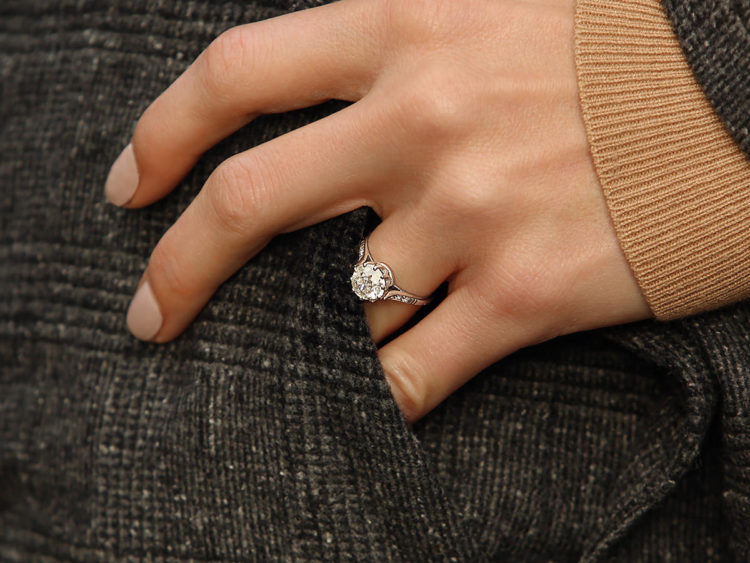
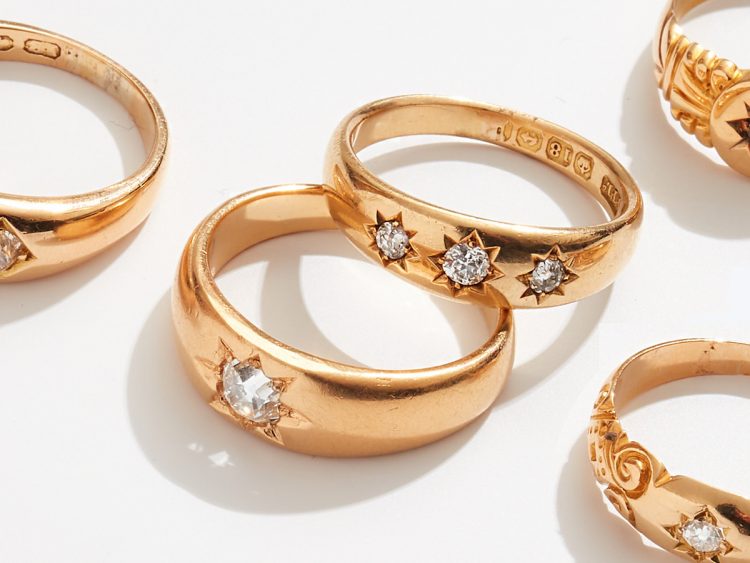
Old mine cuts appear in Georgian closed-back settings, in Victorian cluster rings and carved half hoops, and in early Edwardian solitaires, like this Edwardian platinum solitaire.
I love an old mine cut that’s a little warm in colour. It’s the candlelight in it. Put it next to a modern white diamond and the modern one looks like it’s trying too hard.
Olly Gerrish, AJC Founder
What we look for
Life. A good old mine cut is bright across the whole stone, with no dead areas.
Colour. Many old mine cuts have a slightly warm tone. We don’t see that as a fault; it is part of their character, and it looks beautiful in gold.
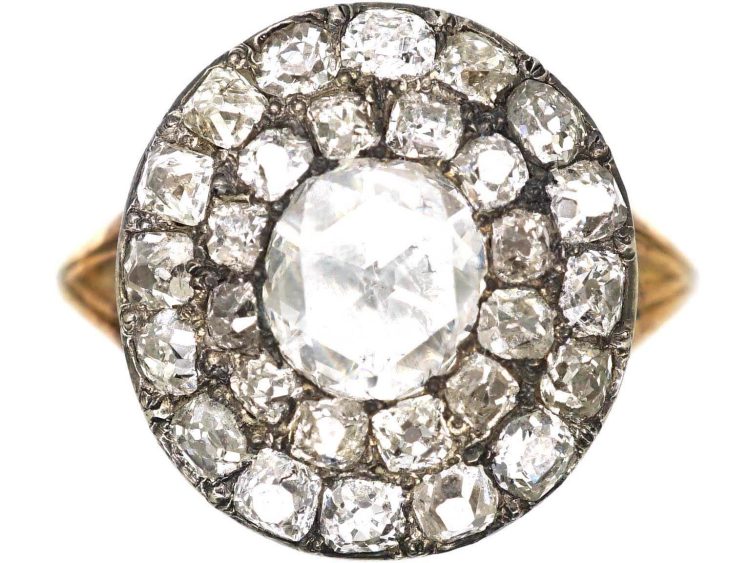
Condition. Old stones often have small chips around the girdle from two centuries of wear. Minor ones are acceptable; larger ones affect value.
Recutting. Some old mine cuts have been recut to look more modern, losing much of what made them special. We would always choose an untouched stone.
Our view
An old mine cut is the most romantic diamond there is, and the most individual: no two are the same. We would choose one for its life and character rather than its grading report, and set in the style of its own period. See our antique diamond engagement rings.