Diamond Engagement Rings
 Sapphire Engagement Rings
 Emerald Engagement Rings
 Ruby Engagement Rings
 Rings
Rings
 Earrings
 Necklaces
 Brooches
 Bracelets & Bangles
 Cufflinks
 Pendants
 Chains
 Tie Pins
 Lockets
 Charms
 Signet Rings
 Seals
Seals
 Curiosities
 UK / £
 USA / $
 AU / $


 Experts since 1975

-
Your Shopping Bag is empty

 Free Worldwide Delivery
 View All
 Diamond
 Sapphire
 Emerald
 Ruby
Ruby


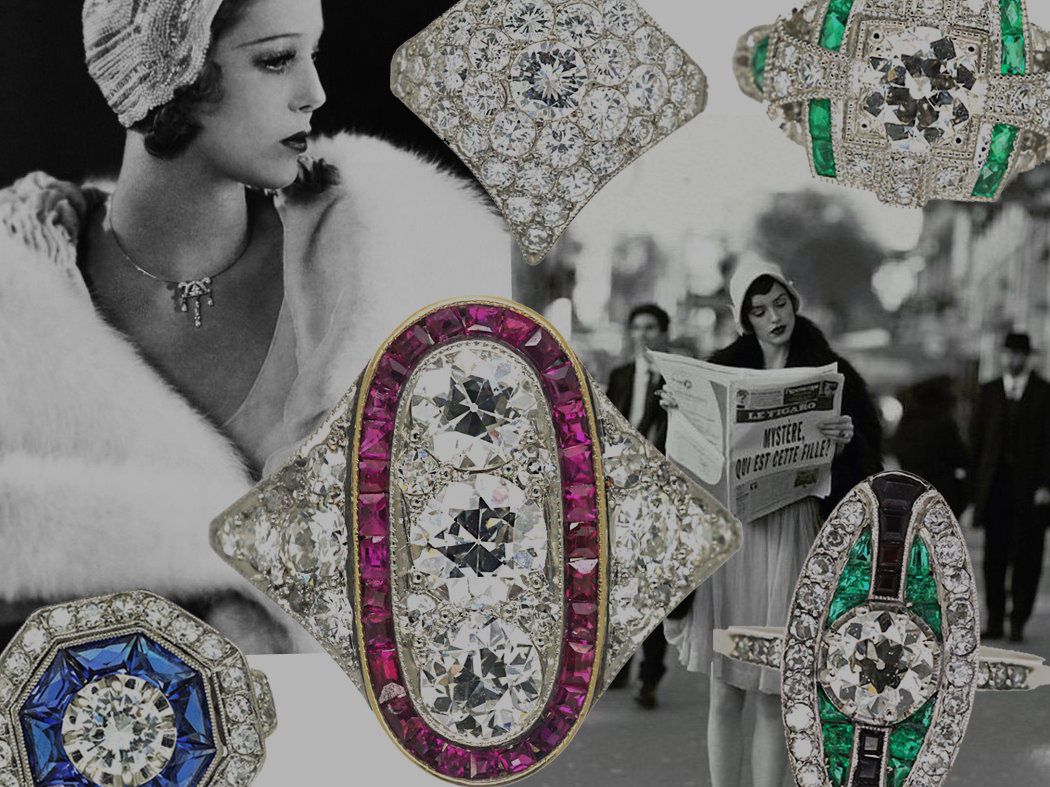

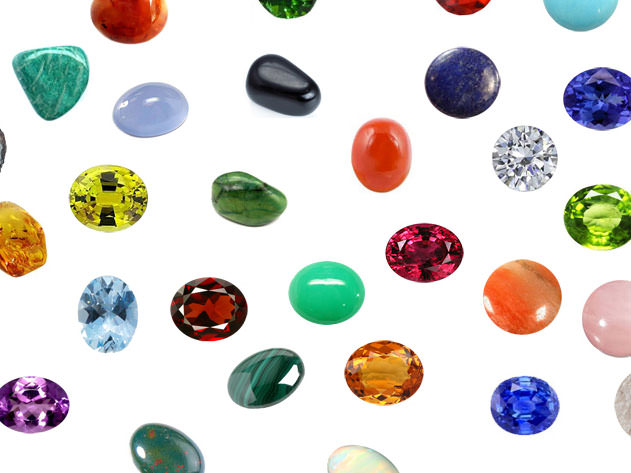


Marcasite Jewellery: A Collector’s Guide
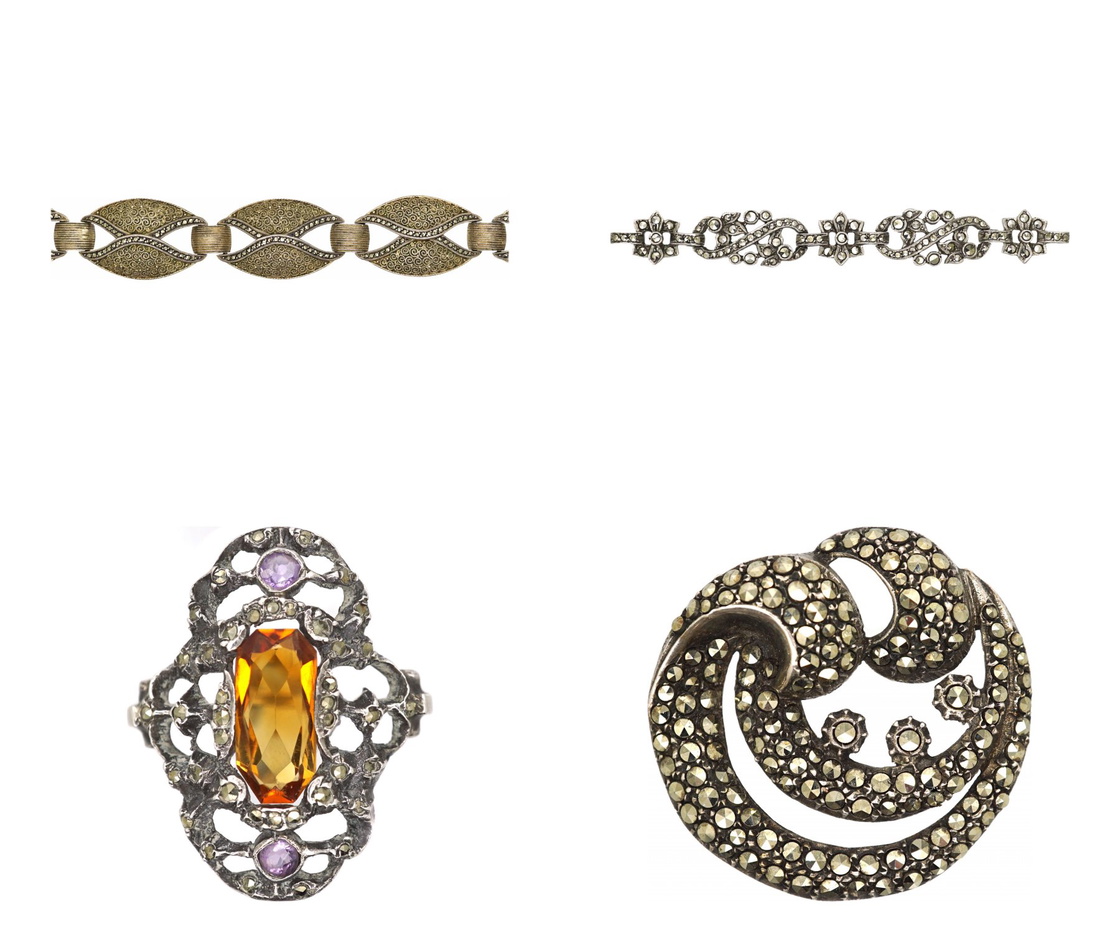
Marcasite jewellery has an image problem. For many people it means mass-produced silver brooches from the 1950s onwards, and plenty of it is exactly that. But at its best, in the eighteenth century and again in the 1920s and 1930s, it produced some of the most elegant and wearable jewellery of its time. We think the good pieces are still underrated.
What marcasite actually is
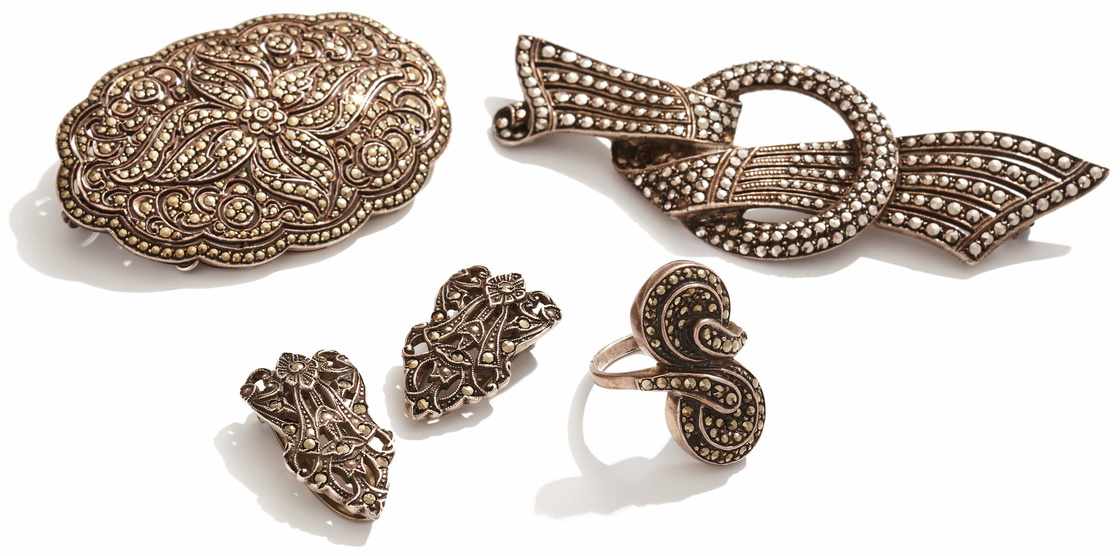
The name is a misnomer. The stones sold as marcasite are almost always pyrite, a form of iron sulphide. True marcasite has the same chemistry but a different crystal structure, and it is unstable, slowly crumbling over time, so it is useless for jewellery. Pyrite, whose name comes from the Greek for fire because it strikes sparks, is hard and holds its polish.
It is cut into tiny stones with a flat back and a few facets, then set closely together so the whole surface glitters. The effect is a soft, grey sparkle quite unlike diamond, and to our eye rather more interesting.
The Georgian beginnings
In the eighteenth century marcasite sat alongside paste and cut steel as an affordable alternative to diamonds, set in silver in buckles, brooches and earrings. Good Georgian marcasite is scarce today and much sought after.
The Victorians
It is often said that marcasite was a mourning jewel. In our experience that is overstated. Jet, onyx and black enamel dominated true mourning jewellery; marcasite appears more in half-mourning and in everyday silver pieces of the period.
Art Deco: marcasite at its best
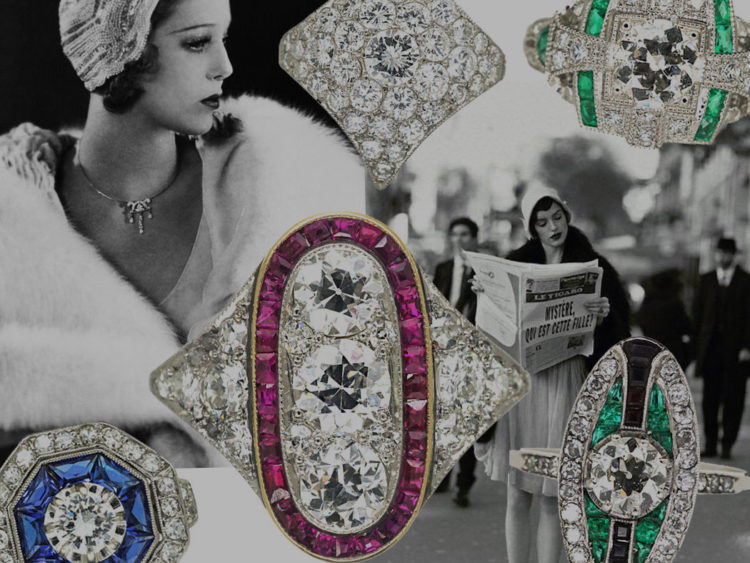
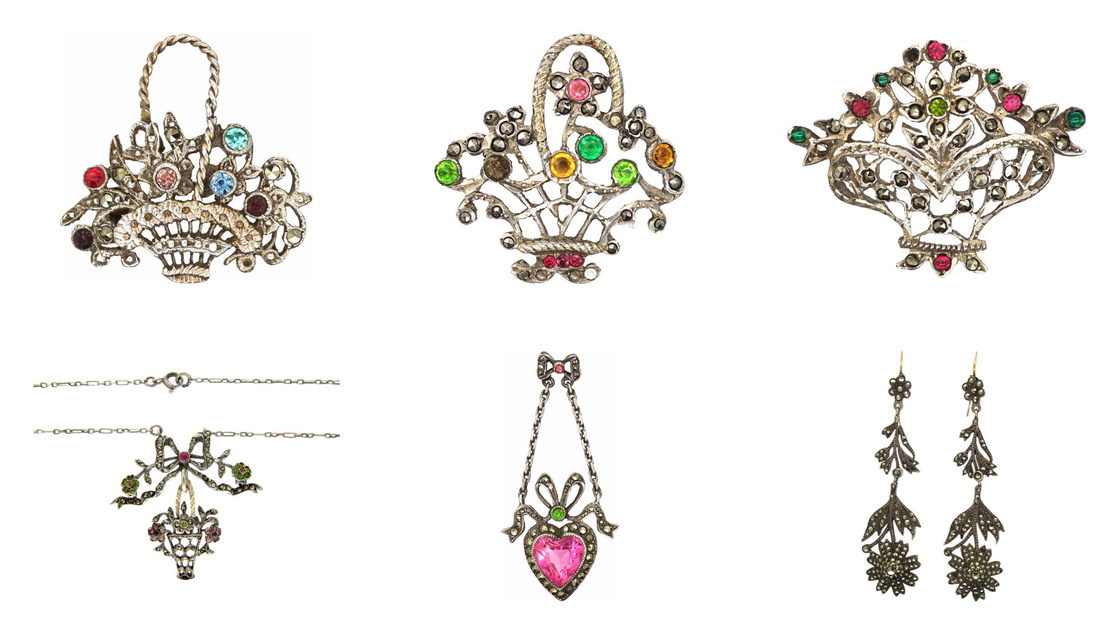
Marcasite’s great moment came in the 1920s and 1930s. Its crisp sparkle suited the geometric lines of Art Deco perfectly, and jewellers combined it with silver, onyx, chrysoprase, carnelian and enamel. German makers in Pforzheim led the way, above all Theodor Fahrner, whose pieces are among the finest ever made in the material. French and English makers produced excellent work too.

What we look for
Set, not glued. Good marcasite is set: each stone is held by tiny beads of metal raised from the silver. Many later pieces have glued stones, which work loose. A loupe will show you which you have.
Missing stones. A few replacements are normal and acceptable if they match. Large gaps make a piece look tired.
The silver and marks. Look for sterling or, on German pieces, 935 silver marks, and for Fahrner’s “TF” in a circle, which commands a considerable premium.
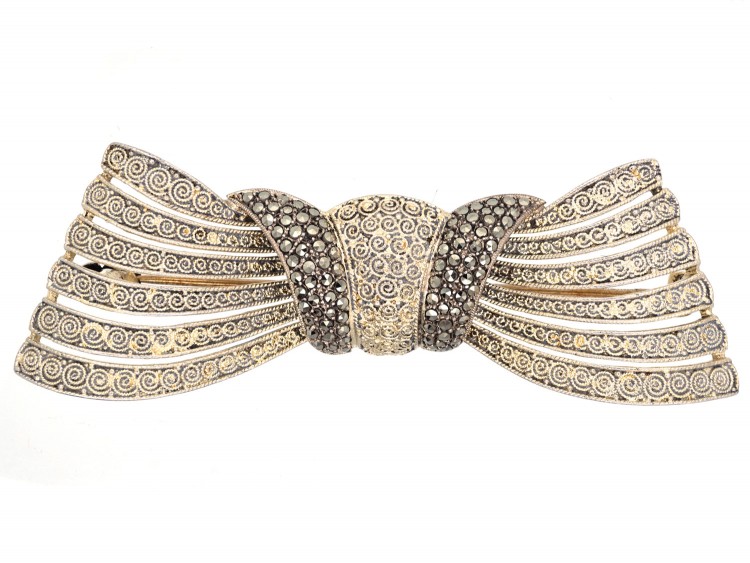
The design. Geometric Deco pieces with a coloured stone are the most sought after, and deservedly so.
Care. Never soak marcasite. Water can dull the stones and loosen any that are glued. A soft, dry cloth is all it needs.
Our view
The best place to start is a well-set 1920s or 1930s silver and marcasite piece with a coloured stone, complete and in good order. For a modest sum it gives you genuine period design and real craftsmanship. We would rather own one excellent Deco piece than a drawer of later souvenirs.