Diamond Engagement Rings
 Sapphire Engagement Rings
 Emerald Engagement Rings
 Ruby Engagement Rings
 Rings
Rings
 Earrings
 Necklaces
 Brooches
 Bracelets & Bangles
 Cufflinks
 Pendants
 Chains
 Tie Pins
 Lockets
 Charms
 Signet Rings
 Seals
Seals
 Curiosities
 UK / £
 USA / $
 AU / $


 Experts since 1975

-
Your Shopping Bag is empty

 Free Worldwide Delivery
 View All
 Diamond
 Sapphire
 Emerald
 Ruby
Ruby





Theodor Fahrner Jewellery: A Collector’s Guide
Theodor Fahrner is not a household name in the way Cartier or Lalique are, but among dealers and collectors of Art Nouveau and Art Deco jewellery his mark is one of the most welcome sights there is. He made modern, artist-designed jewellery in silver, affordable enough to be worn by thousands of women, and made it better than almost anyone. We always have a few pieces in the collection, and they rarely stay long.
Pforzheim, the Golden City
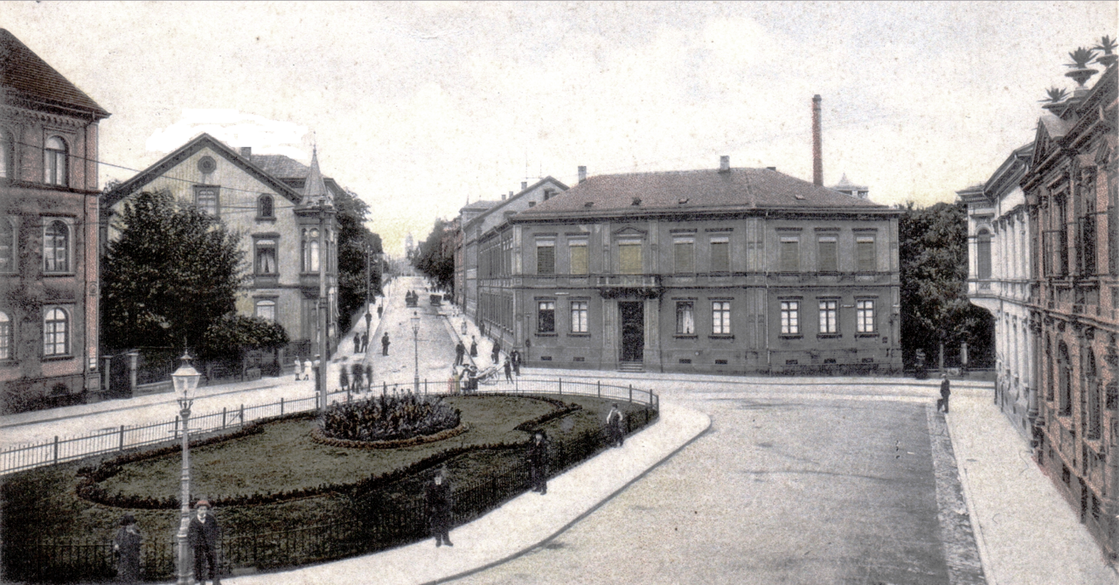
Fahrner was born in 1859 in Pforzheim, the town in south-west Germany whose jewellery trade earned it the name Goldstadt, the Golden City. His father ran a ring-making business there, and after training as a steel engraver Theodor took it over in 1883. Within twenty years he had turned a conventional workshop into one of the most progressive jewellery firms in Europe.
Fahrner and Jugendstil
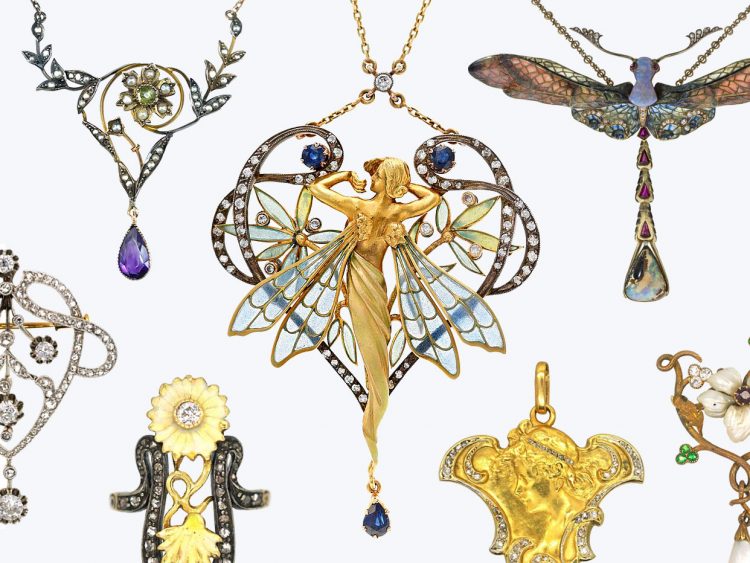
At the turn of the century, the German form of Art Nouveau, Jugendstil, was more restrained than its French cousin: flowing lines, but with a leaning towards stylised, almost architectural forms. Fahrner embraced it wholeheartedly. Rather than gold and diamonds, he worked mostly in silver, set with enamel and inexpensive stones chosen for their colour, such as chalcedony, turquoise, citrine and amethyst. The result was jewellery with the design quality of an artist’s piece at a fraction of the price.
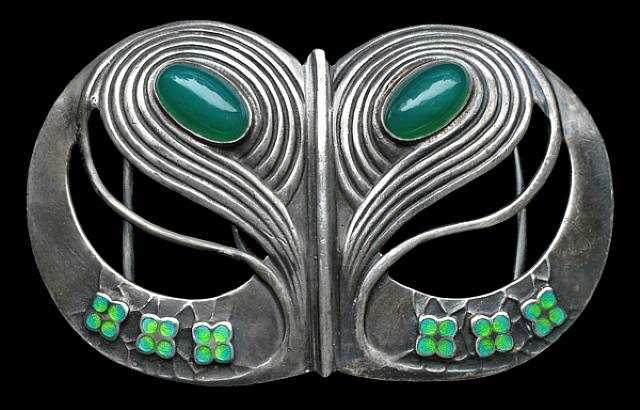
A good early example is this Art Nouveau silver and citrine pendant by Fahrner: simple, graphic and entirely of its moment.
A sense of play
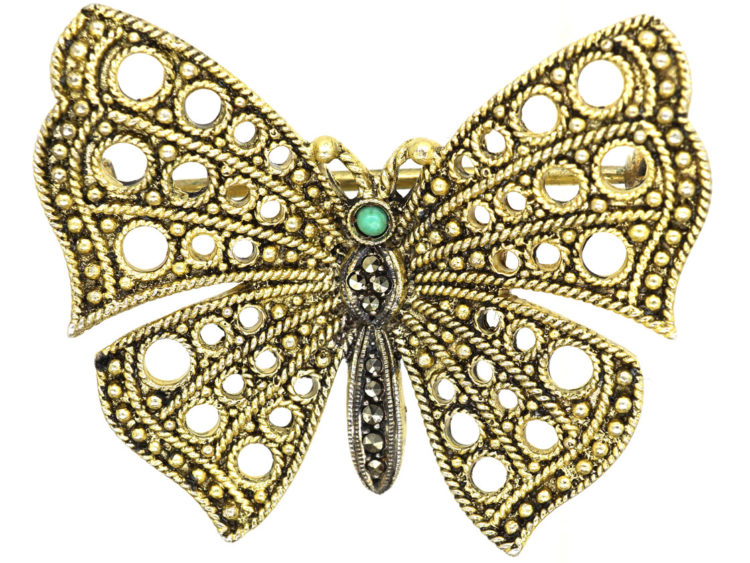
What sets Fahrner apart from many of his contemporaries is a lightness of touch. Butterflies, birds, stylised flowers and bold abstract shapes appear throughout his work, often in combinations of colour that still feel fresh today. There is a wit to the best Fahrner jewellery, and it is one of the reasons we find it so easy to wear.
The designers behind the mark
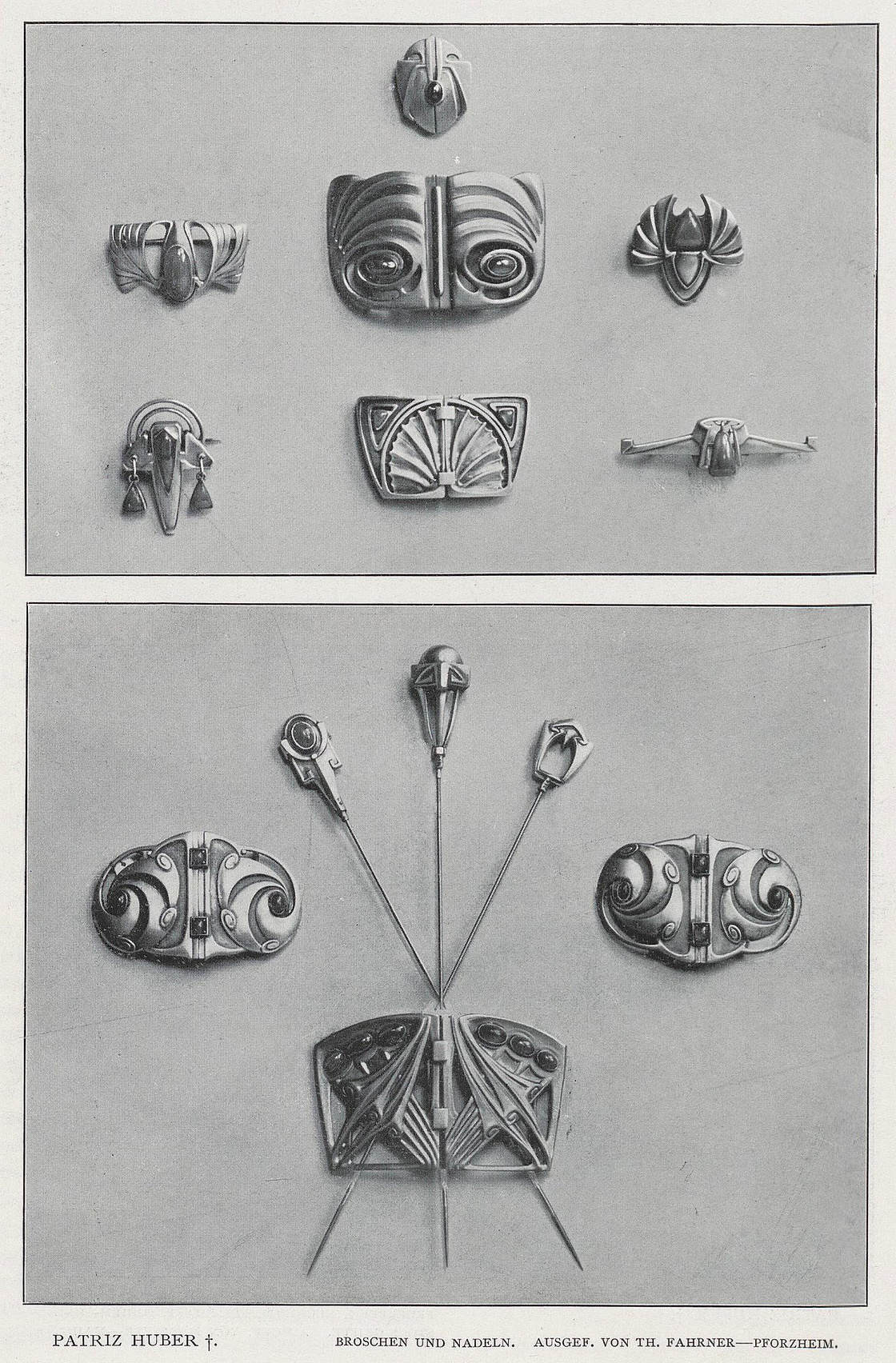
Fahrner did much of his own design work around 1900, but he also commissioned leading artists of the day, including Patriz Huber and other members of the Darmstadt artists’ colony. The firm’s work was shown at the great exhibitions and sold across Europe, and in Britain much of it was retailed by Murrle, Bennett & Co., whose name often appears alongside Fahrner’s on pieces sold here. This set of silver and turquoise buttons by Fahrner, retailed by Murrle Bennett, is a perfect example of that partnership.
Fahrner in the Art Deco years
Theodor Fahrner died in 1919, and the firm was bought by the Pforzheim jeweller Gustav Braendle, who continued it under the Fahrner name. In the 1920s and 1930s it became one of the leading makers of Art Deco costume jewellery: geometric silver, often gilded, set with marcasite, onyx, chrysoprase, lapis and enamel. These are the pieces most people now think of as “Fahrner”, and they include some of the finest marcasite jewellery ever made. The firm continued until 1979.
What we look for
The mark. Genuine pieces are usually marked with the initials TF in a circle, often with “Original Fahrner” on later work, and German silver standards such as 935 or 925. Marks can be worn on older pieces, so we look at the construction as well.
The design. Fahrner’s designs are crisp and considered. Soft, blurred detail or clumsy proportions suggest a copy or a lesser maker.
The stones and marcasite. On Art Deco pieces, the marcasite should be set, not glued, and coloured stones well matched. A few replacements are acceptable; large gaps are not.
Gilding and enamel. Original gilding and enamel in good condition add considerably to value, as they cannot be convincingly restored.
Fahrner is what I show people when they tell me antique jewellery is out of their reach. It’s real design, beautifully made, and you can wear it with a white shirt on a Tuesday.
Olly Gerrish, AJC Founder
Why Fahrner still matters
Fahrner proved that modern design did not have to be exclusive. His jewellery brought the ideas of the Jugendstil and Art Deco avant-garde to women who could never have commissioned a piece from a great house, and it did so without compromising on quality. That democratic spirit is exactly why his work feels so relevant now.
Our view
If you are starting a collection of early twentieth-century jewellery, Fahrner is one of the best places to begin. We would choose an Art Deco silver and marcasite bracelet or brooch with a coloured stone, well marked and complete. It gives you genuine period design by a named maker, beautifully made, for a fraction of what comparable pieces by the great Paris houses would cost.
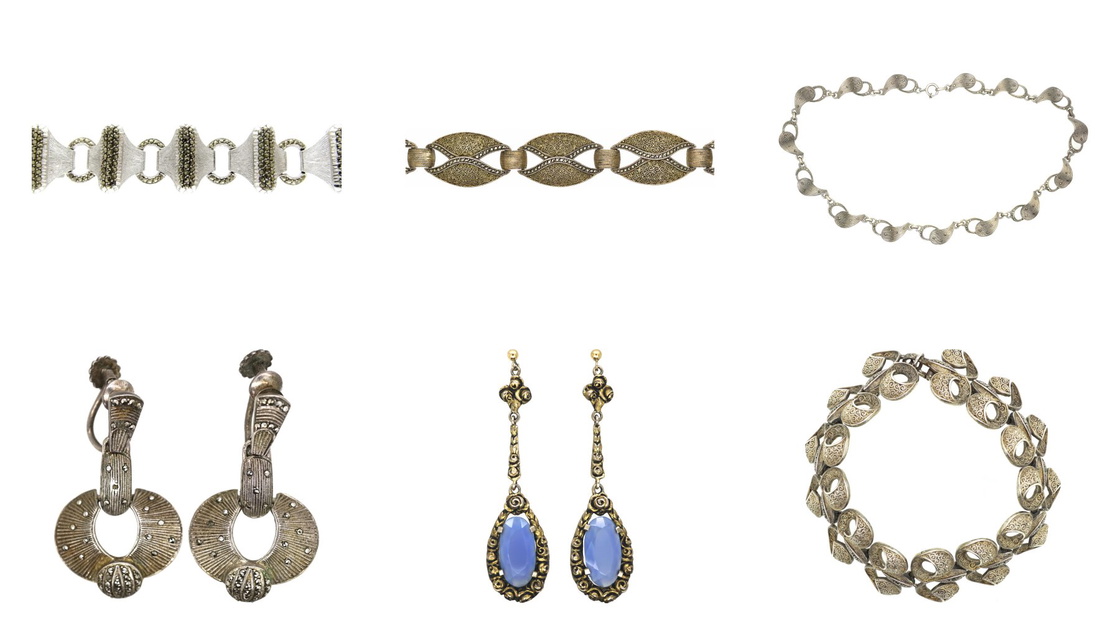
Browse our collection of Art Deco, Art Nouveau, and beyond online. Or better yet, book an appointment to see it in person. Continue the story.
Explore the collection
- Marcasite jewellery
- Art Nouveau jewellery
- Art Deco jewellery
- Antique brooches
- Antique bracelets & bangles