Diamond Engagement Rings
 Sapphire Engagement Rings
 Emerald Engagement Rings
 Ruby Engagement Rings
 Rings
Rings
 Earrings
 Necklaces
 Brooches
 Bracelets & Bangles
 Cufflinks
 Pendants
 Chains
 Tie Pins
 Lockets
 Charms
 Signet Rings
 Seals
Seals
 Curiosities
 UK / £
 USA / $
 AU / $


 Experts since 1975

-
Your Shopping Bag is empty

 Free Worldwide Delivery
 View All
 Diamond
 Sapphire
 Emerald
 Ruby
Ruby





Two-Stone Toi et Moi Engagement Rings: A Collector’s Guide
A two-stone ring says something a solitaire cannot: two people, side by side. The French call it toi et moi, “you and me”, and it has been one of the most romantic designs in jewellery for more than two centuries. It is also one of our favourite rings to handle, because no two old examples are quite alike.
Napoleon, Joséphine and the first famous toi et moi
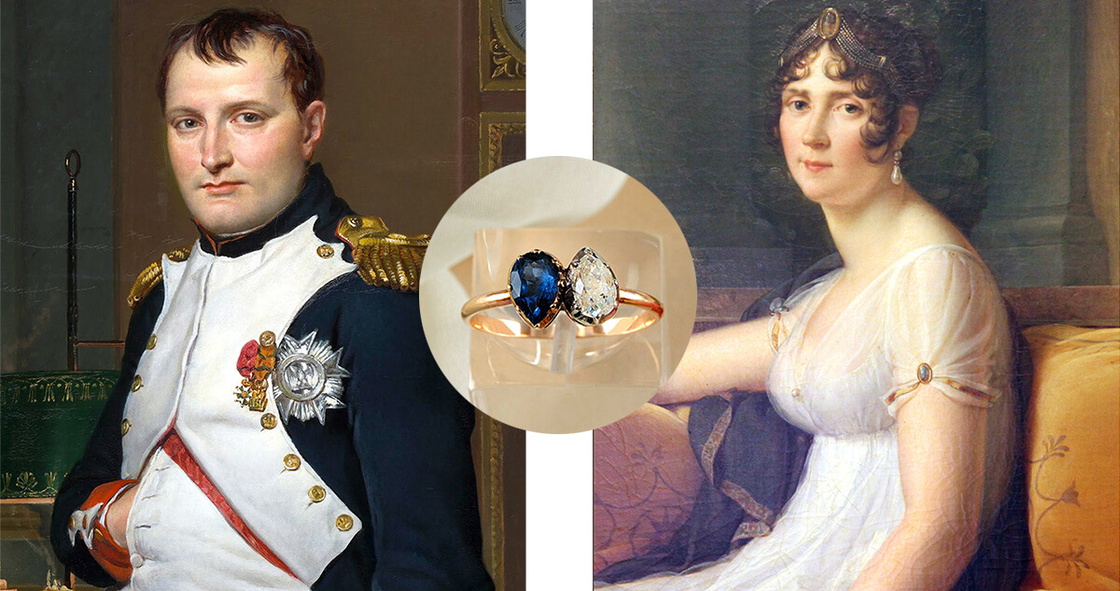
The design’s most famous early example is the ring Napoleon Bonaparte gave Joséphine de Beauharnais in 1796: a simple gold band set with a pear-shaped sapphire and a pear-shaped diamond, each of around a carat, facing one another. It is a modest ring by later standards, which is part of its charm. When it came up for auction in France in 2013 it sold for close to €900,000.
Victorian and Edwardian crossover rings
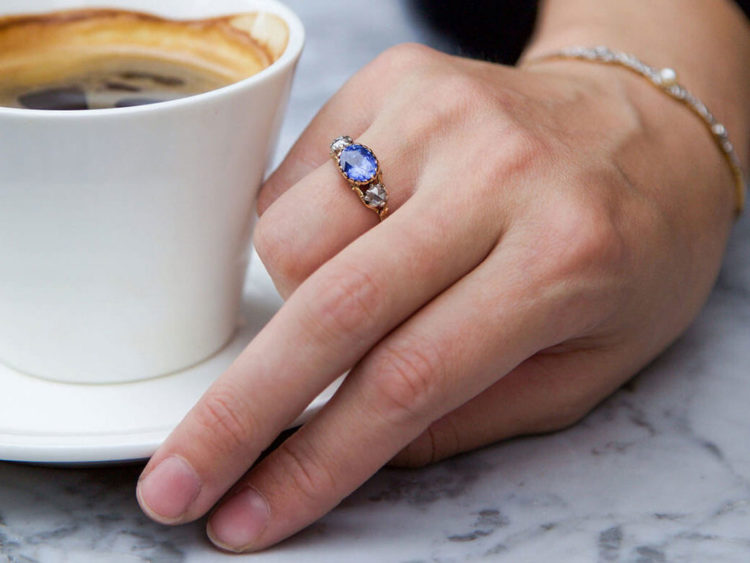
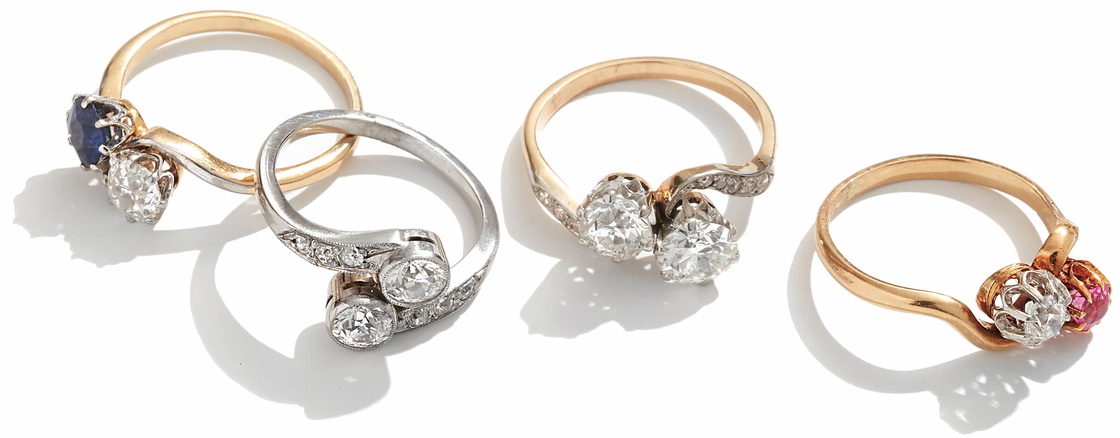
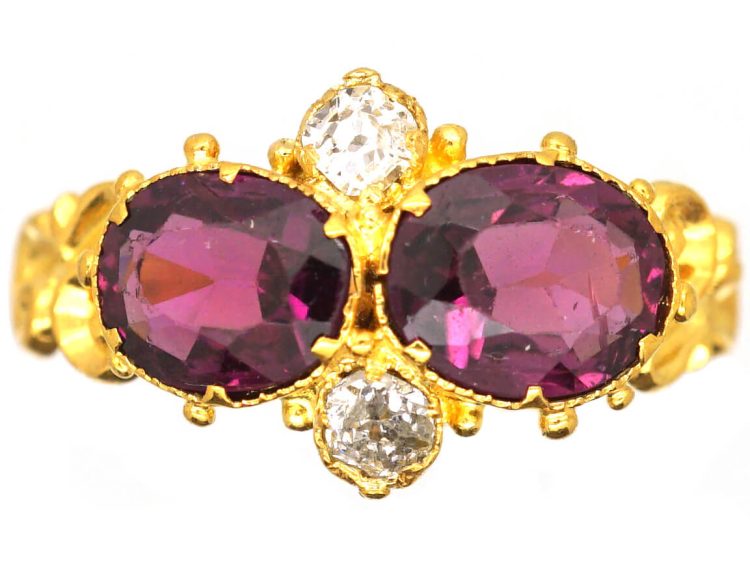
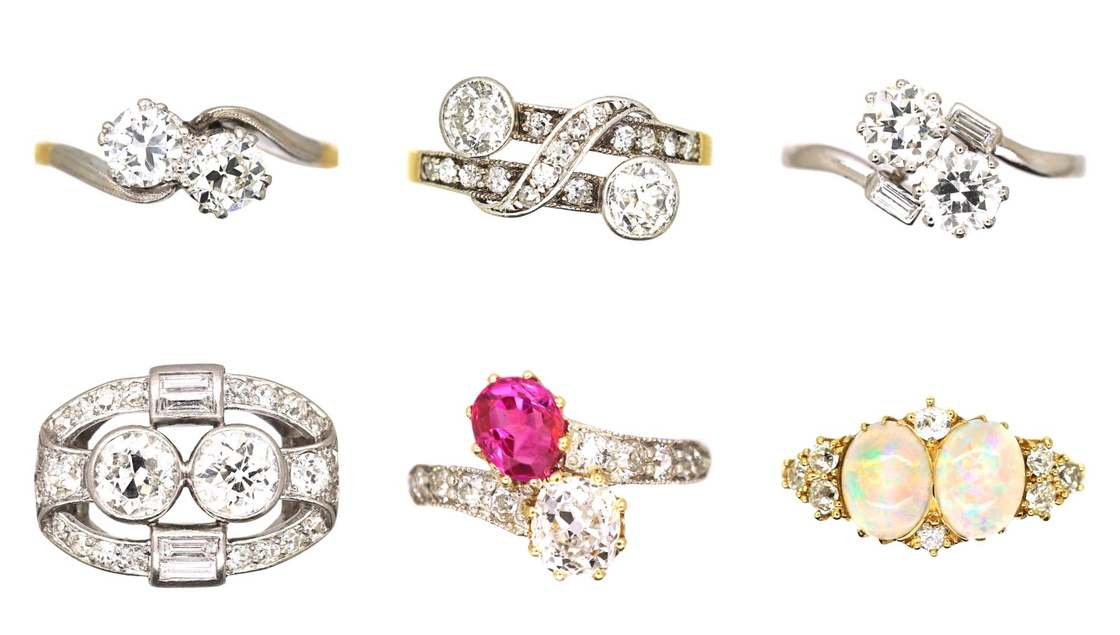
Through the nineteenth century the two-stone ring settled into its classic form, the crossover, where the band sweeps past itself and each end holds a stone set on the diagonal. Early Victorian examples often pair a diamond with a garnet or another coloured stone, set in gold with closed or collet settings.
The Edwardians refined it. Platinum, and platinum-topped gold, allowed fine claws and millegrain edges, and the typical Edwardian toi et moi pairs two old-cut diamonds, sometimes with small diamonds on the shoulders. These are the rings we see most often, and they remain the best value in the field.
Art Deco and the twentieth century
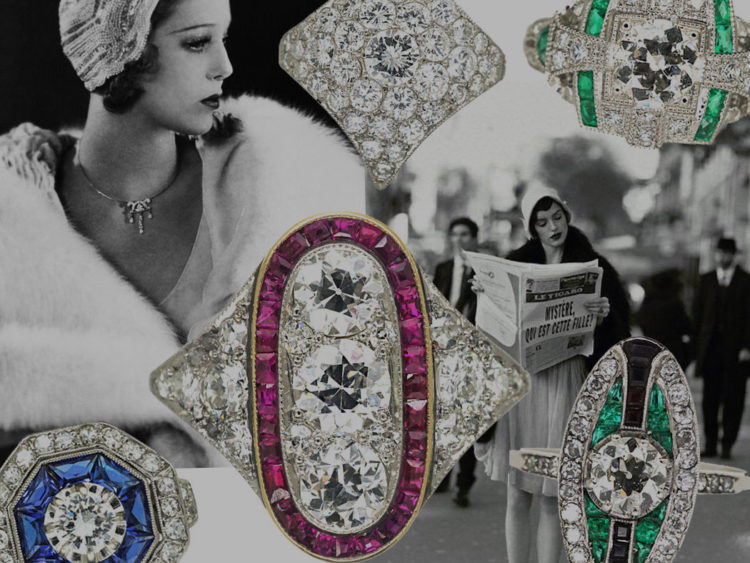
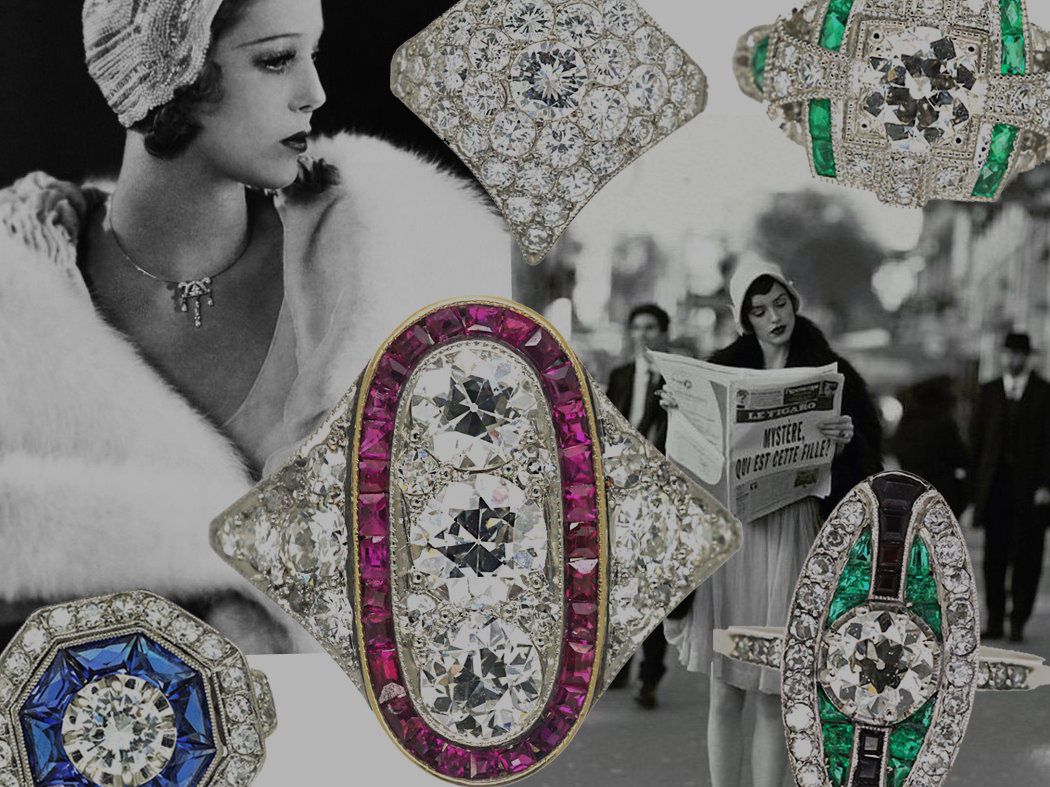
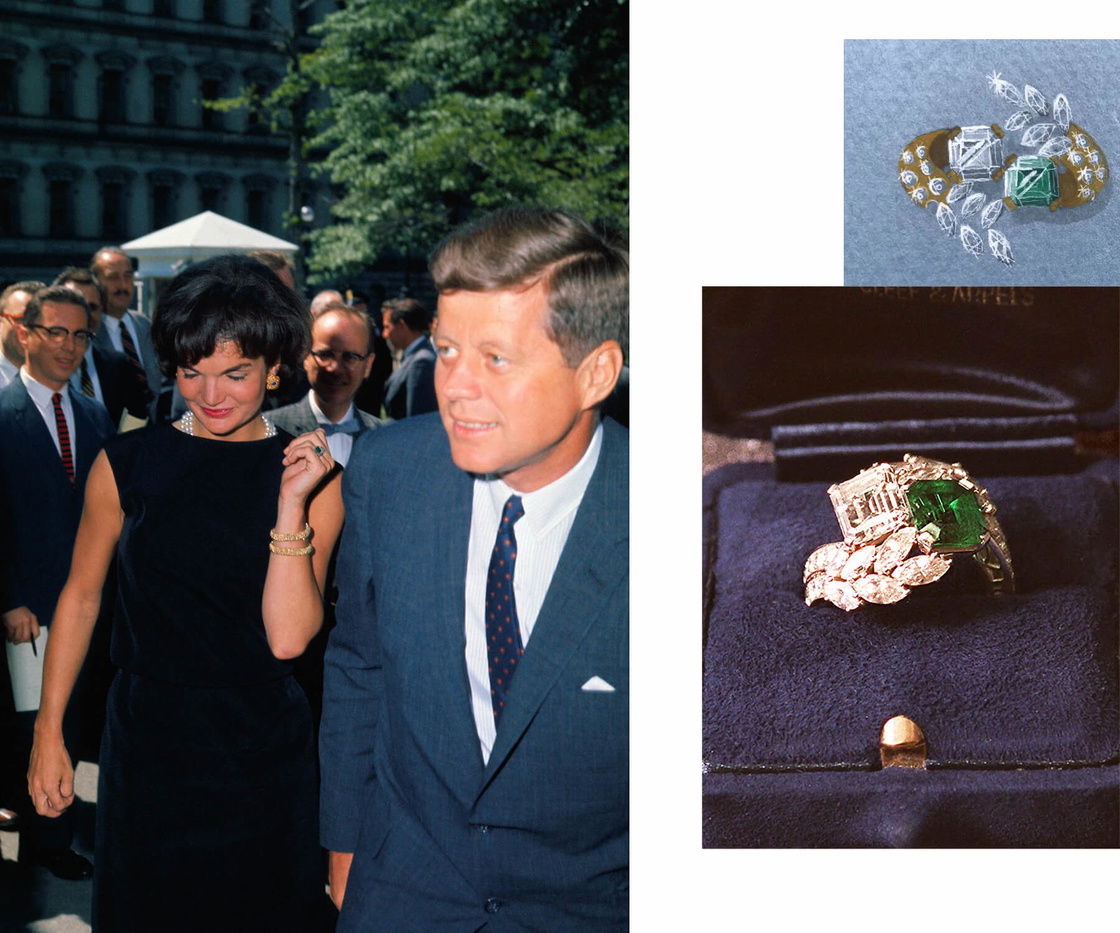
In the 1920s and 1930s the crossover became sharper and more geometric: step-cut and baguette diamonds on the shoulders, calibré-cut coloured stones, and settings in platinum. Jacqueline Kennedy’s engagement ring from John F. Kennedy, made by Van Cleef & Arpels in 1953, set a diamond and an emerald of nearly three carats each side by side, and did a great deal to keep the style fashionable.
The modern revival
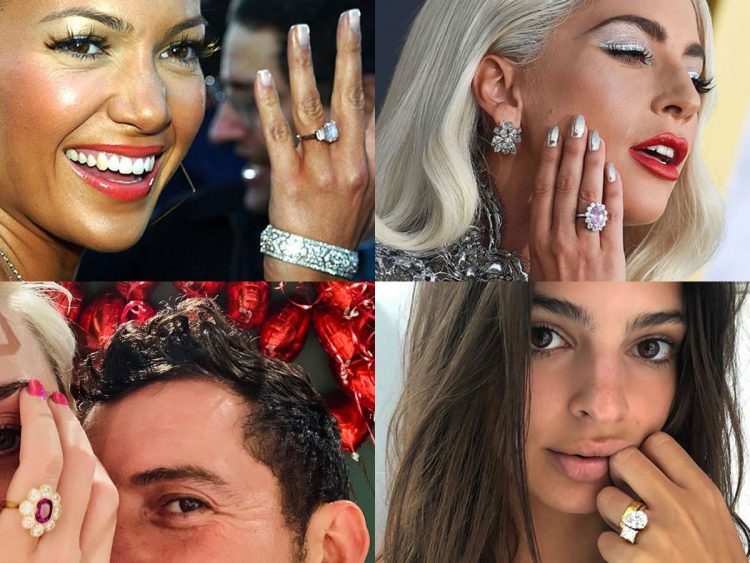
The toi et moi has returned strongly over the past few years. Ariana Grande chose a diamond and pearl ring, Emily Ratajkowski a pear and princess-cut diamond pair, and Megan Fox an emerald and diamond ring designed by Stephen Webster. What they share is the sense of two distinct stones making one ring, which is exactly what the antique versions have always done.
What we look for
Balance. The two stones should either match closely or contrast deliberately. A near-match that isn’t quite right is the least satisfying of all.
The crossover. Look closely where the band divides and passes the stones. That is where old rings wear and where repairs show.
The claws. Two stones set on the diagonal present more exposed edges than a solitaire. Worn claws should be rebuilt before a ring is worn every day.
The stones for everyday wear. Diamonds, sapphires and rubies are hard enough for daily wear. Opals, pearls and emeralds are lovely, but need more care on the hand.
Our view
If we were choosing a two-stone engagement ring, it would be an Edwardian platinum-topped crossover with a pair of old-cut diamonds. It has the history and the romance of the style at its best, it is practical enough to wear every day, and it costs considerably less than a modern ring of the same presence.
Shop our two-stone and toi et moi rings · Book a viewing at the Townhouse
Explore the collection
- Antique engagement rings
- Diamond engagement rings
- Crossover rings
- Sapphire engagement rings
- Victorian engagement rings