Diamond Engagement Rings
 Sapphire Engagement Rings
 Emerald Engagement Rings
 Ruby Engagement Rings
 Rings
Rings
 Earrings
 Necklaces
 Brooches
 Bracelets & Bangles
 Cufflinks
 Pendants
 Chains
 Tie Pins
 Lockets
 Charms
 Signet Rings
 Seals
Seals
 Curiosities
 UK / £
 USA / $
 AU / $


 Experts since 1975

-
Your Shopping Bag is empty

 Free Worldwide Delivery
 View All
 Diamond
 Sapphire
 Emerald
 Ruby
Ruby





A Guide to Antique Engagement Ring Settings
The setting is the part of a ring most people notice last, but it is often what tells you most about when and how a ring was made. Each period of antique jewellery had its own ways of holding a stone, and learning to recognise them is one of the quickest ways to understand, and date, an antique engagement ring.
1. The Victorian era (1837–1901)
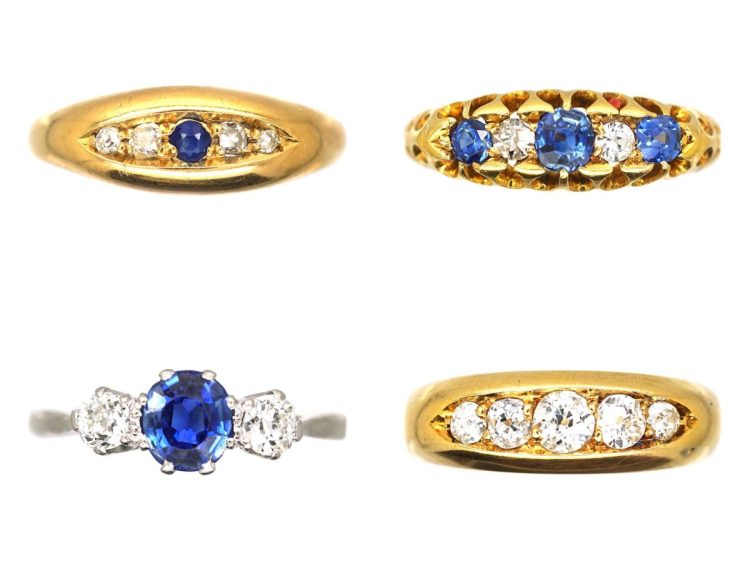
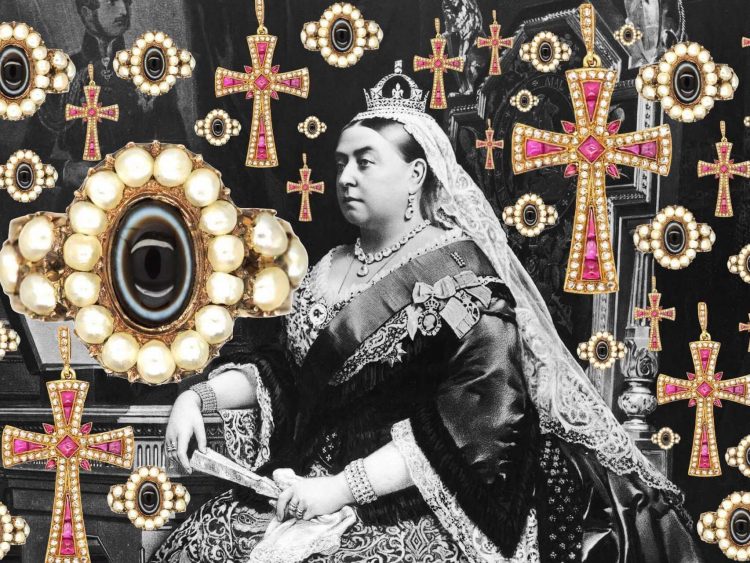
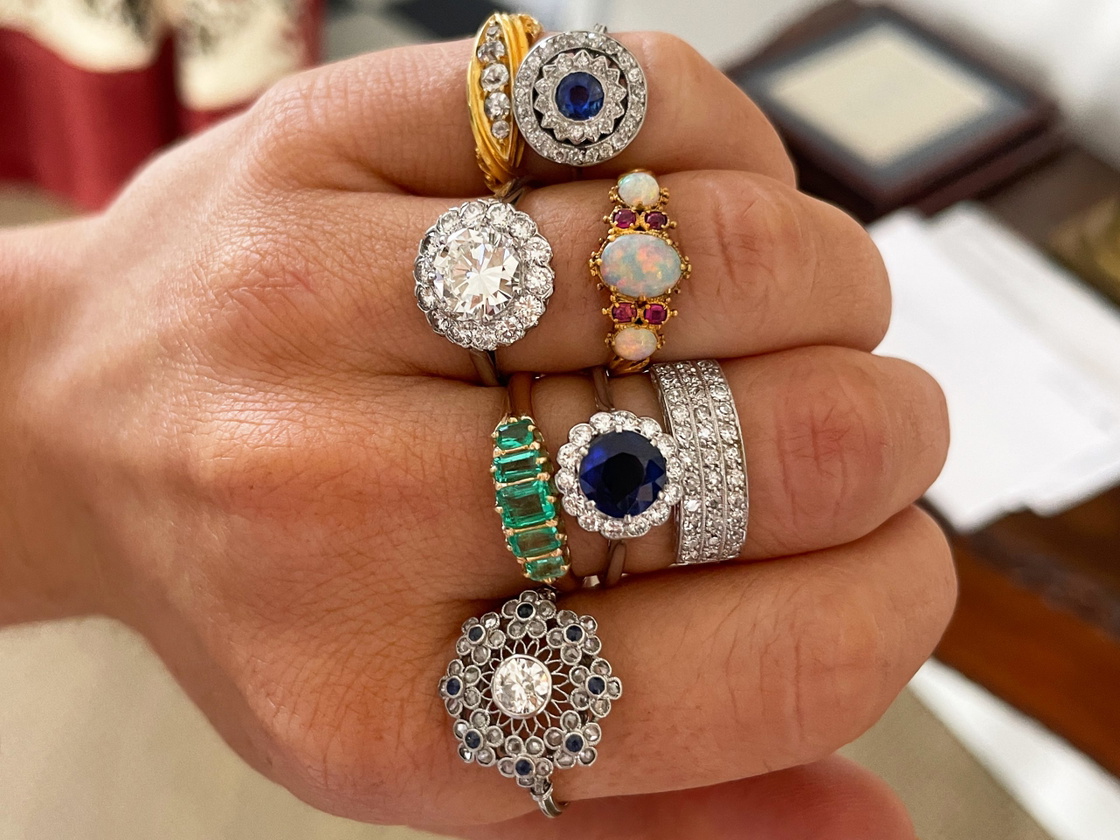
Victorian engagement rings were usually made in 18ct or 15ct yellow gold, with the stones in claws or set into the gold itself. The most popular settings were:
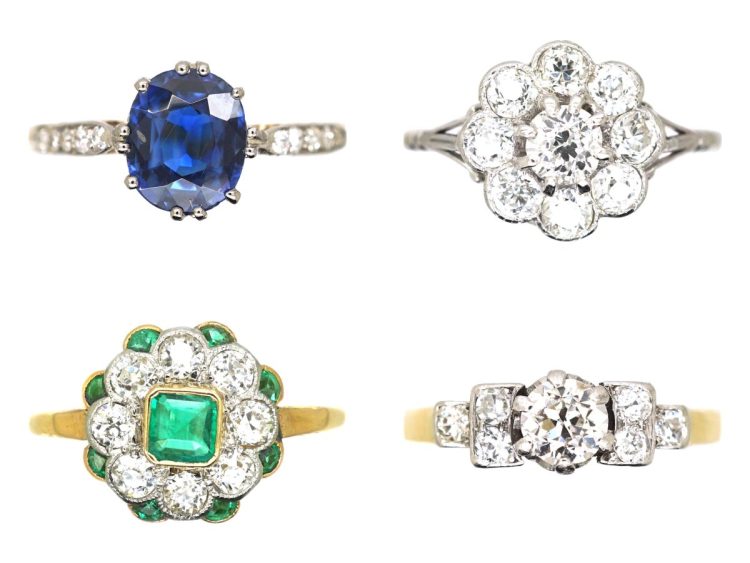
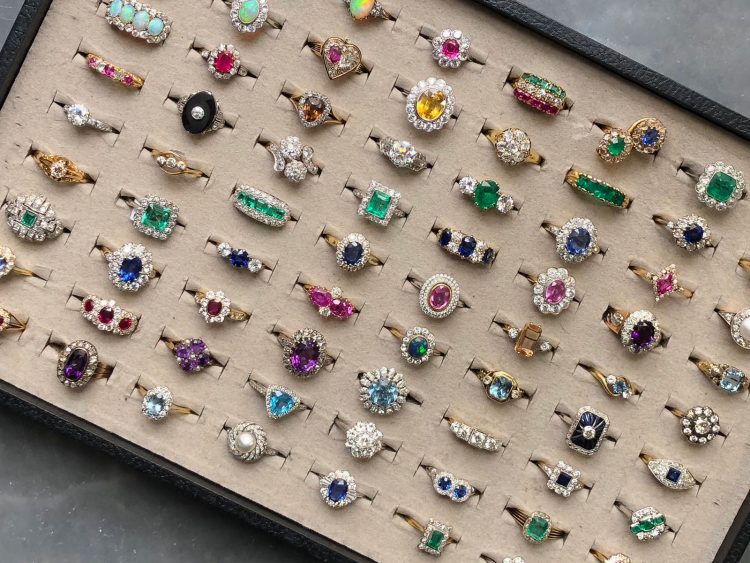
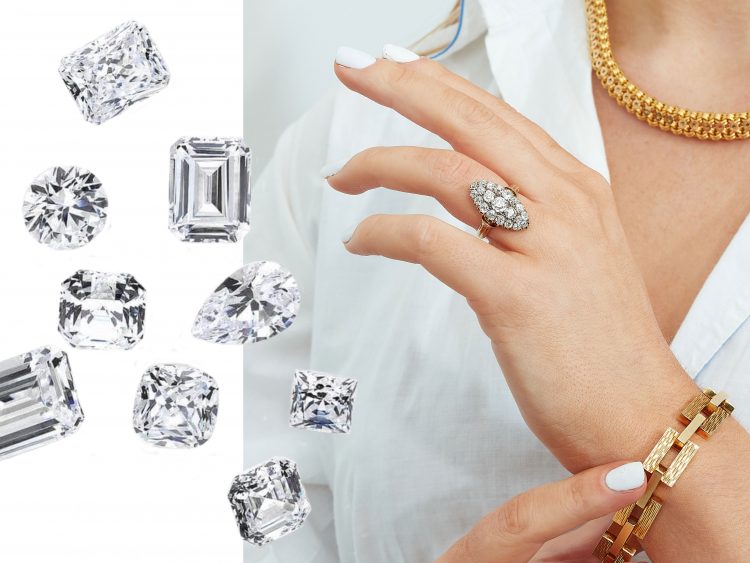
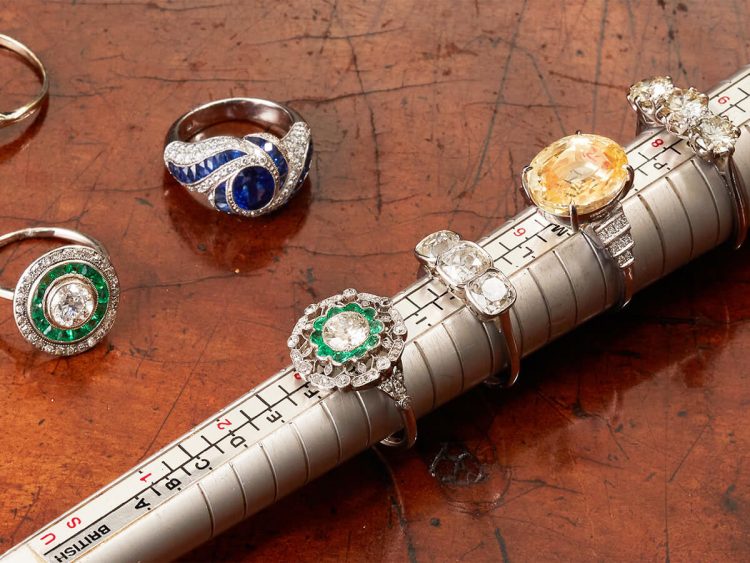
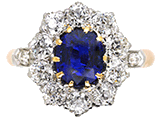
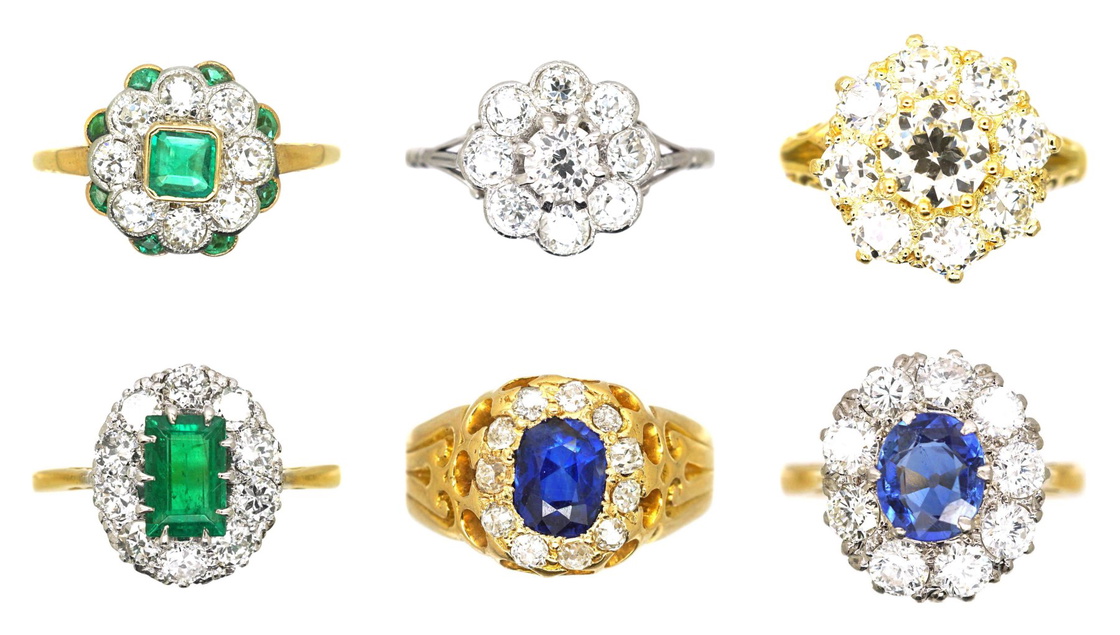
Cluster settings, where small stones surround a centre stone to make a larger, flower-like shape, like this Victorian diamond cluster ring.
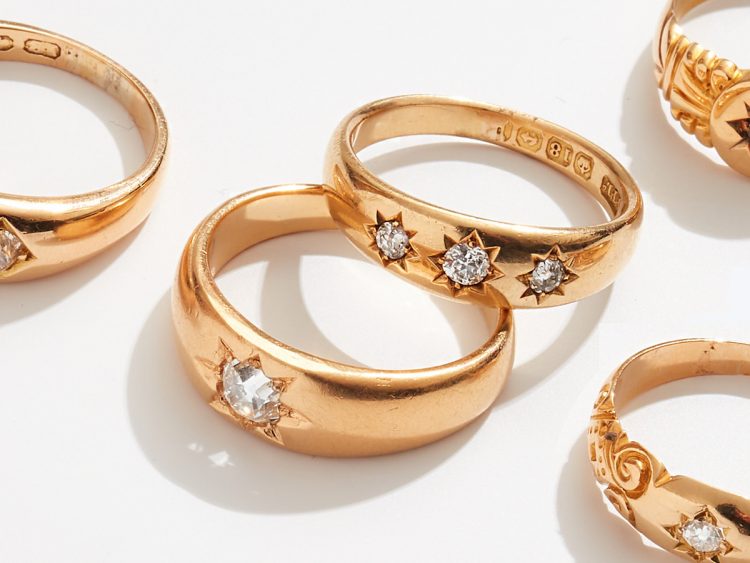
Rub-over settings, in which each stone sits in a smooth collar of gold, as in the classic three- and five-stone gypsy rings.
Carved half hoops, with a row of stones set into a gold band carved with scrolls between them.
Pavé settings, especially of turquoise and pearls.
2. The Edwardian era (1901–1910)
The Edwardians had platinum, and it transformed ring making. Strong enough to be used very finely, it allowed jewellers to hold diamonds in delicate claws with millegrain edges, tiny beaded borders that make each stone look larger and brighter. Mounts became lighter and lacier, often with pierced galleries underneath, and many rings combined a platinum top with an 18ct gold shank.
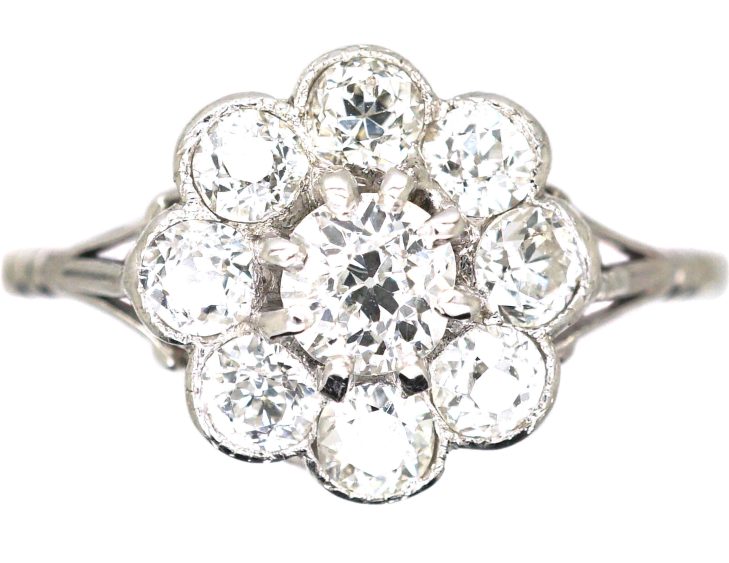
3. Art Nouveau (1890–1910)
Art Nouveau jewellers were more interested in design than in big stones. Settings followed natural, flowing lines, stones were chosen for colour rather than value, and enamel often played as large a part as any gem. Art Nouveau engagement rings are rare, and among the most individual rings of all.
4. Art Deco (1920s–1930s)
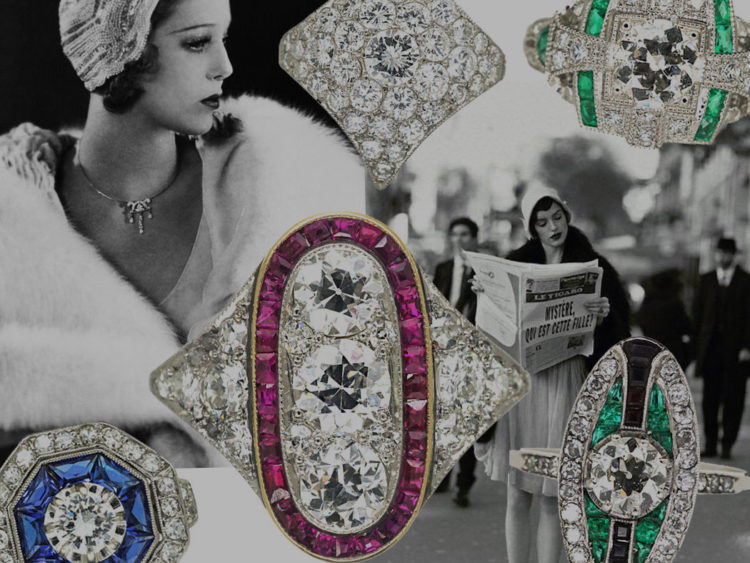
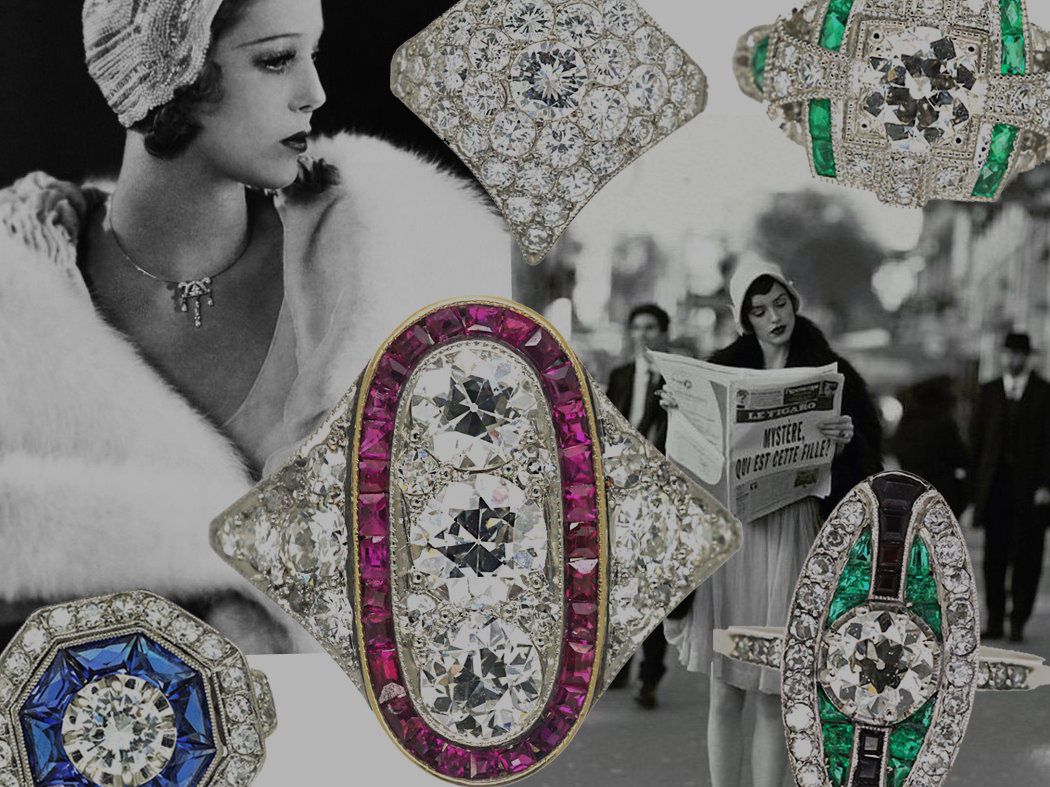
Art Deco settings are all about geometry. Stones were set in crisp platinum mounts with clean lines, often with baguette or calibré-cut stones on the shoulders, channel-set rows of diamonds, and illusion settings that made a small diamond look larger. The effect is bright, white and architectural.
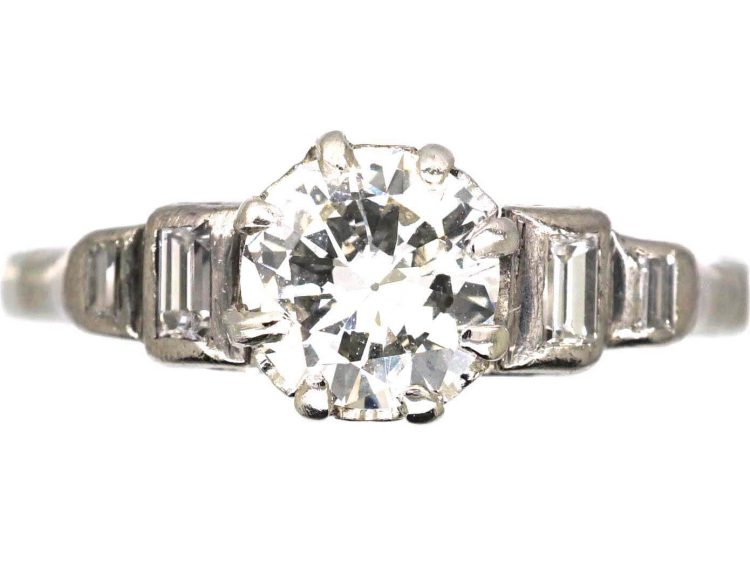
5. The Retro era (1940s–1950s)
After the war, jewellers returned to gold, often rose or two-colour gold, and settings became bolder and more sculptural. Stones were raised in high, stepped mounts or surrounded by scrolls and ribbons of gold, giving Retro rings a glamorous, almost cinematic look.
Turn a ring over before you fall in love with it. A beautifully made gallery underneath tells you a jeweller took real care over the whole ring, not just the part you see.
Olly Gerrish, AJC Founder
What we look for
Whatever the period, we look at how securely the stones are held, how worn the claws or collars are, and whether the setting is original. Many antique rings have been repaired or re-tipped over the years, which is perfectly normal, but a setting that doesn’t match the period of the ring is worth asking about.
Our view
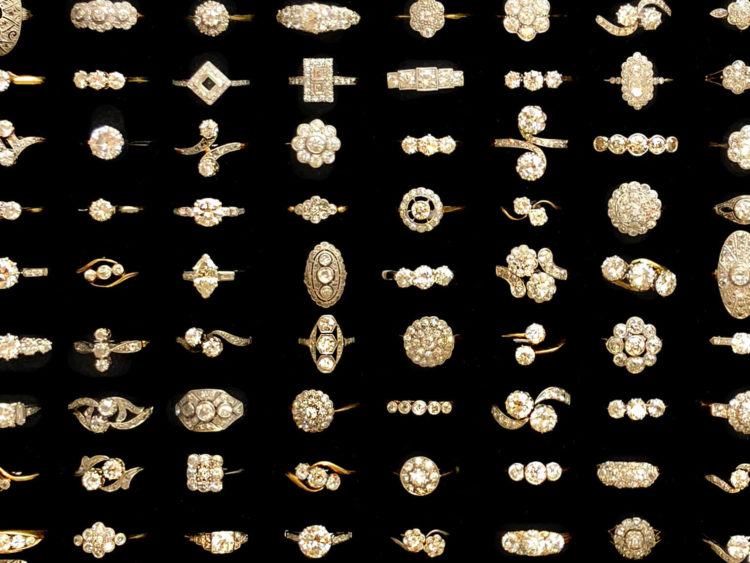
If we had to choose one period for its settings, it would be the Edwardian: fine platinum claws, millegrain edges and airy galleries have never been bettered. But every period has its own beauty, and the best way to find yours is to try rings from each of them on. See our cluster rings, Edwardian engagement rings and Art Deco engagement rings.
Explore the collection
- Cluster rings
- Carved half hoops
- Victorian engagement rings
- Edwardian engagement rings
- Art Deco engagement rings