Diamond Engagement Rings
 Sapphire Engagement Rings
 Emerald Engagement Rings
 Ruby Engagement Rings
 Rings
Rings
 Earrings
 Necklaces
 Brooches
 Bracelets & Bangles
 Cufflinks
 Pendants
 Chains
 Tie Pins
 Lockets
 Charms
 Signet Rings
 Seals
Seals
 Curiosities
 UK / £
 USA / $
 AU / $


 Experts since 1975

-
Your Shopping Bag is empty

 Free Worldwide Delivery
 View All
 Diamond
 Sapphire
 Emerald
 Ruby
Ruby





Antique Sapphire Engagement Rings: A Buyer’s Guide
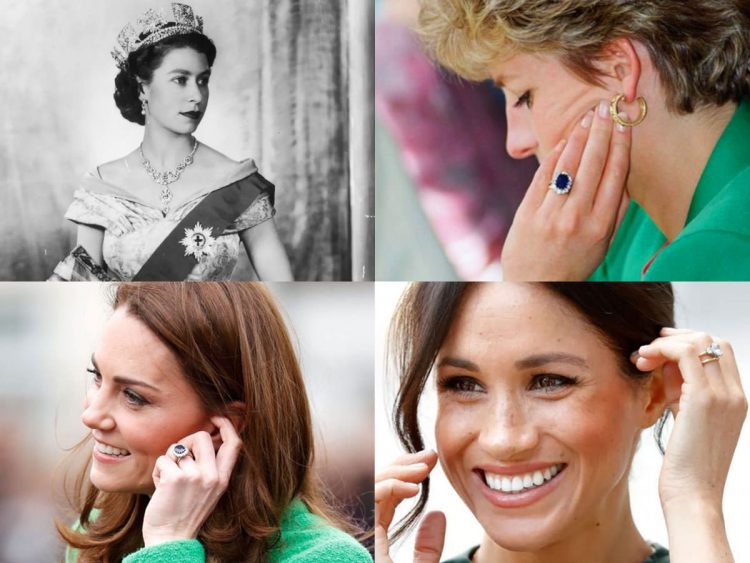
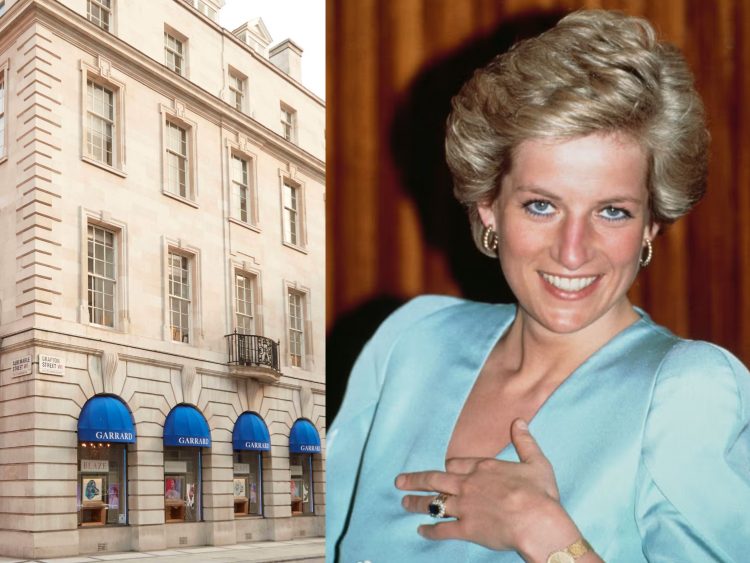
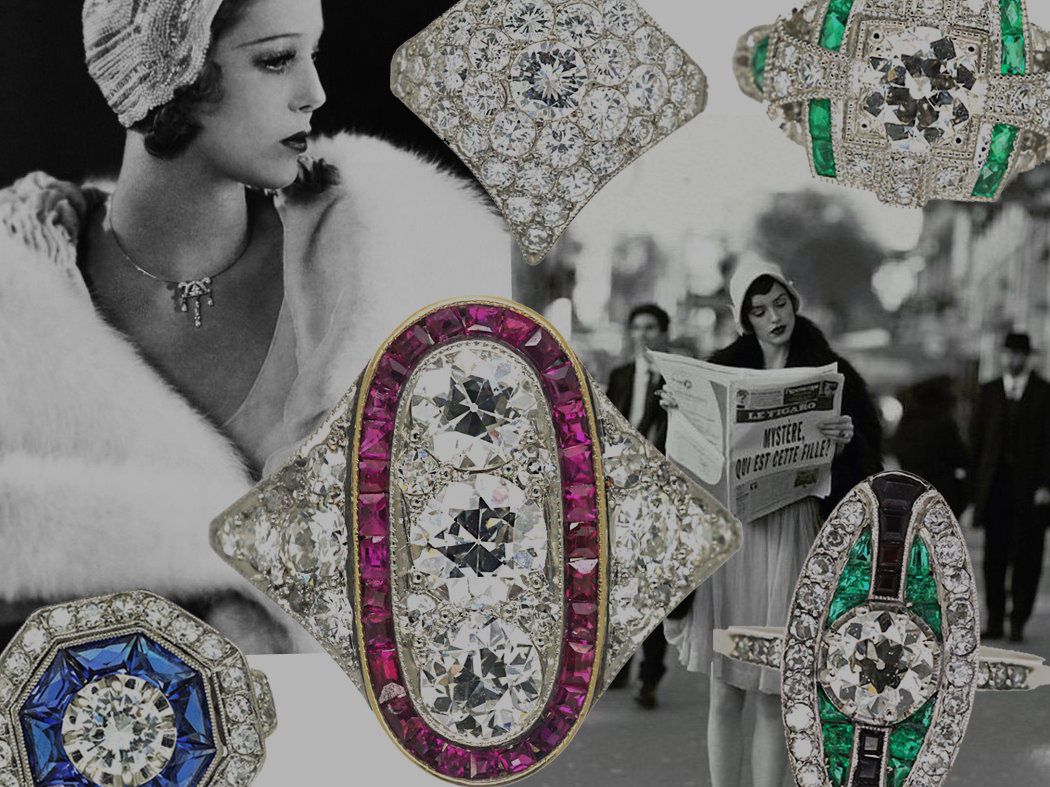
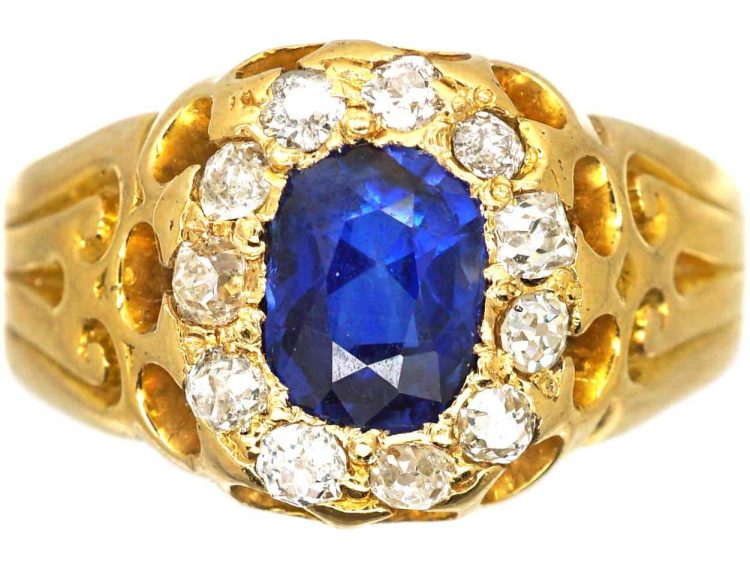
After the diamond, the sapphire is the classic engagement stone, and in antique jewellery it may be the more characteristic of the two. Victorian and Edwardian jewellers loved its colour, and it has the hardness to be worn every day for a lifetime. Princess Diana’s ring, a large oval sapphire surrounded by diamonds, made it famous again in 1981, but antique sapphire rings were being given long before that.
The ring was inspired by a sapphire brooch that Queen Victoria wore on her wedding day as her “something blue”!
Why choose a sapphire?
Sapphire is corundum, the same mineral as ruby, and at 9 on the Mohs scale it is second only to diamond in hardness. It takes knocks well, keeps its polish and, in a well-made setting, will outlast its wearer. Its deep blue is associated with loyalty and faithfulness, and it is the birthstone for September. It also sets beautifully with diamonds, which is why so many of our sapphire and diamond engagement rings combine the two.
Colour, clarity, cut and size
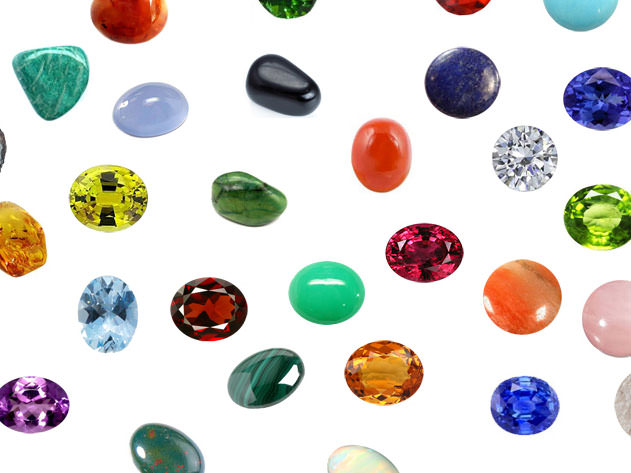
Colour. Colour matters more than anything else. The most admired sapphires are a rich, velvety cornflower blue, neither too dark nor too pale. The three classic sources each have a character: Kashmir sapphires, mined only briefly after their discovery in the 1880s, are soft and velvety; Burmese stones are deep and saturated; Ceylon sapphires from Sri Lanka are brighter and lighter. Sapphires also occur in pink, yellow and other colours, though blue is the classic choice for an engagement ring.
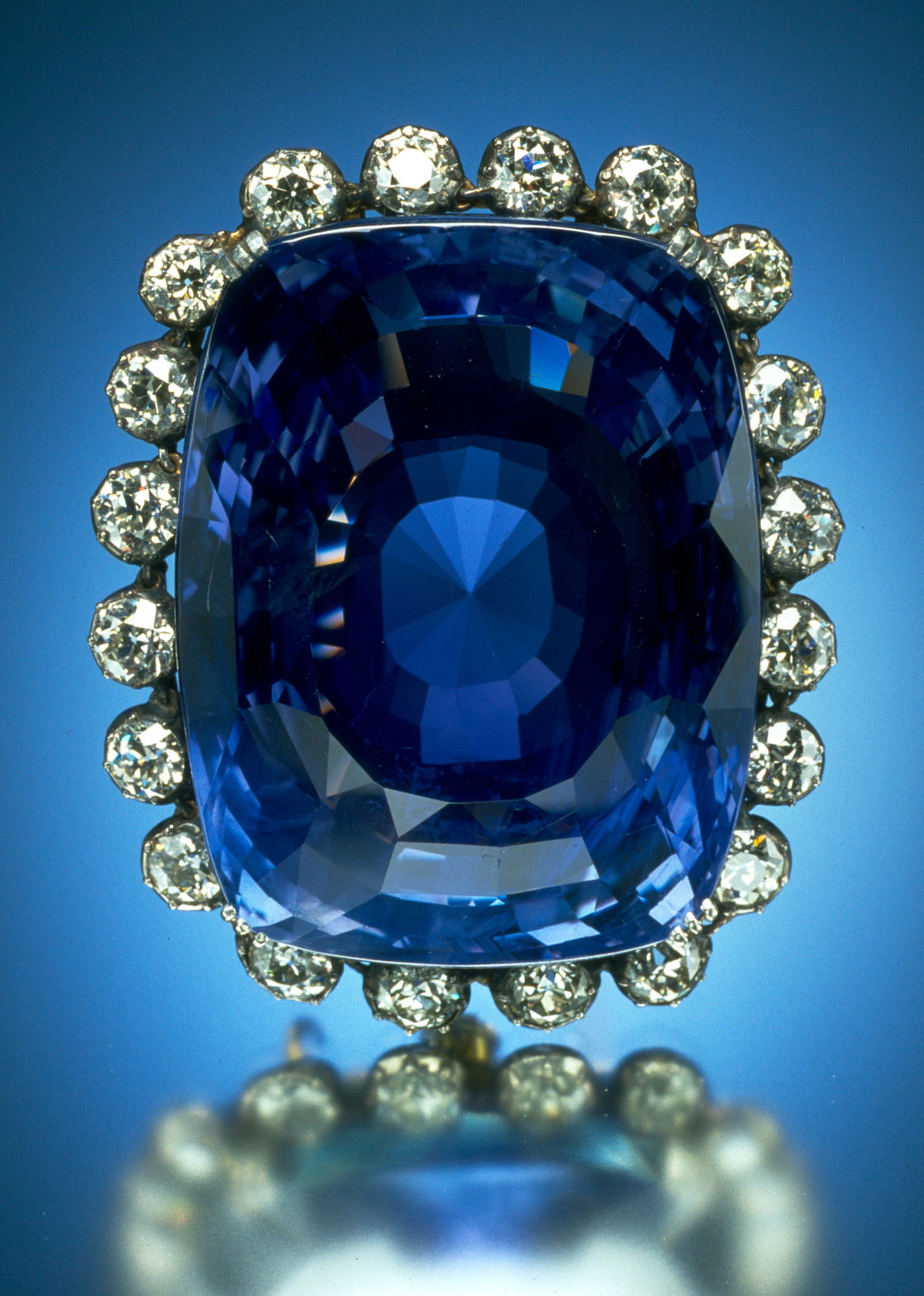
Clarity. Natural sapphires usually contain inclusions, and fine silk-like inclusions can give an attractive softness. What matters is that nothing affects the stone’s brilliance or strength.
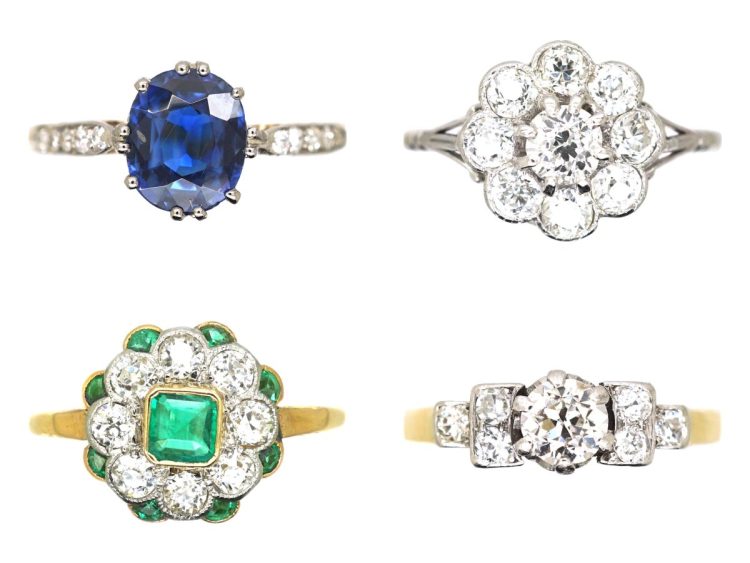
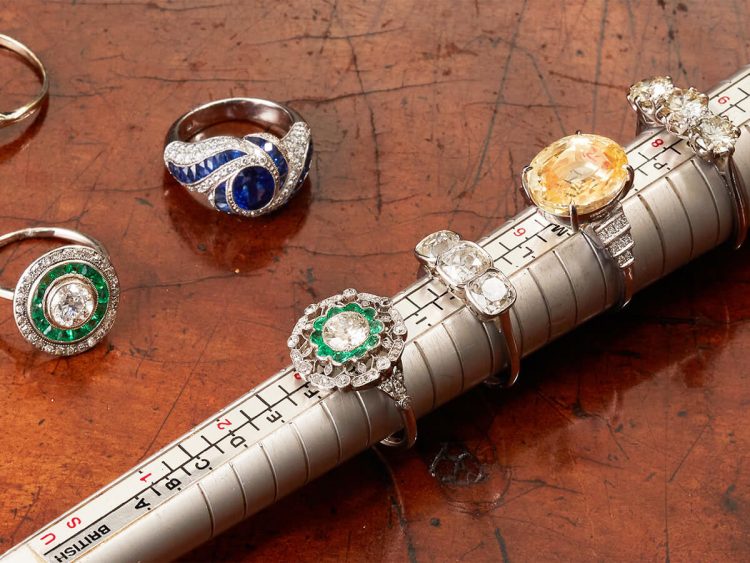
Cut. Antique sapphires were cut to make the most of their colour rather than their weight, so they are often cushion or oval shapes with slightly irregular outlines. Art Deco jewellers also used calibré-cut and sugar-loaf sapphires, like the one in this Art Deco platinum ring.
Size. A smaller sapphire of excellent colour is almost always more beautiful than a larger dull one. Buy colour first.
Antique settings
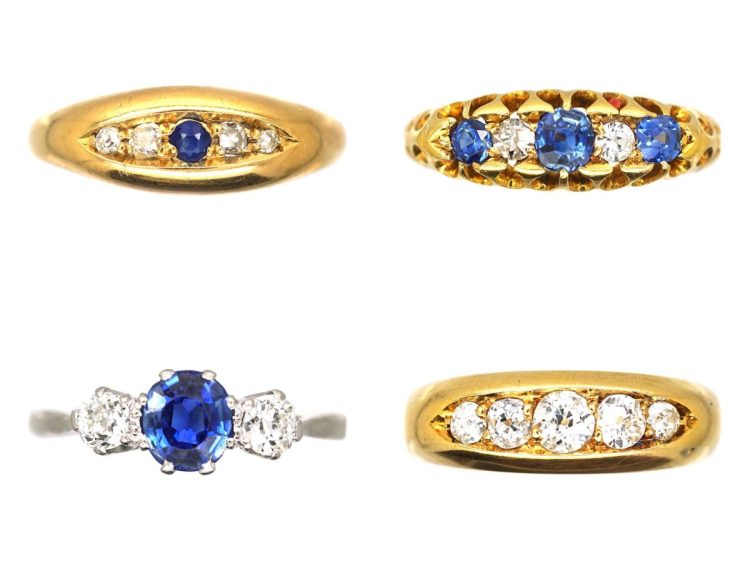
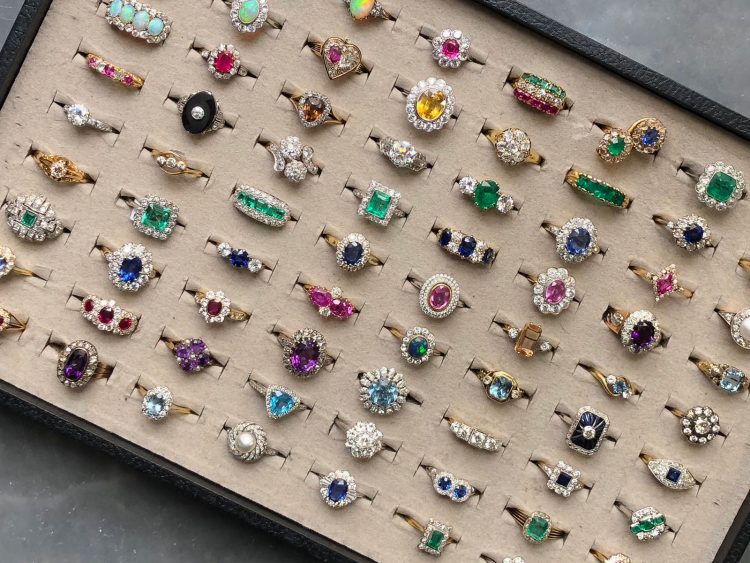
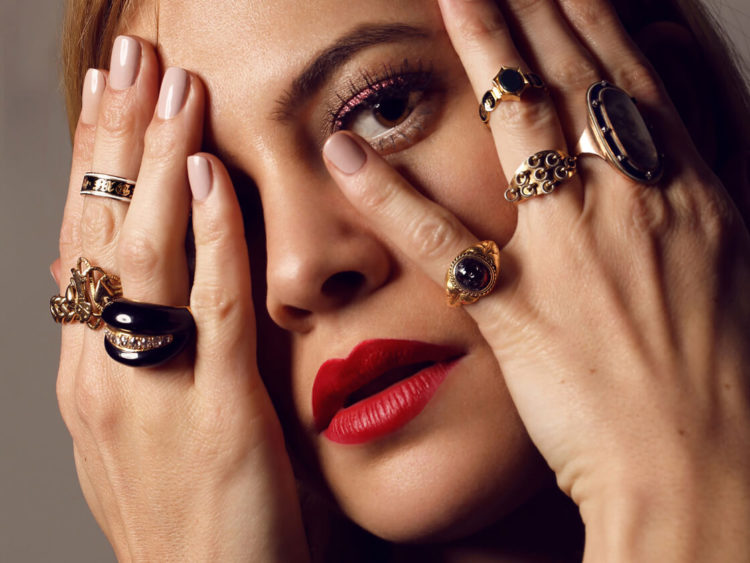
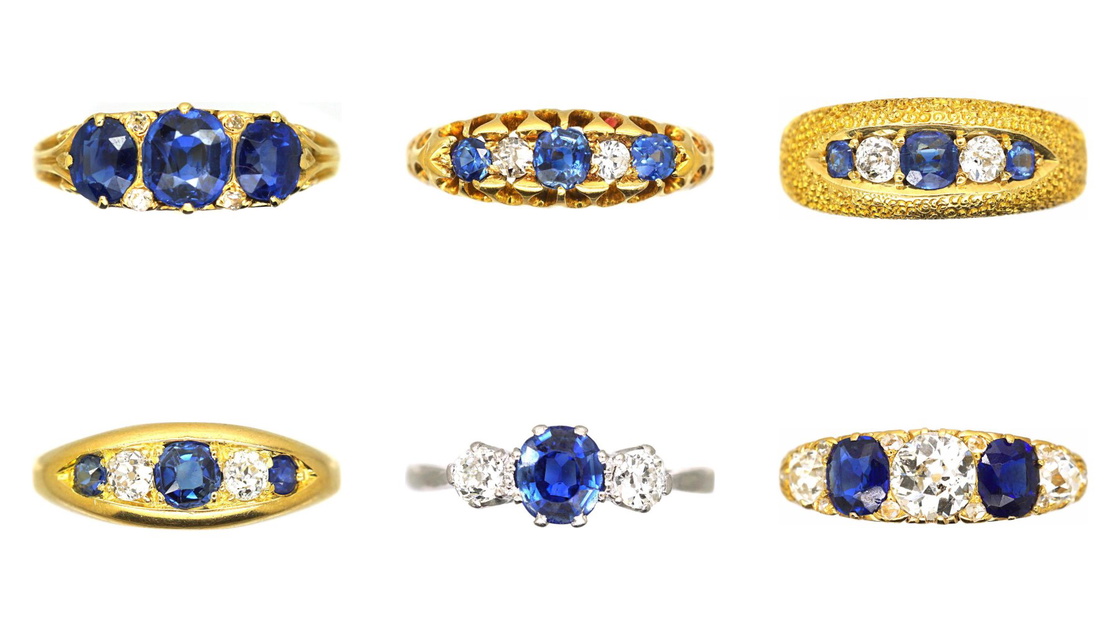
Antique sapphire rings come in more styles than modern ones. The cluster, a centre sapphire framed by diamonds, is the style Princess Diana made famous, and Victorian and Edwardian versions are among our favourites. The three-stone ring, a sapphire between two diamonds or the reverse, is simple and elegant. Carved half hoops and five-stone rings set sapphires and diamonds in a row, and boat-shaped rings sweep them into a long, flattering shape. A sapphire solitaire with diamond-set shoulders is the most understated of all.
Gold or platinum?
Victorian sapphire rings are usually in 18ct yellow gold, which warms the blue. The Edwardians preferred platinum, or platinum-topped gold, whose cool white brightens the stone and shows off the diamonds around it. Art Deco rings are almost always in platinum. The choice is partly a matter of taste, and partly of which period you love.
What affects the price
Colour and origin have the greatest effect, followed by size, clarity and the quality of the setting. Treatment matters too: most sapphires today have been heated to improve their colour, an accepted and stable practice, while an untreated sapphire of fine colour commands a premium. Because synthetic sapphire has been made since the early 1900s, even a stone in a genuinely antique mount should be tested before it is sold as natural, and any significant stone should come with a laboratory report.
Buy the colour, not the carats. A smaller sapphire with real life in it will make you happier every single day than a big stone that looks like ink.
Olly Gerrish, AJC Founder
Caring for a sapphire ring
Sapphires are tough, but their settings are not indestructible. Clean the ring with warm soapy water and a soft brush, take it off for heavy work, and have the claws checked every year or two, particularly on older rings. Heated sapphires are stable in normal wear, but avoid harsh chemicals and sudden extremes of temperature.
Our view
If we were choosing a sapphire engagement ring, it would be an Edwardian or late Victorian cluster: a sapphire of good, bright colour surrounded by old-cut diamonds, set in platinum-topped gold. It is the classic sapphire ring at its best, it wears beautifully every day, and it costs a fraction of a modern equivalent of the same quality. See our full collection of antique sapphire engagement rings, or read about the most famous royal engagement rings.
Explore the collection
- Sapphire engagement rings
- Sapphire & diamond rings
- Cluster rings
- Three-stone rings
- Boat-shaped rings
- Edwardian engagement rings