Diamond Engagement Rings
 Sapphire Engagement Rings
 Emerald Engagement Rings
 Ruby Engagement Rings
 Rings
Rings
 Earrings
 Necklaces
 Brooches
 Bracelets & Bangles
 Cufflinks
 Pendants
 Chains
 Tie Pins
 Lockets
 Charms
 Signet Rings
 Seals
Seals
 Curiosities
 UK / £
 USA / $
 AU / $


 Experts since 1975

-
Your Shopping Bag is empty

 Free Worldwide Delivery
 View All
 Diamond
 Sapphire
 Emerald
 Ruby
Ruby





Carved Half Hoop Rings: A Buyer’s Guide
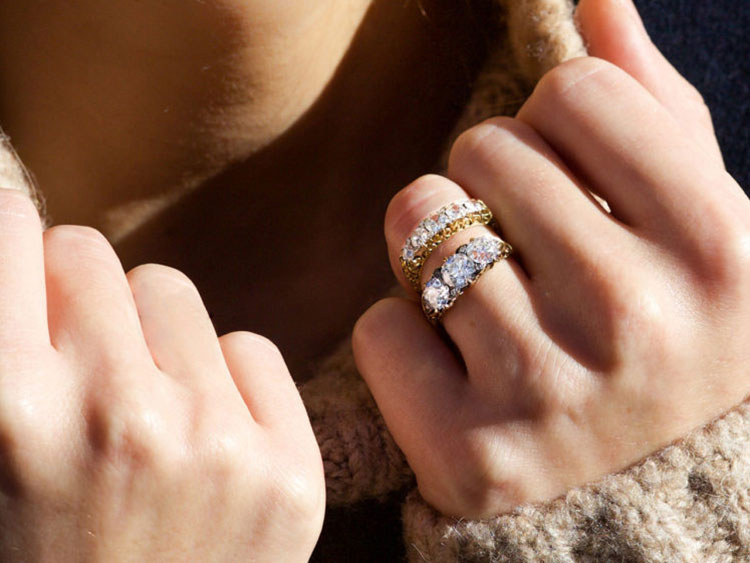
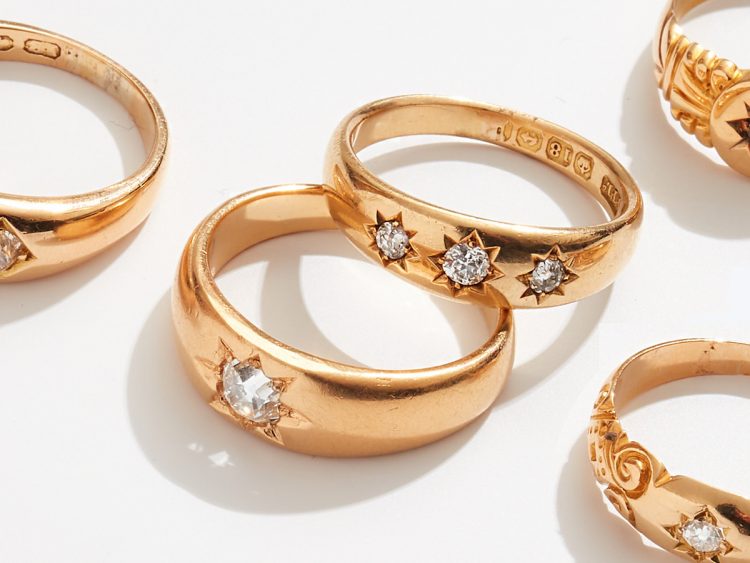
The carved half hoop is the classic antique engagement ring. A row of three or five stones set across the top of a band, with scrolling carved gold between them, it was the ring of choice for late Victorian and Edwardian brides, and it remains one of the most loved and best-value antique styles today. Here is our guide.
What is a carved half hoop?
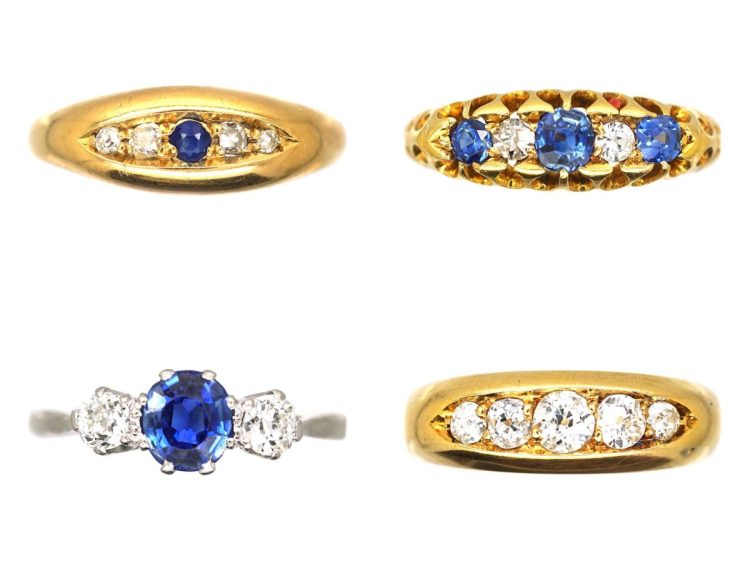
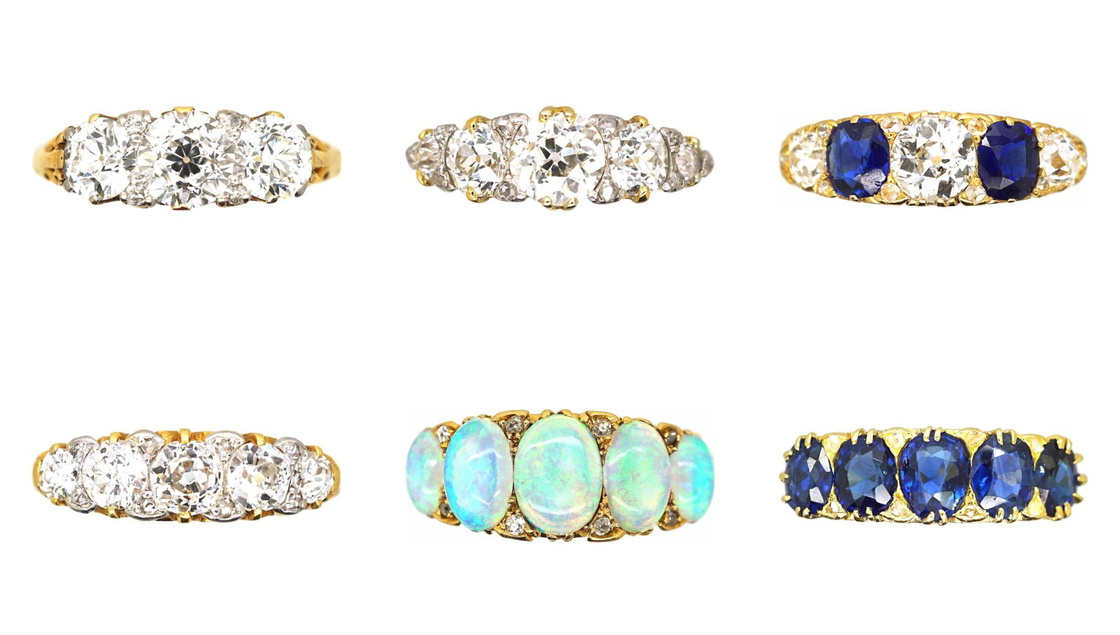
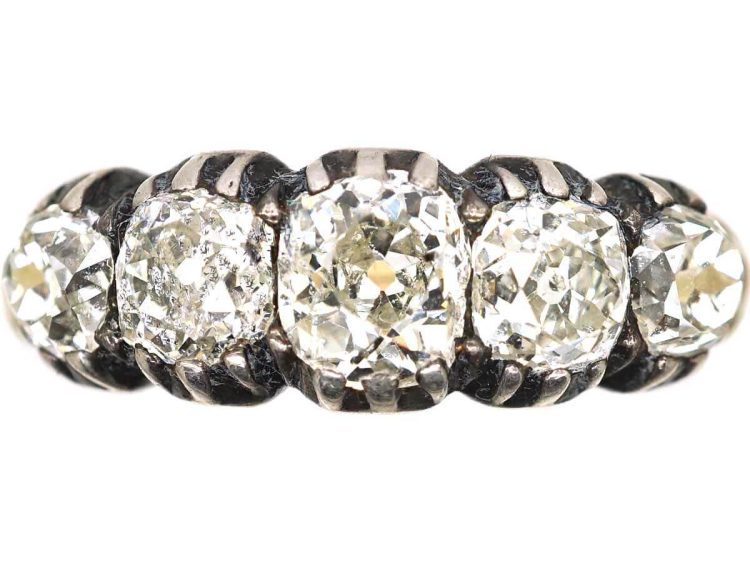
A half hoop ring has stones set only across the top half of the band, unlike a full eternity ring, which has stones all the way round. In a carved half hoop, the stones sit in a gold mount decorated with carved or chased scrolls and leaves, and very often tiny diamond points are set between the main stones. Most have three or five stones, usually graduated so the largest sits in the centre, though seven-stone examples exist.
A late Victorian classic
Half hoops were made from the early nineteenth century, but the carved half hoop reached its peak between about 1880 and 1910. The discovery of diamonds in South Africa in 1867 made old mine cut diamonds more plentiful, and the half hoop was the perfect way to show them off. Many were made in Birmingham and Chester, the great centres of the British jewellery trade, and carry their hallmarks. Our guide to Victorian engagement rings tells the wider story.
Diamonds and coloured stones
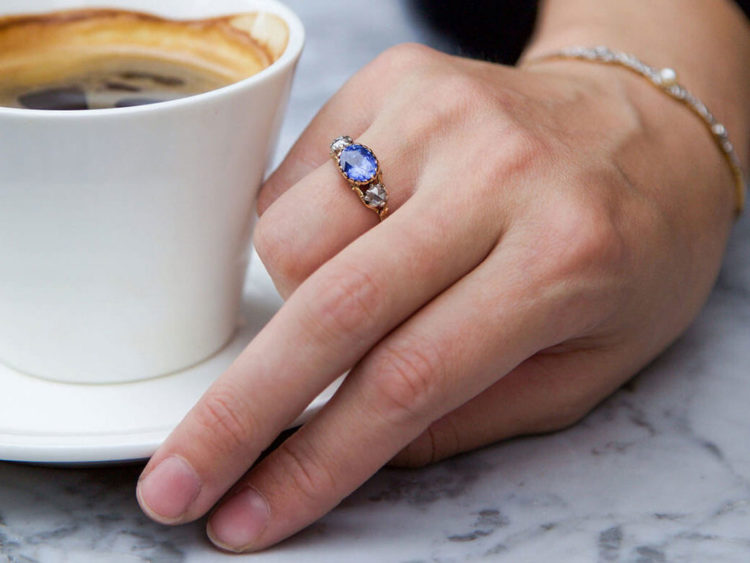
All-diamond half hoops are the classic, set with old mine or old European cut diamonds. Coloured half hoops are just as typical: sapphires or rubies alternating with diamonds, three or five sapphires with diamond points, or opals with their flashes of colour. Turquoise and garnet half hoops were popular too, especially earlier in the period. Explore five-stone rings and three-stone rings in our collection.
A carved half hoop is the ring I’d give anyone who wants something truly antique that they can wear every day without a second thought. They were built to last.
Olly Gerrish, AJC Founder
Edwardian half hoops
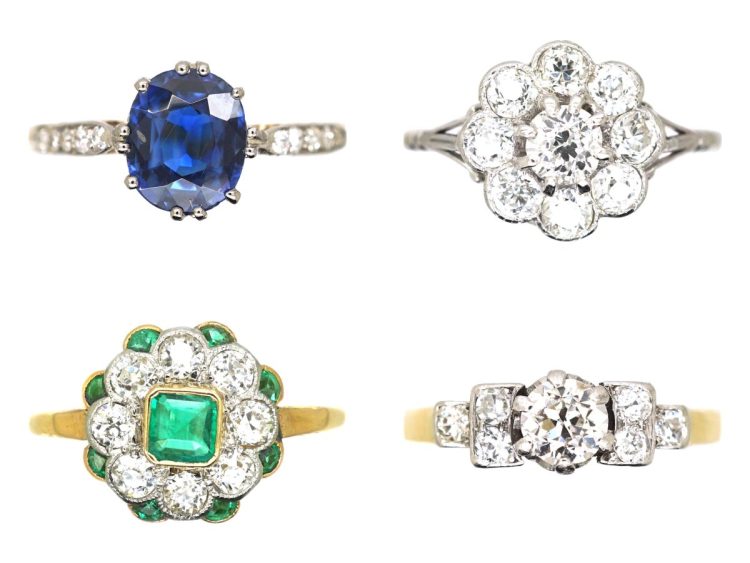
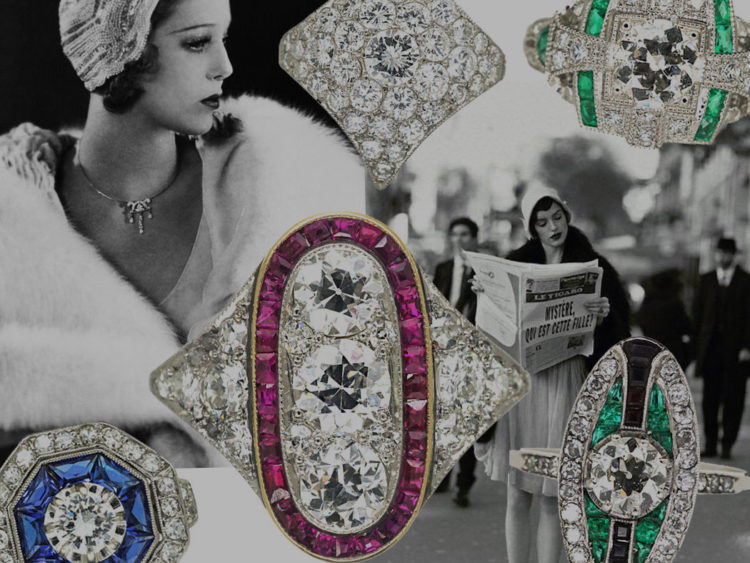
In the Edwardian period, half hoops became lighter and more refined, often with a platinum top for the diamonds on a yellow gold shank, finer claws and less carving. Five-stone emerald, sapphire and diamond half hoops in this style are especially elegant. See our guide to Edwardian engagement rings.
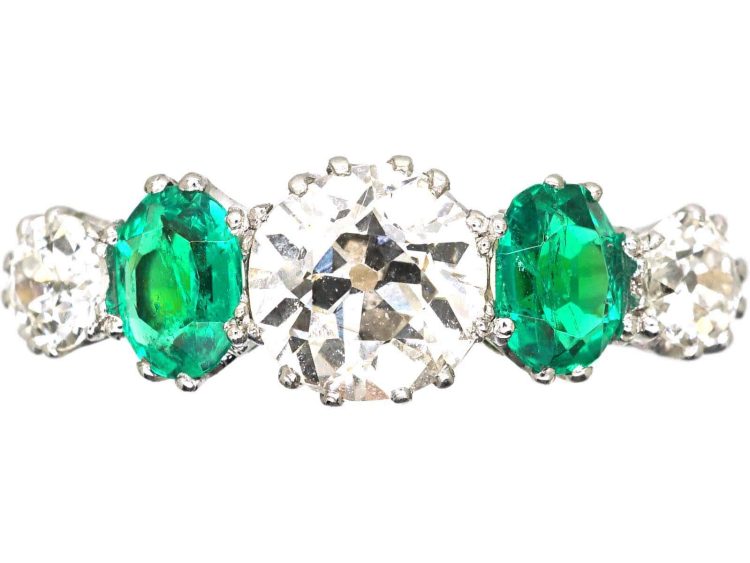
Why choose a half hoop?
Comfort and practicality. Stones sit low on the finger, so a half hoop rarely catches and is comfortable for everyday wear.
Easy to size and to pair. Because the stones only run across the top, half hoops are usually straightforward to resize, and they sit beautifully beside a wedding band.
Value. Carved half hoops are among the best-value antique engagement rings, offering real Victorian craftsmanship and old cut diamonds for much less than a large solitaire.
What to look for
Look for crisp carving that has not been worn smooth, stones that sit level and are well matched, secure claws, and a shank that is not too thin after a century of wear. Hallmarks will often tell you the gold standard, the town and even the year of assay; our guide to reading hallmarks explains how.
Caring for a half hoop
Have the claws checked every year or two, and clean your ring with warm soapy water and a soft brush, especially in the carving, where dirt collects. Avoid ultrasonic cleaners if your ring has opals, turquoise or emeralds.
The carving is what makes them special. Every scroll was cut by hand, and on a good one it’s as fine as anything made today.
Olly Gerrish, AJC Founder
Explore the collection
- Carved half hoops
- Five-stone rings
- Three-stone rings
- Victorian engagement rings
- Edwardian engagement rings
- Antique eternity rings