Diamond Engagement Rings
 Sapphire Engagement Rings
 Emerald Engagement Rings
 Ruby Engagement Rings
 Rings
Rings
 Earrings
 Necklaces
 Brooches
 Bracelets & Bangles
 Cufflinks
 Pendants
 Chains
 Tie Pins
 Lockets
 Charms
 Signet Rings
 Seals
Seals
 Curiosities
 UK / £
 USA / $
 AU / $


 Experts since 1975

-
Your Shopping Bag is empty

 Free Worldwide Delivery
 View All
 Diamond
 Sapphire
 Emerald
 Ruby
Ruby
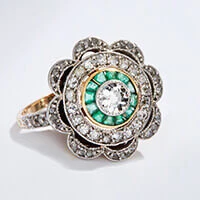





The 4Cs of Diamond Rings Explained
The 4Cs of diamonds are Cut, Colour, Clarity and Carat. Together, they are used to assess a diamond’s beauty, quality, rarity and value. For antique diamond rings, the 4Cs are still useful, but they should be considered alongside the age, setting, hand-cut character and overall charm of the jewel.
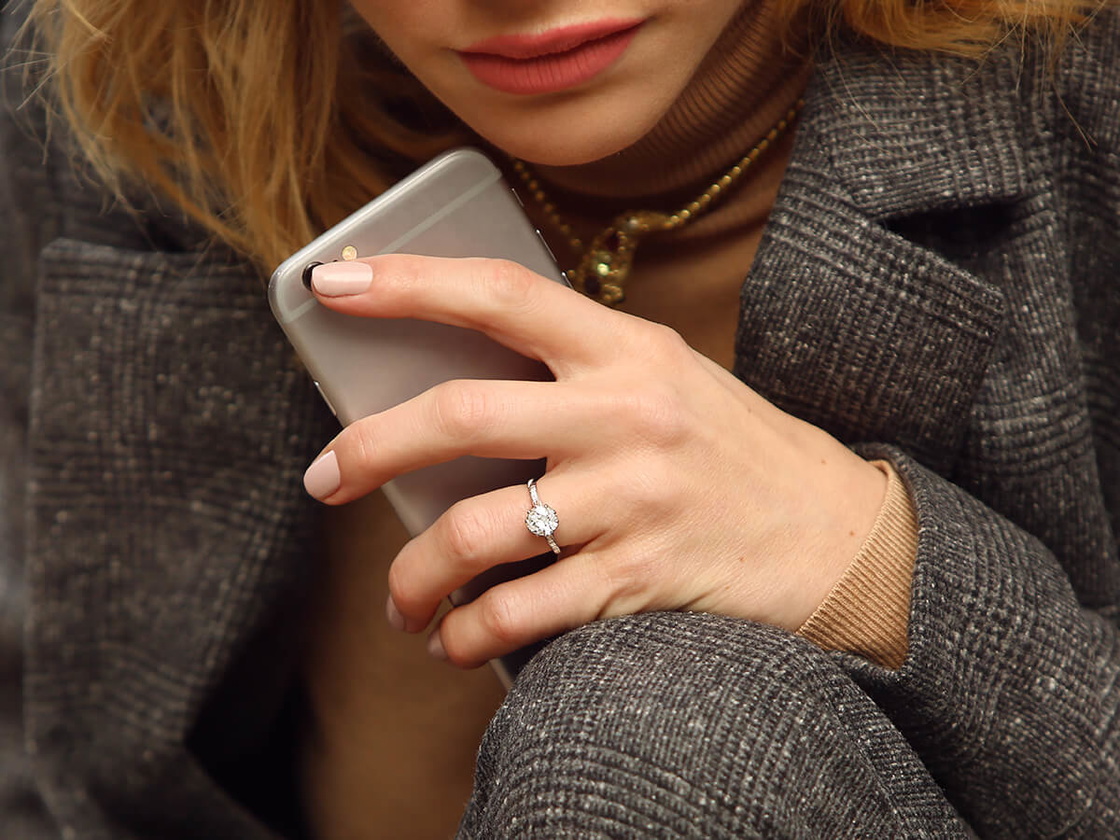
Brilliant, luminous and timeless, diamonds are a guaranteed winner when it comes to buying jewellery for somebody you love. Buying a diamond often marks a significant milestone – an engagement, a new baby or an important anniversary – and is loaded with excitement and sentimentality. But it can also be confusing to get to grips with the terminology and gain the confidence to choose the right stone.
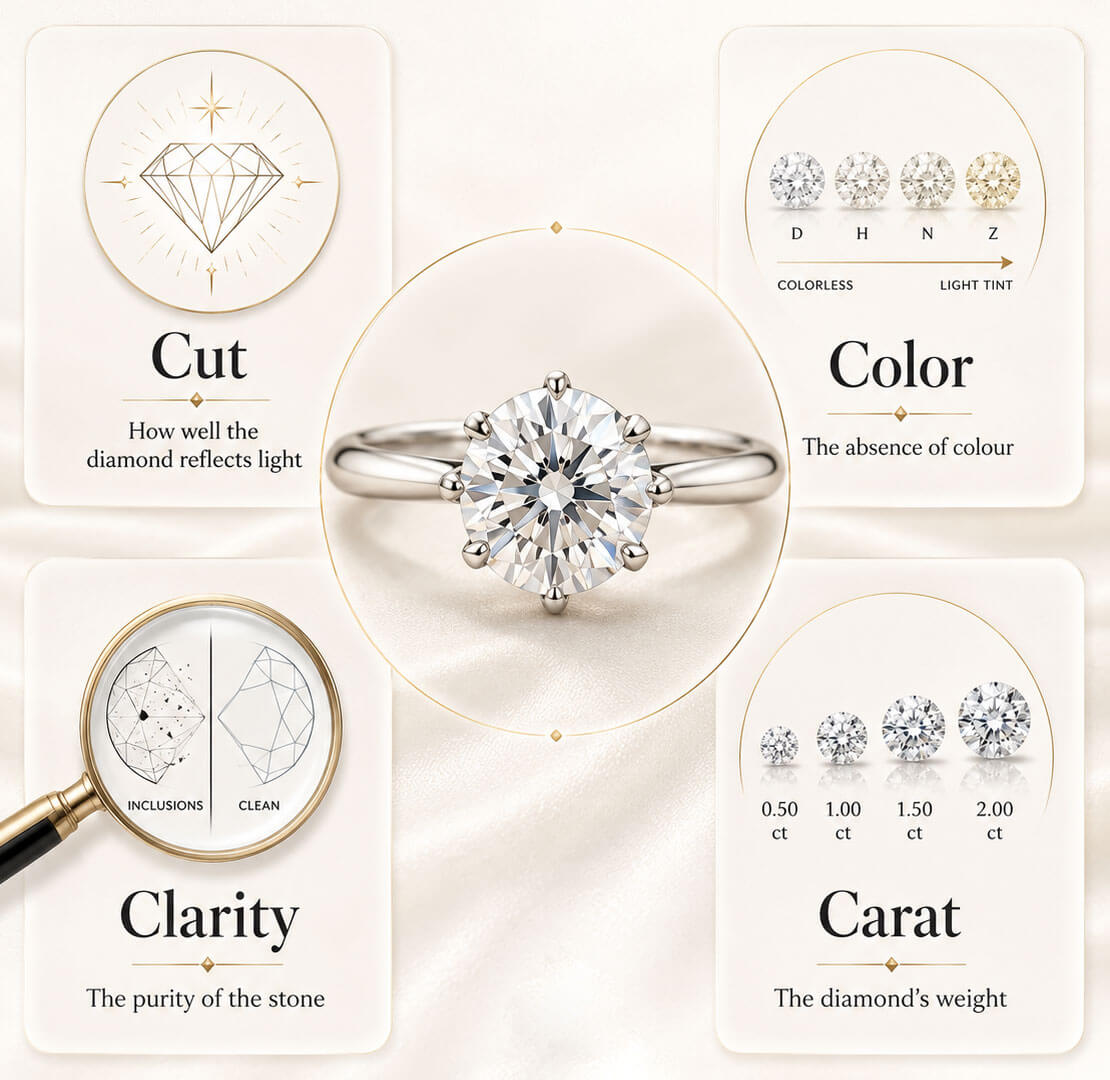
The 4Cs were developed by the GIA – the Gemological Institute of America – in the mid-20th century as a universal system for assessing diamonds. In short, the system examines the Cut, Colour, Clarity and Carat of each stone.
While you will need a qualified gemologist, or in the case of antique jewellery an experienced trade expert, to assess a diamond properly, understanding the 4Cs gives you a useful advantage when shopping around.
Grading Modern Diamonds
Grading a diamond properly using the 4Cs requires that stone to be loose. In modern diamond-buying, this means either buying a stone before setting it into jewellery, or acquiring a GIA certificate along with the jewellery you buy.
Clarity
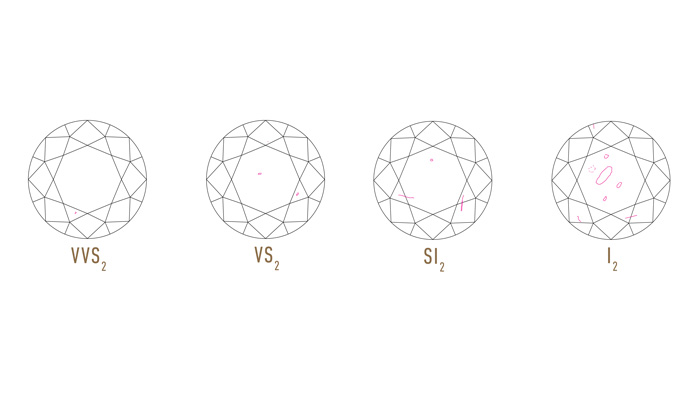
Diamond clarity refers to the absence of imperfections, known as (internal) ‘inclusions’ and (external) ‘blemishes’. No diamond is completely flawless, but assessing the nature and number of imperfections under a magnification loupe can tell us how ‘perfect’ it is. The higher the clarity, the rarer the stone will usually be – although with antique diamonds, small natural inclusions are often part of the stone’s character.
The GIA Diamond Clarity Scale has 6 categories, some of which are divided, creating a total of 11 specific grades which are used around the world, regardless of the language. They are as follows:
- Flawless (FL) No inclusions and no blemishes visible under 10x magnification
- Internally Flawless (IF) No inclusions visible under 10x magnification
- Very, Very Slightly Included (VVS1 and VVS2) Inclusions so slight they are difficult for a skilled grader to see under 10x magnification
- Very Slightly Included (VS1 and VS2) Inclusions are observed with effort under 10x magnification, but can be characterized as minor
- Slightly Included (SI1 and SI2) Inclusions are noticeable under 10x magnification
- Included (I1, I2, and I3) Inclusions are obvious under 10x magnification which may affect transparency and brilliance
Cut
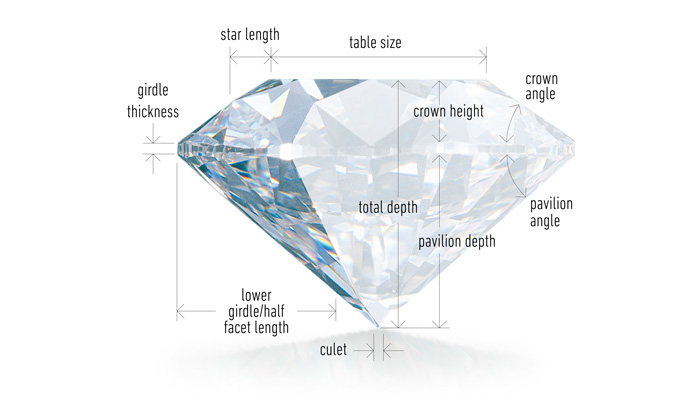
Assessing the cut of a diamond is the most complex of the 4Cs, but the cut makes a huge impact on the beauty and value of a stone.
While most people think of the cut as the shape of the diamond, the ‘cut’ technically refers to the way the stone’s facets interact with light. An expert will examine the way the proportions, symmetry and polish maximise the unique sparkle and brilliance of diamonds. The crucial point is how the facets’ proportions influence the visual effects that count, including:
- Brightness: Internal and external white light reflected from a diamond
- Fire: The scattering of white light into all the colours of the rainbow
- Scintillation: The ‘sparkle factor’, and the pattern of light and dark areas caused by reflections within the diamond
Colour
Many diamond colour distinctions are so subtle that they cannot be detected by the naked eye, but a completely pure, colourless diamond is considered to be of the highest quality and commands a higher price.
The GIA’s D-Z colour-grading system ranks stones from completely colourless (D) to light yellow (Z). Diamonds whose natural colour falls outside of this spectrum are known as ‘coloured diamonds’ and are graded separately.
Carat
Carat – named after the carob seeds used by early traders as counterweights – refers to the weight of the diamond. The metric weight (200mg per carat) is the same around the world. In principle, a larger diamond can command a higher price, but this is dependent on the condition of the stone as per the other three ‘Cs’.
You may hear a jeweller describe the weight of a diamond by its ‘points’. Each carat can be subdivided into 100 points. So a 0.25 carat diamond might be referred to as a ‘twenty five pointer’. Diamonds that weigh over one carat are expressed in carats and decimals – e.g. a ‘one point two five carat’ stone.
Grading Antique Diamonds
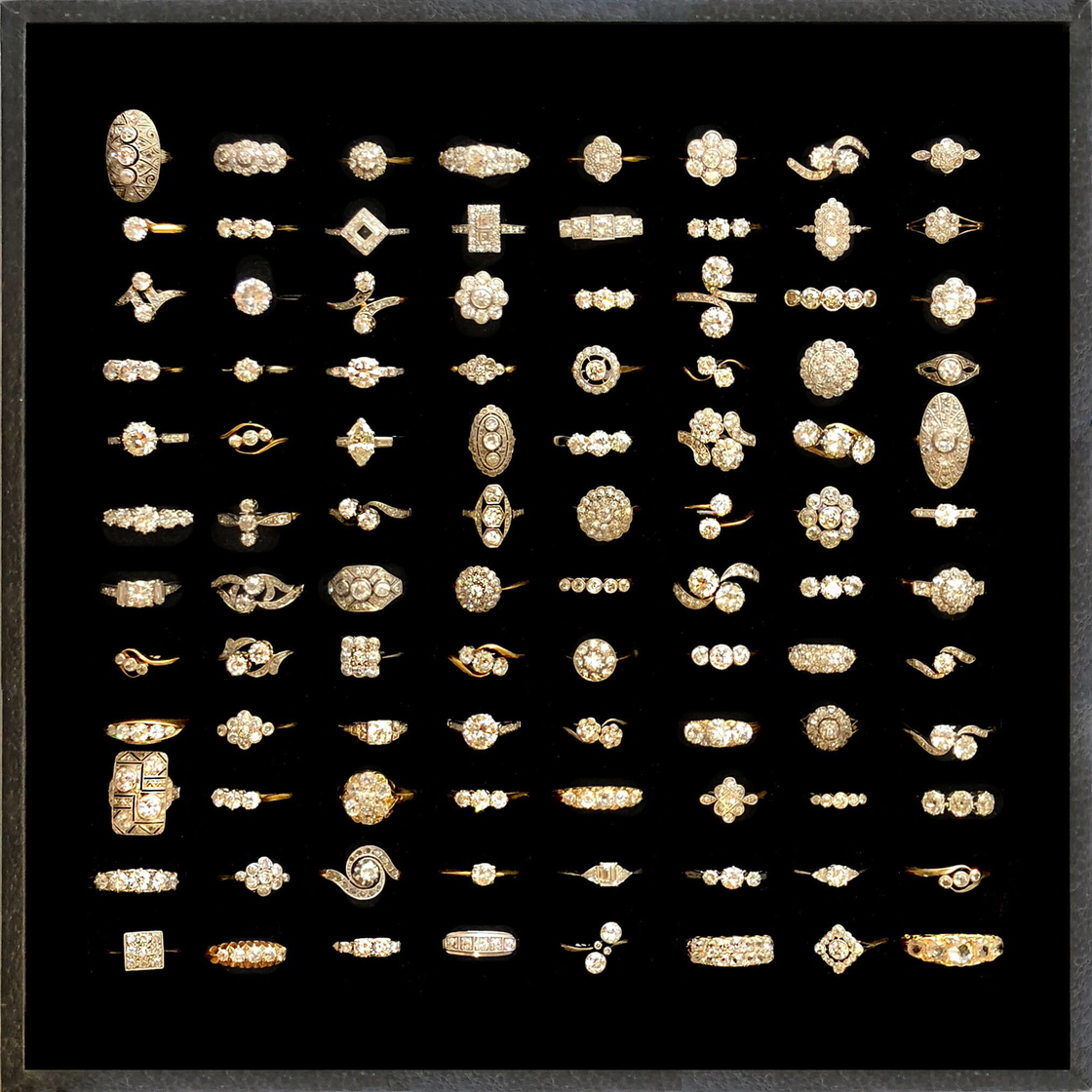
When it comes to diamonds which have already been set (almost always the case when buying antique or vintage diamonds), you will need to apply a slightly different grading technique.
Until universal diamond-grading was introduced by the GIA in the mid 20th century, nobody could agree on a single method for grading diamonds. For this reason, a technical grading is considered less important when buying antique and vintage diamonds. Different characteristics were prized at different times.
When buying antique or vintage diamonds, it is more important to look for a piece of jewellery or a style that appeals to your aesthetic or historic interest than to look for a perfect stone.
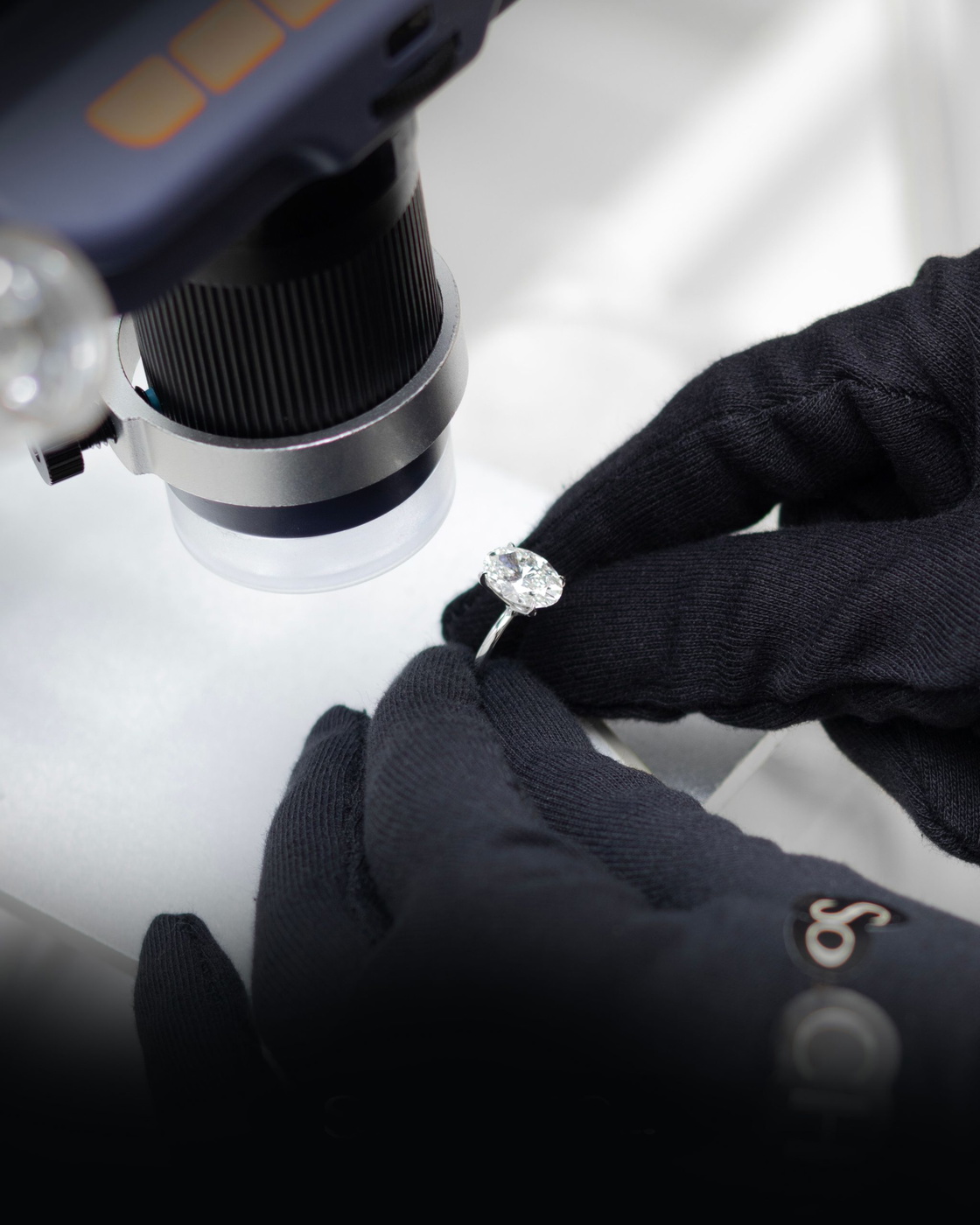
Grading antique and vintage diamonds is technically based on opinion unless the stones are loose (i.e. outside of their setting), but an expert will be able to give you a very good idea of the value of an old diamond using a magnifying loupe and expertise. They are graded using the same system as modern diamond grading – the ‘4Cs’: Cut, Colour, Clarity and Carat. However, with antique diamonds you need to look for different traits to modern diamonds.
Here’s how it works:
Cut & Shape
As with modern diamonds, the cut refers to how light interacts with the stone’s symmetry, proportions and polish.
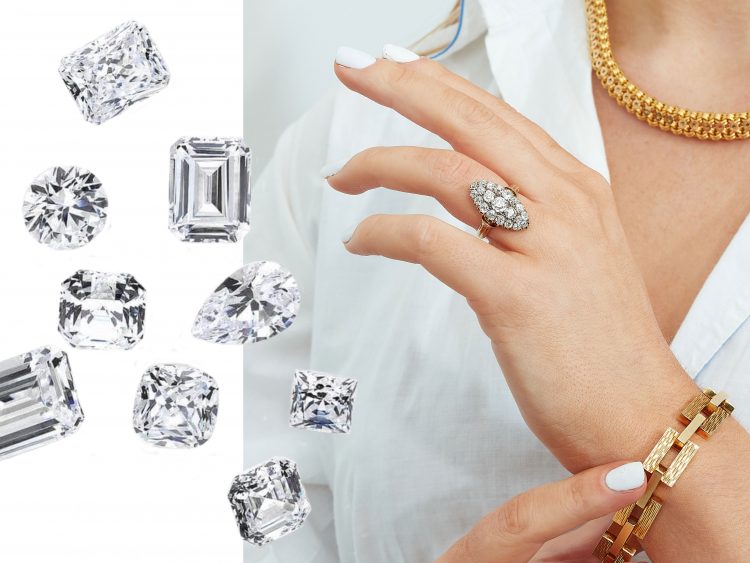
The shape of the stone refers to the outline of the stone – e.g. heart, round, marquise. The process of cutting a stone was intricate and required the serious skill of master artisans in the days before laser-cutting machinery.
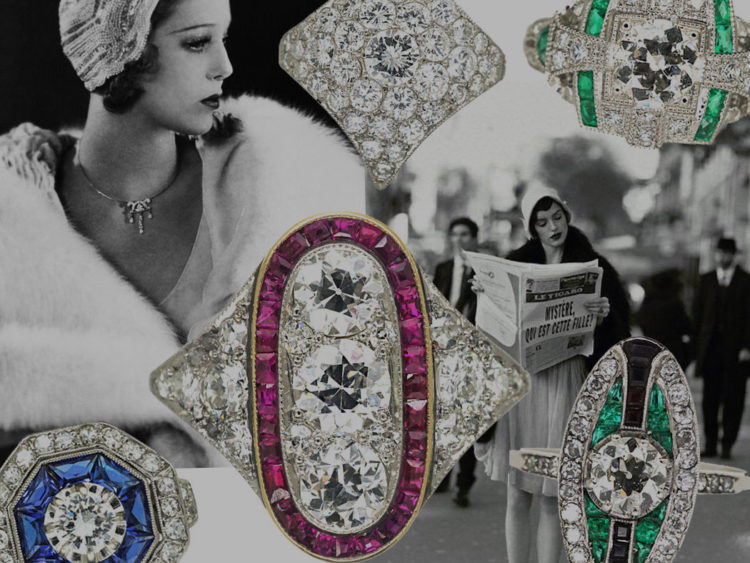
The Old Cut diamond shapes evolved with advances in machinery and techniques. The most popular antique cuts include:
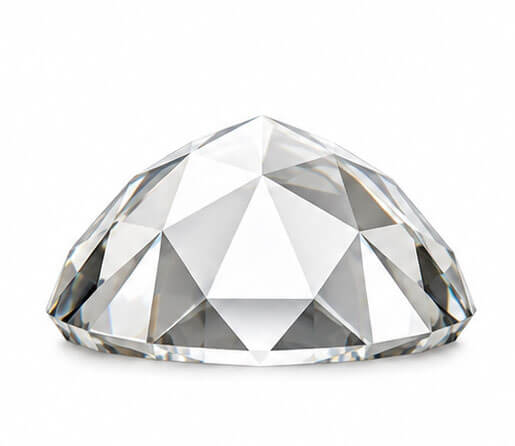
Rose Cut
Used since the 1600s, this beautiful, ‘flat’ cut worked with the natural shape of the stones and produced a demure, alluring sparkle.
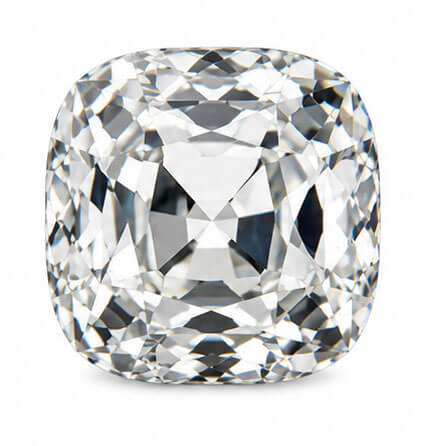
Old Mine Cut
Advancements in jewellery making resulted in a deeper pavilion (base) below the facets, which allow for a greater play of light within the diamond and a more brilliant sparkle.
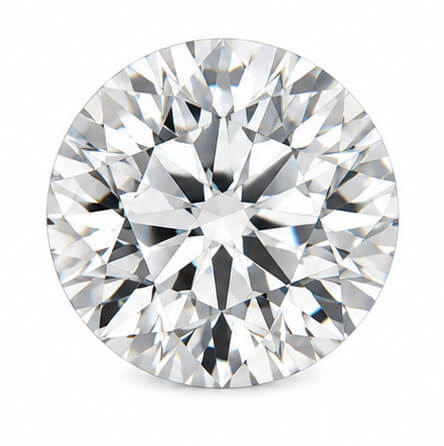
Old European Cut
The invention of the diamond-cutting wheel allowed for a perfectly round stone, opening up the diamond to even more light, creating even more sparkle and a wider array of patterns.
Other common cuts in older jewellery include:
- Pear Cut
- Rectangular or Emerald Cut
- Baguette Cut
- Marquise cut
- Heart Cut
- Square Cut
- Triangle or Trillion Cut
- French Cut
Antique Diamond Clarity Scale
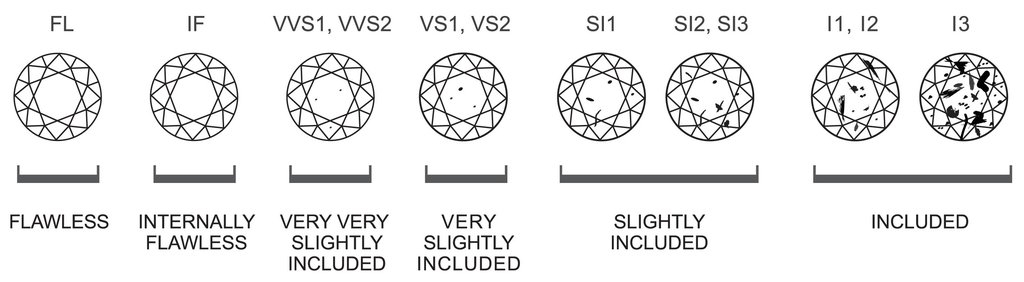
Flawless diamonds are incredibly rare and expensive even in modern diamonds. In past eras, carat was typically prized above clarity so it’s very common for antique diamonds to be imperfect.
An old, set diamond which is ‘eye-clean’ – Slightly Included – usually offers the best value, but it’s worth considering that even an SI stone can only be identified under 10x magnification.
Antique Diamond Colour Scale
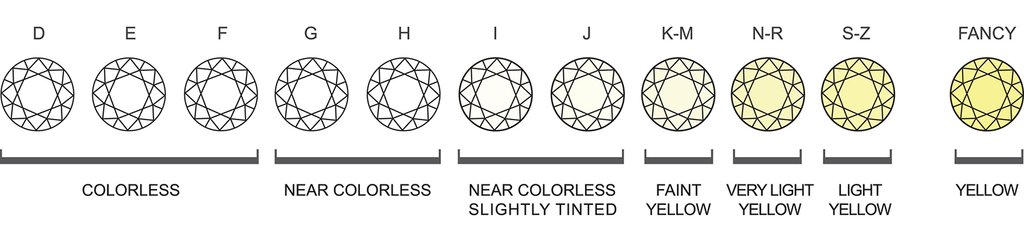
Just as with modern diamonds, truly white (colourless) antique diamonds are extremely rare and therefore expensive. Old diamonds usually have some colour in them, considered by many to add character and beauty to the stone.
Keep in mind that an antique diamond’s true colour can be affected by cutting techniques and when buying it’s important to consider the piece of jewellery as a whole and look for stones you love rather than dismiss them due to their grading.
Antique Diamond Carats
A carat is a measurement of weight equal to 0.20 grams. Bigger diamonds are rarer than small diamonds and this is typically reflected in the price of antique diamonds. However, diamonds can do what is known as “facing up larger”, which means that looking at a stone straight on gives the illusion of a larger one. This is taken into consideration.
Choosing a Diamond You Love
The 4Cs are a useful way to understand and compare diamonds, whether you are looking at a contemporary stone or an antique diamond ring. They give you a shared language for assessing quality, rarity and value – but they should never be the only measure of a jewel.
This is especially true with antique and vintage diamonds. Older stones were cut by hand, often to suit the natural shape of the rough diamond and the taste of the period. Their beauty lies not only in their colour, clarity, cut or carat weight, but in their individuality: the softness of an old mine cut, the quiet shimmer of a rose cut, the warmth of an antique colour grade, or the way a stone catches the light in a candlelit, romantic way.
When choosing a diamond ring, it is worth understanding the 4Cs – but it is just as important to look at the piece as a whole. Does it speak to you? Does the design feel special? Does the stone have life, charm and character? A certificate can tell you a great deal about a diamond, but it cannot tell you whether you will fall in love with it.
At The Antique Jewellery Company, we believe the best diamond rings are those with beauty, history and soul. The 4Cs can guide you, but your eye – and your instinct – should always have the final say.