Diamond Engagement Rings
 Sapphire Engagement Rings
 Emerald Engagement Rings
 Ruby Engagement Rings
 Rings
Rings
 Earrings
 Necklaces
 Brooches
 Bracelets & Bangles
 Cufflinks
 Pendants
 Chains
 Tie Pins
 Lockets
 Charms
 Signet Rings
 Seals
Seals
 Curiosities
 USA / $
 AU / $

-
Your Shopping Bag is empty
 View All
 Diamond
 Sapphire
 Emerald
 Ruby
Ruby






 WhatsApp





Want to see it in person?
We look forward to welcoming you to the AJC Townhouse, our home in the heart of Mayfair.
Book Your Appointment Latest Finds
What's Hot
Expert Picks
The Archive
Sale
Eras
Collections
Contact
Book Appointment
Join VIP
Latest Finds
What's Hot
Expert Picks
The Archive
Sale
Eras
Collections
Contact
Book Appointment
Join VIP
 0
0
 Experts since 1975Read Our Story
 UK / £
0
UK / £
0


Your Shopping Bag is empty

 Free Worldwide Delivery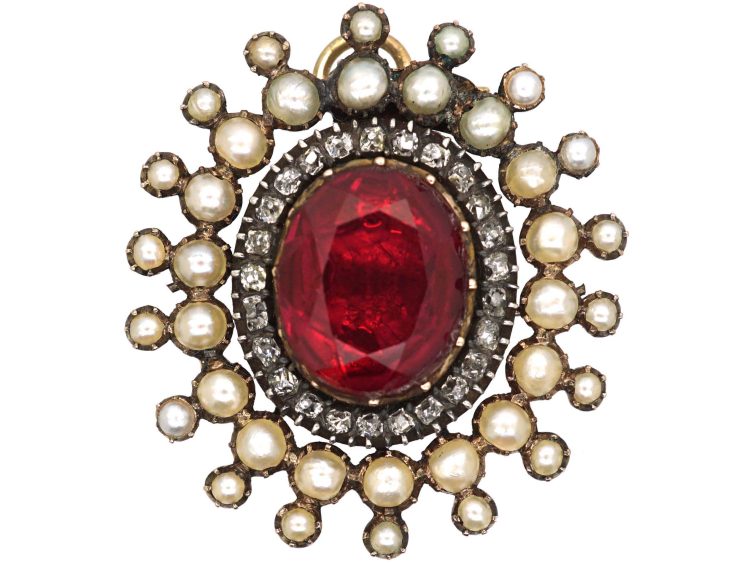
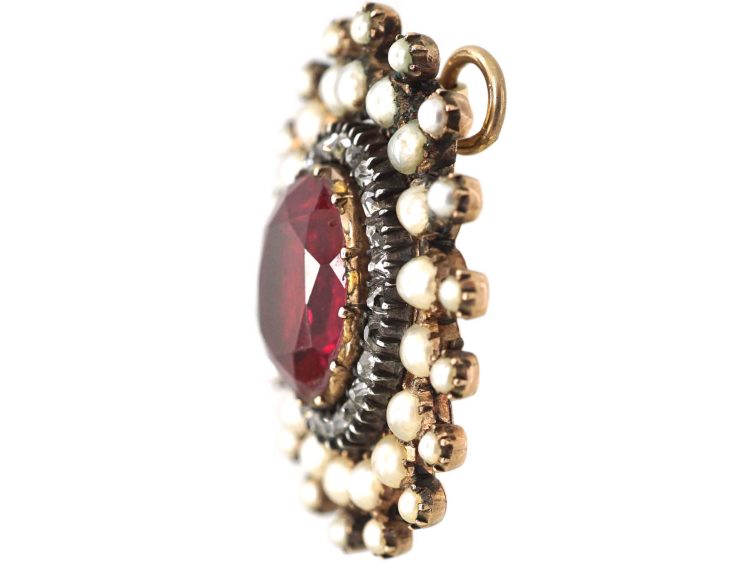
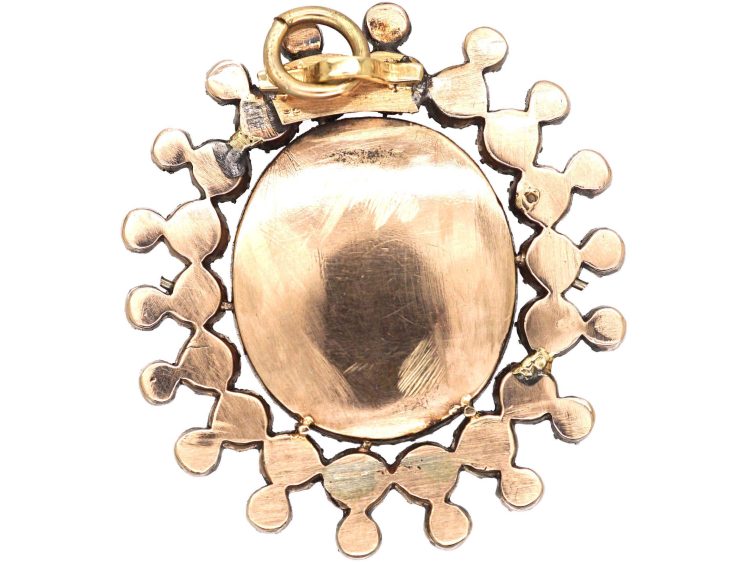
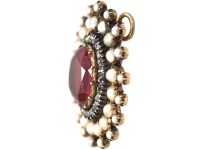
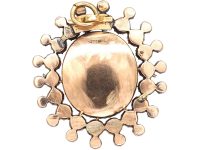
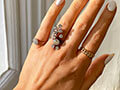

A good looking 9ct37.5% pure gold (or 375 parts pure gold and 625 parts other metals) More gold GeorgianJewellery made in the Georgian era (1714-1830). More pendant that was made circa 1820. It has been pinch collet set with a foil backedA thin metal foil placed behind a gemstone within a closed-back setting to improve its optical performance. Metallic foil improves the reflectivity of certain gemstones, whilst coloured foils act as colouring agents when placed behind colourless materials, such as paste and rock crystal. These stones were typically set in silver closed backs to shield the fo... More red pasteGlass made to resemble gem materials, which may be moulded, faceted, carved, etc. More. Around it are small old mine cutAn 18th, 19th and early 20th century diamond shape, typically cushion or asymmetrical, marked by a small table, a high crown and a large culet. Culets are the small flat facets at the bottom of a stone which appear to the untrained eye as a hole in the middle of the stone. Before the advent of modern machinery which allows for the precise faceting we see tod... More diamonds then naturalA natural stone is called such because it has not been subjected to any treatments. More split pearls. The whole effect is beautiful.
In Georgian jewellery, red paste refers to a type of high-lead-content flint glass that has been expertly crafted to imitatethe appearance and brilliance of red gemstones, most commonly garnets and rubies.
Metal oxides or pigments were added during the glass-making process to achieve a vibrant crimson or rubyOne of the most valuable gemstones on earth. From the corundum family, the red variety being ruby and the blue, sapphire. With the exception of the diamond, corundum is the hardest of the gemstones on the Mohs scale scoring a 9. More hue, effectively mimicking precious red stones. Unlike modern costume jewelleryJewellery designed for wear with current fashions and usually made of inexpensive materials. Usually applied to two classes of jewellery: gem-set imitations, which resemble precious jewellery but are made of silver (sometimes rhodium-coated) or pinchbeck and set with substitutes for gemstones, e.g. marcasite, paste or synthetic gemstones; although usually th... More, antiqueFrom the Latin 'antiquus', meaning 'old and long in existence', it is generally used to refer to collectible artifacts of at least 100 years of age.
More paste stones were meticulously hand-cut and polished using the same techniques as real diamonds, a labour intensive process that elevated their status. To further enhance the brilliance and colour, a thin layer of coloured foilA thin metal foil placed behind a gemstone within a closed-back setting to improve its appearance. Metallic foil improves the reflectivity of certain gemstones, whilst coloured foils act as colouring agents when placed behind colourless materials, such as paste and rock crystal. The practice of foil-backing gemstones can be traced back to Minoan times (circa... More (often silverA metallic element which is malleable and ductile, and white in colour, making it ideal for use in jewellery. It is usually mixed with copper to improve its hardness.
More) was placed behind the closed-back settings of the red paste stones. This helped reflect light and intensified the gem’s appearance, especially in candlelit settings.
Paste was an alternative to rare and expensive gemstones, and paste jewellery became highly popular during the Georgian era (1714-1830). It allowed a wider social strata to wear ornate jewellery that matched contemporary fashions.
Far from being a cheap substitute, high-quality paste jewellery was prized in its own right and worn by the aristocracy,
The Details
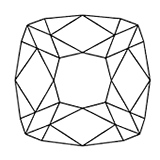 Diamonds
We are pleased to offer FREE DELIVERY on all purchases.
All orders are fully insured and dispatched securely by our trusted partner, DHL Express.

We are pleased to offer a 30 day, full money-back guarantee on all purchases.
 UK
UK
 USA, Europe & Rest of World
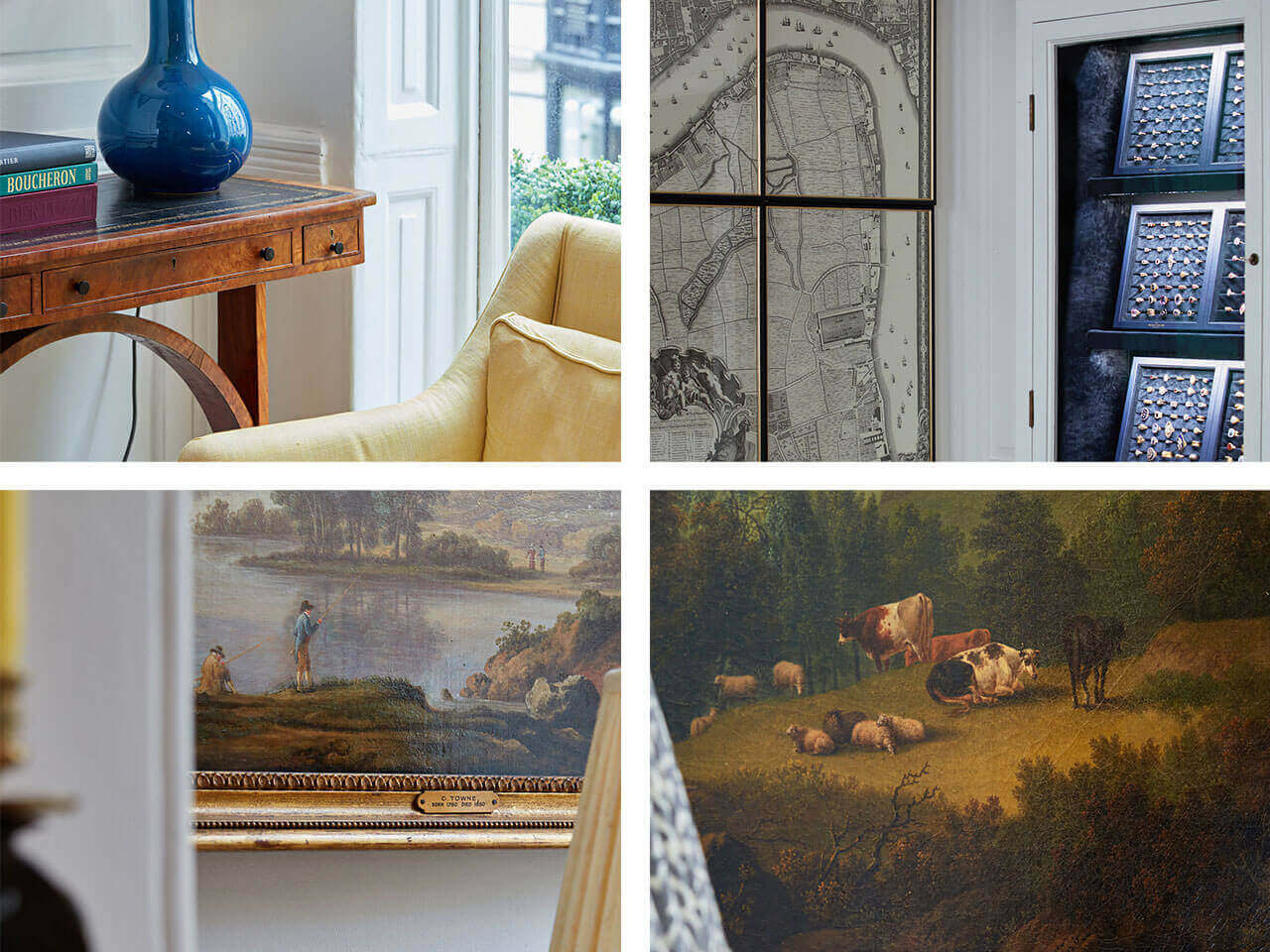
We look forward to welcoming you to the AJC Townhouse, our home in the heart of Mayfair.
Book Your Appointment
Buying antique jewellery is both ethical and eco-friendly as harmful and destructive mining processes are not needed to make an item yours.
Find Out More

We always stand by our five core principles: Quality, Rarity, Expertise, Peace of Mind and Personal Touch
Find Out More